
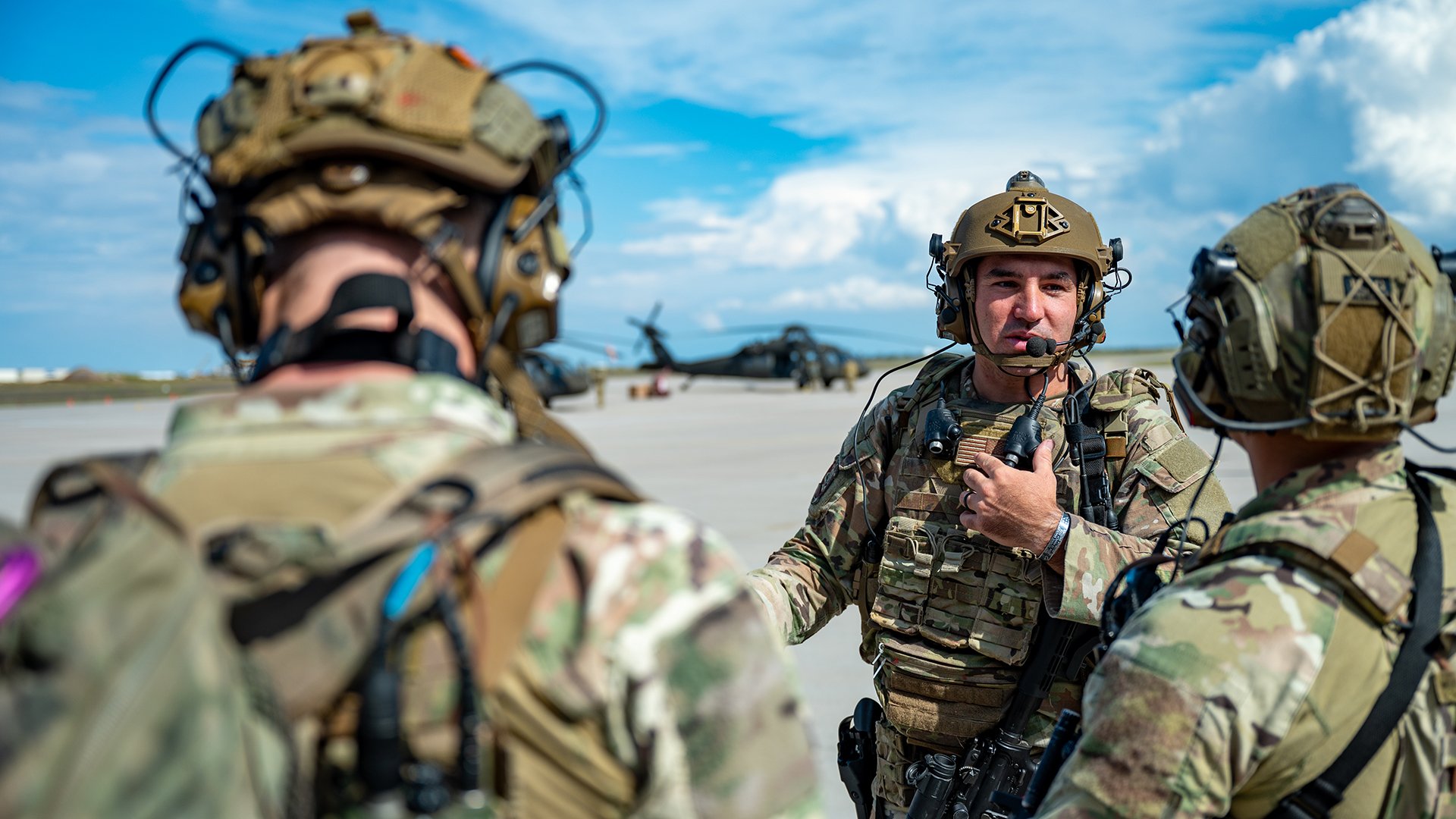
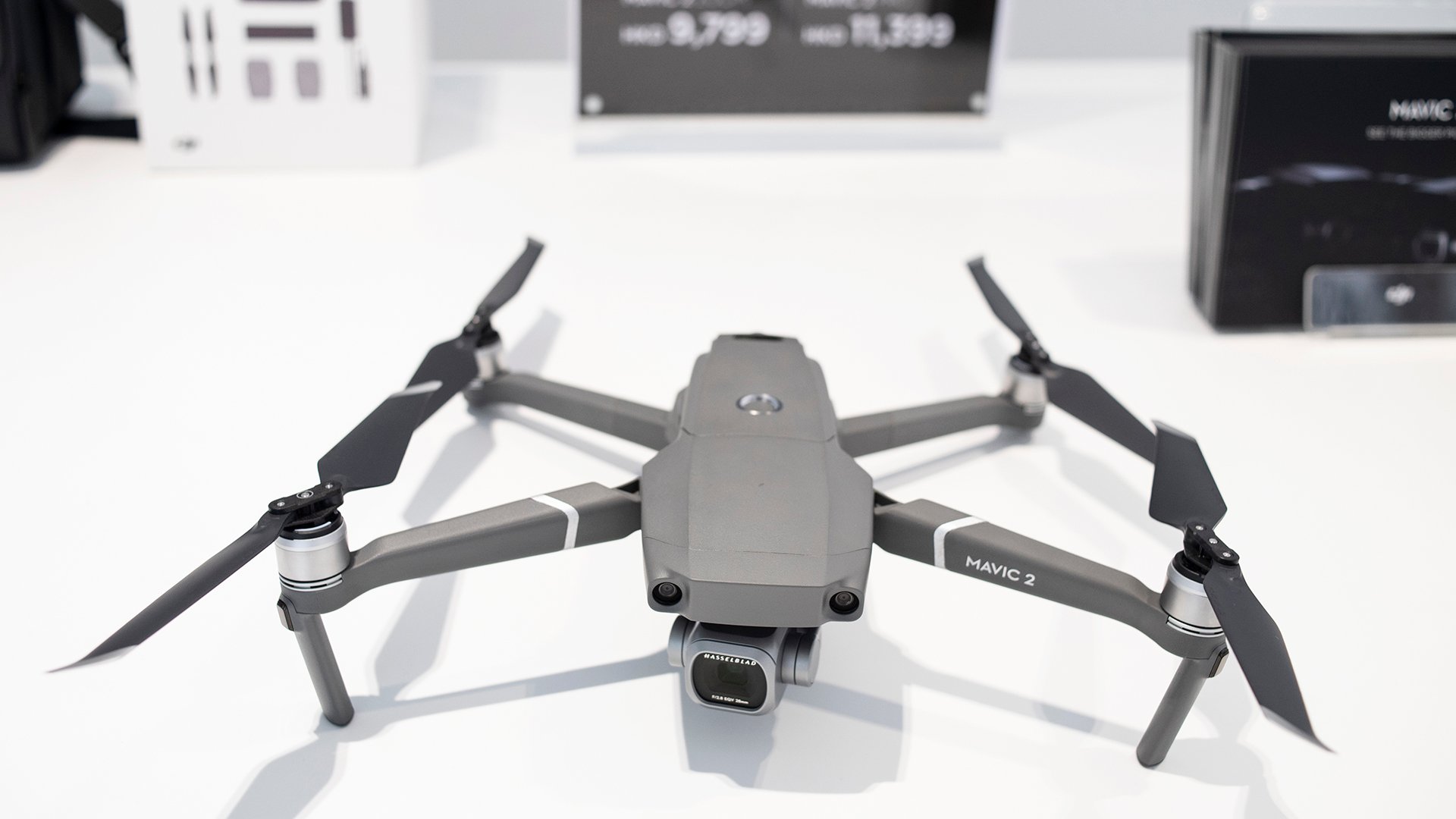
Security teams at an Air Force nuclear base may soon be training with Chinese-made drones, which are now so widely used in war zones that one expert called them ‘the new AK-47.’ According to a federal contract solicitation, nuclear security airmen at F.E. Warren Air Force Base, Wyoming, need the Chinese-made drones so they can train with the “exact devices adversaries are most likely to employ.”
First reported by Stars and Stripes, the solicitation specifically seeks “brand name DJI” drones. DJI, a company based in Shenzhen, China, builds most of the world’s civilian drones. The Air Force wants a total of six refurbished quadcopters for the 90th Missile Security Operations Squadron at F.E. Warren.
It’s not surprising that the Air Force wants to buy DJI drones given how prevalent they have been used in recent wars, said Samuel Bendett, with the Russia studies program at CNA, a Washington, D.C.-based research organization focused on national security.
“If you want to train in modern tactical drone combat, you got to train against the technology that’s used in that tactical combat, and that’s DJI,” Bendett said. “No other drone made elsewhere is going to approximate it. DJI is like the new AK-47 for combat right now: simple, easy to use, great out of the box.”
Few corners of the military are as fervent about on-base security as Air Force nuclear bases. F.E. Warren is home to the 90th Missile Wing, which maintains up to 150 launch facilities for Minuteman III intercontinental ballistic missiles. The wing falls under Air Force Global Strike Command, which has purview over nuclear missiles and bombers.
Normally, the U.S. military would use “Blue” drones, made by manufacturers that have been vetted by government agencies. But in this case, the Air Force can purchase the DJI systems under a directive that Defense Secretary Pete Hegseth issued last year, according to a document that accompanies the contract solicitation.
“Drones have become prolific in modern conflict,” a Global Strike Command spokesperson told Task & Purpose. “To ensure the protection of critical strategic assets, the 90th Missile Security Operations Squadron must train against all threats they may face. DJI Platforms account for a significant amount of the global drone commercial market, and training against specific models is critical to match capabilities to potential threats.”
The spokesperson added that any systems used for the training would be “completely isolated” from secure Defense Department networks.
Buying DJI brand drones is “an absolute operational necessity” for ensuring that airmen supporting the nuclear mission train against the “most statistically probable real-world threat” that an adversary is likely to use, according to a justification document included in the solicitation that explains why the Air Force needs this specific equipment.
DJI currently controls over 80% of the commercial drone market, and its systems have distinct features that are not included in American-made drones on the Pentagon’s Blue list, the document says.
“If these specific DJI products are not obtained, the [90th Missile Security Operations Squadron] will be severely degraded in its ability to execute its no-fail nuclear security mission,” the document says. “Relying solely on computerized data or alternative ‘Blue’ drones leaves a critical blind spot; operators and systems will remain untested against the actual [radio frequency] signatures and proprietary protocols of the world’s most prevalent drone threat. This failure to conduct realistic, real-world [counter-small unmanned aircraft systems] training directly jeopardizes installation defense and nuclear asset security.”
Officials at Malmstrom Air Force Base, Montana, which is also home to nuclear weapons, are also seeking DJI systems used to train on stopping small drones, the document says.
Loading comments…
Comments couldn’t be loaded. Please refresh the page.