
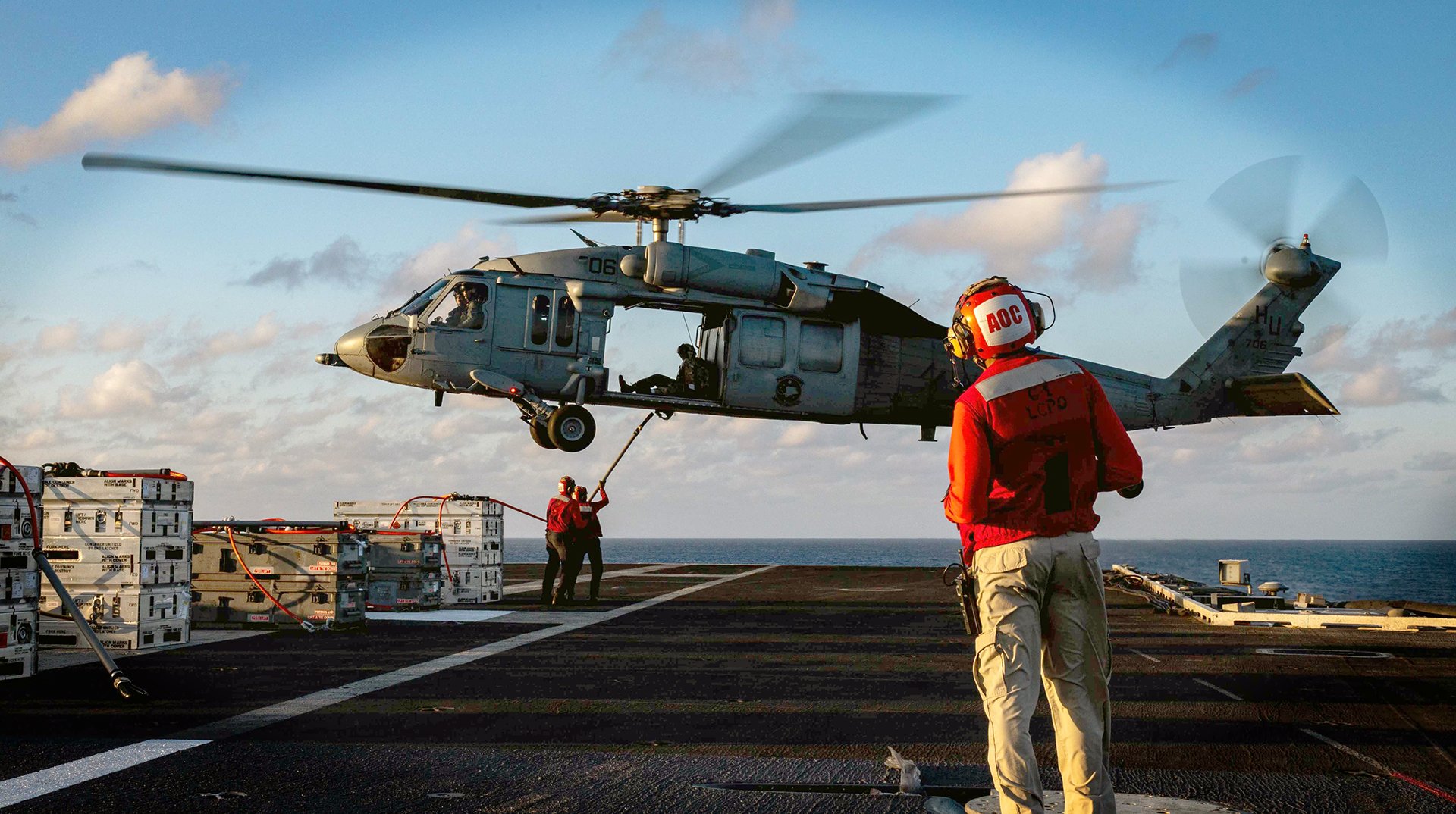
Reports of food shortages and other serious issues on a major U.S. aircraft carrier have shocked many in the public, even as the Pentagon has rushed to insist sailors on the USS Abraham Lincoln are well-supplied.
But for the Navy, the situation aboard the Lincoln is larger than just one ship and underscores the strain that attacks on logistics hubs can place on a fleet when supply chains are interrupted.
Iranian missile and drone attacks on a major U.S. base in Bahrain and a port in the United Arab Emirates have forced the Navy to bring supplies for warships like the Lincoln from locations such as Diego Garcia and Singapore, trips that can force resupply ships to sail more than 4,000 miles.
Defense officials have mostly avoided discussing the impact of the Bahrain and UAE closures on Navy ships engaged in combat with Iran, but several naval experts told Task & Purpose that any struggles with the food and supplies at sea likely trace to the closed ports.
Longer supply lines, delayed deliveries
For years, the U.S. military has been able to resupply its ships operating in the Middle East from ports and stockpiles within the Persian Gulf, said retired Navy Capt. Bradley Martin, a senior policy researcher with the RAND Corporation.
“We’ve of course known for a long time that these ports and routes inside the Persian Gulf might be vulnerable, but it’s a vulnerability we chose to accept,” Martin told Task & Purpose.
Top Stories This Week
The Iran war has threatened these hubs and severely curtailed the U.S. military’s ability to move supply ships through the Strait of Hormuz, Martin said. The New York Times first reported on resupply problems caused by heavy damage to the U.S. base in Bahrain from Iranian drone and missile attacks.
“Thus, resupply had to come from ports outside the Gulf – Diego Garcia and even as far as Singapore or through the Suez Canal – which of course meant that deliveries were bound to be delayed,” Martin said. “The distance problems were likely exacerbated by insufficient numbers of combat logistics force ships and the need for combatants supporting operations to move and reposition.”
Ships can also be resupplied in ports, but the Lincoln has been at sea for more than 240 consecutive days, setting a new record during its deployment.
Getting food aboard ships
Aircraft carriers at sea typically need to be resupplied every three to six days, depending on the pace of operations, said Stephen Wills, a navalist with the Center for Maritime Strategy, a non-profit think tank and research institution in Arlington, Virginia.
The longer resupply routes that have resulted from the Iran War could affect deliveries of perishable items to U.S. military ships in the Middle East, Wills told Task & Purpose.
“Generally, your aircraft carrier is pretty well loaded out with what I call dry goods stuff, like macaroni and cheese, mashed potatoes, various frozen and other proteins,” Wills said. “So they’ve got food, but the problem sometimes is there are interruptions in the flow of fresh fruit and vegetables, and more fresher foods that you expect to see too.”
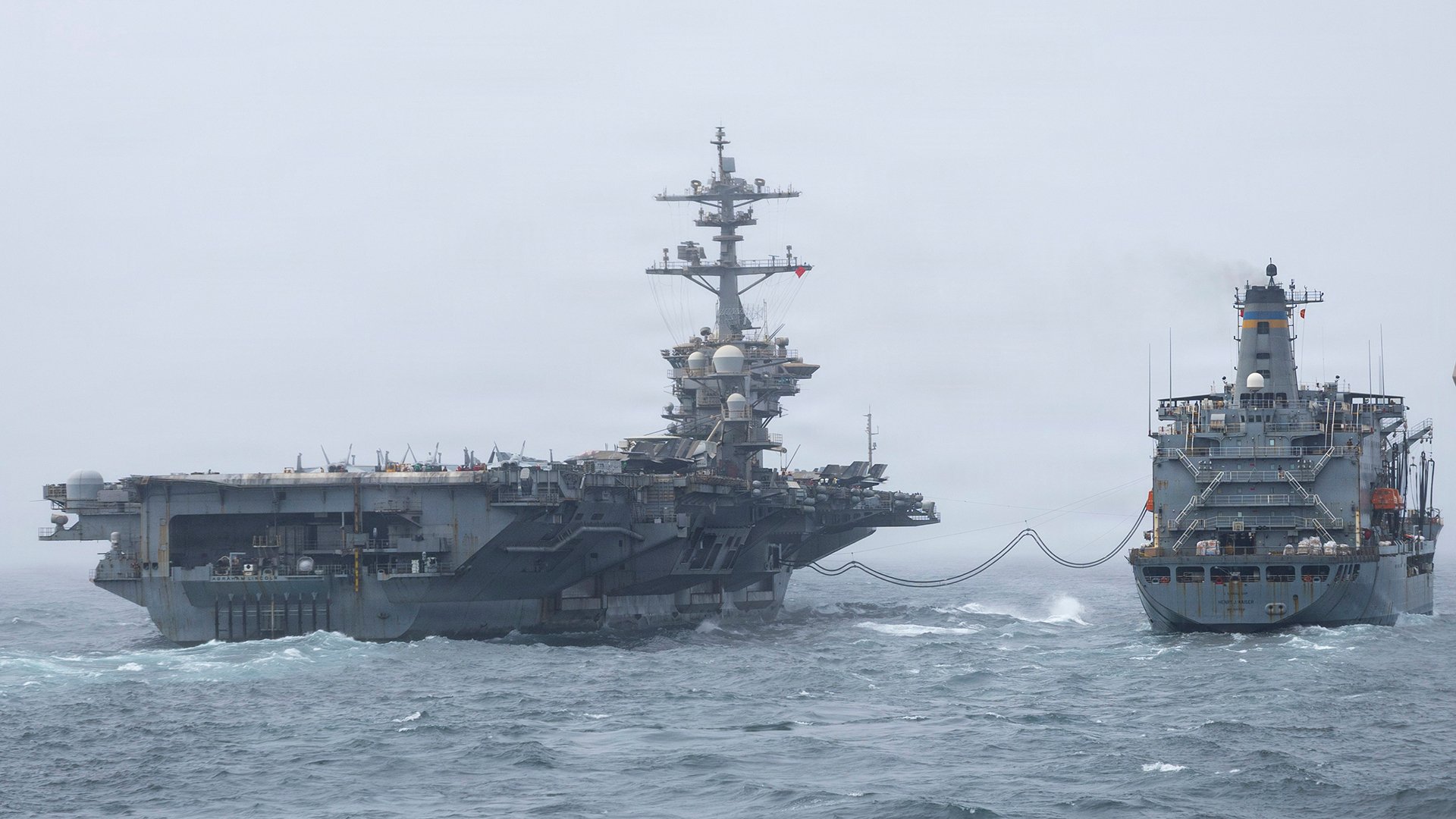
Carriers are also supplied by air, but there are limits to how much cargo each aircraft can bring aboard, said retired Navy Capt. Brent Sadler, of the Heritage Foundation think tank in Washington, D.C.
Another issue is how far an aircraft carrier is from the coast, Sadler told Task & Purpose. The farther away from land the ship is, the fewer aircraft can resupply it per day. But getting closer to shore in a combat zone puts U.S. troops within range of enemy weapons.
The Lincoln, which is being replaced this month by the USS George Washington, has taken part in U.S. military operations against Iran and a blockade against Iranian ports since the start of the war. USA Today first reported in April about issues with the quantity and quality of food available to the Lincoln’s crew. Families of sailors and Marines assigned to the carrier recently told MS Now that their loved ones had food shortages aboard the ship.
Defense officials have disputed such reports. Adm. Brad Cooper, head of U.S. Central Command, even took the step of penning an Aug. 16 commentary for the Wall Street Journal about his recent visit to the ship that, “Issues related to food, hot water and other concerns raised months ago were addressed by leadership and resolved,” he wrote without elaboration on what those concerns were or their solutions.
In the case of the Lincoln, Salder said he believes the food issues aboard the ship stabilized in about two weeks, which is how much time it takes to move supplies from Japan and Singapore to the Middle East. He added that the Navy’s efforts to adjust its supply lines provide a preview of what a conflict in the Pacific region might look like.
“If there’s going to be a war in East Asia, it’s going to happen like what just happened with Iran,” Sadler said. “It’s going to happen quick. We’re going to have to adapt. We’re going to have to have supply chains already in place that we can fall back on.”
Conditions ‘not exaggerated’
When asked about the issues that experts raised about the reported food shortages aboard the Lincoln, the Navy referred Task & Purpose to Acting Navy Secretary Hung Cao’s Aug. 14 statement, which reads in part: “Meal plans were adjusted when fresh resupply was unavailable, without a single meal being missed”.
But the mother of a sailor currently serving aboard the Lincoln said that several of the crew’s families are coming forward with stories about problems their loved ones are facing.
“Whenever you have this many families saying the same exact thing, you probably need to start listening to the families,” said the mother, who spoke to Task & Purpose on condition of anonymity.
She said her son told her in March that food available to the ship’s crew was limited, but the situation had improved since then.
“So, I think the food issues have resolved once the food issues became national news,” she said.
Still, she said she is concerned about her son, who has told her that the Lincoln’s long deployment has sapped the crew’s morale. He also told her that one of the ship’s sailors had tried to jump overboard but was stopped, and another crew member was rescued after jumping into the water.
She also took issue with U.S. government officials’ comments downplaying the difficulties facing the Lincoln’s crew.
“The sailors aren’t the ones complaining,” she said. “They’re still doing their job. They are still proud to serve our country. I know my son is. He’s still a proud American. He loves his country. He does what the mission calls for, but it’s not exaggerated.”
Loading comments…
Comments couldn’t be loaded. Please refresh the page.