
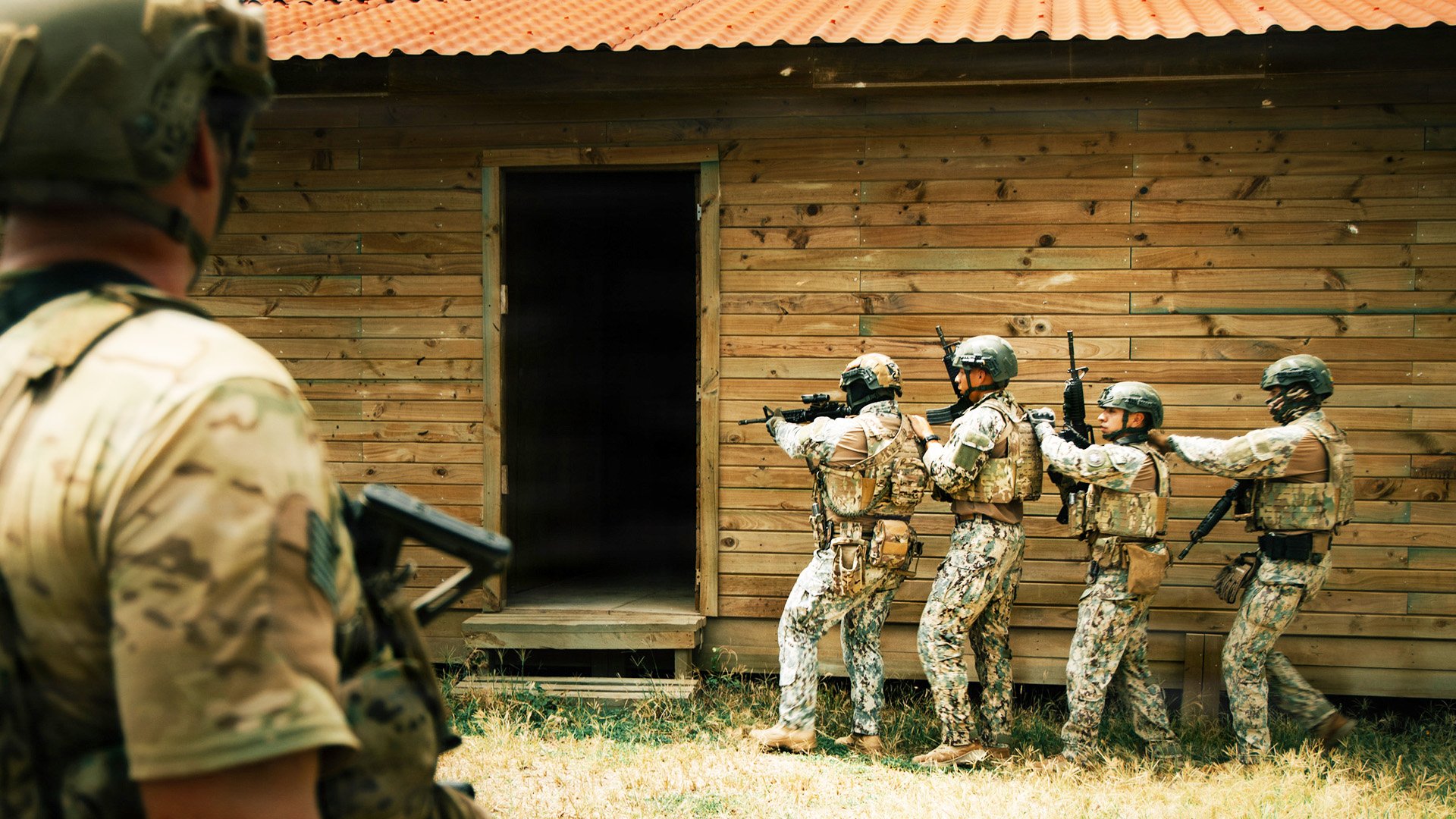
American Special Forces are conducting joint operations with local troops against drug cartels, and more U.S. military assets are incoming, Ecuadorian officials said last week. The announcements come nearly six months after the U.S. and Ecuador carried out their first joint strike against a group inside the country, which officials labeled as drug traffickers.
A local official said U.S. Green Berets have been operating in the Esmeraldas province, carrying out joint operations with Ecuadorian forces, according to reports from Agence France-Press and UPI. The region borders Colombia and has been hit with violence tied to the drug trade. Provincial governor Juan Jaramillo told reporters last week about the U.S. troops’ presence.
“We are with the 7th (Special Forces) Group of the U.S. Army… we are working together in the fight against narcoterrorism,” Jaramillo told reporters, per AFP.
The 7th Special Forces Group is based at Eglin Air Force Base, Florida, and focuses on Latin America as its primary responsibility. Jaramillo did not say how many U.S. soldiers were in the province or who they are targeting.
The involvement of the Green Berets in direct operations against drug cartels comes as the U.S. has been surging military power into Ecuador. On Aug. 20, Ecuadorian Defense Minister Gian Carlo Loffredo said that two U.S. warships, equipped with interceptor boats, will be patrolling out of the port city of Manta.
According to fleet trackers and announcements from the Navy, two American ships recently entered the eastern Pacific near Ecuador. The USS San Antonio transited through the Panama Canal into the eastern Pacific at the start of the month. The Arleigh Burke-class destroyer USS Gridley also entered the Pacific this month, assigned to Joint Task Force-Western Hemisphere.
On Sunday, U.S. forces fired on a vessel in the eastern Pacific allegedly trafficking narcotics. The strike killed two people, according to U.S. Southern Command, and was the first strike on alleged drug boats since June. It was the first confirmed boat strike under Joint Task Force Western Hemisphere, which replaced Joint Task Force-Southern Spear.
Ecuadorian officials have been more open about apparent U.S. involvement than the U.S. military. SOUTHCOM declined to comment on the reports from Ecuador, citing operational security reasons, as did the Navy’s 4th Fleet.
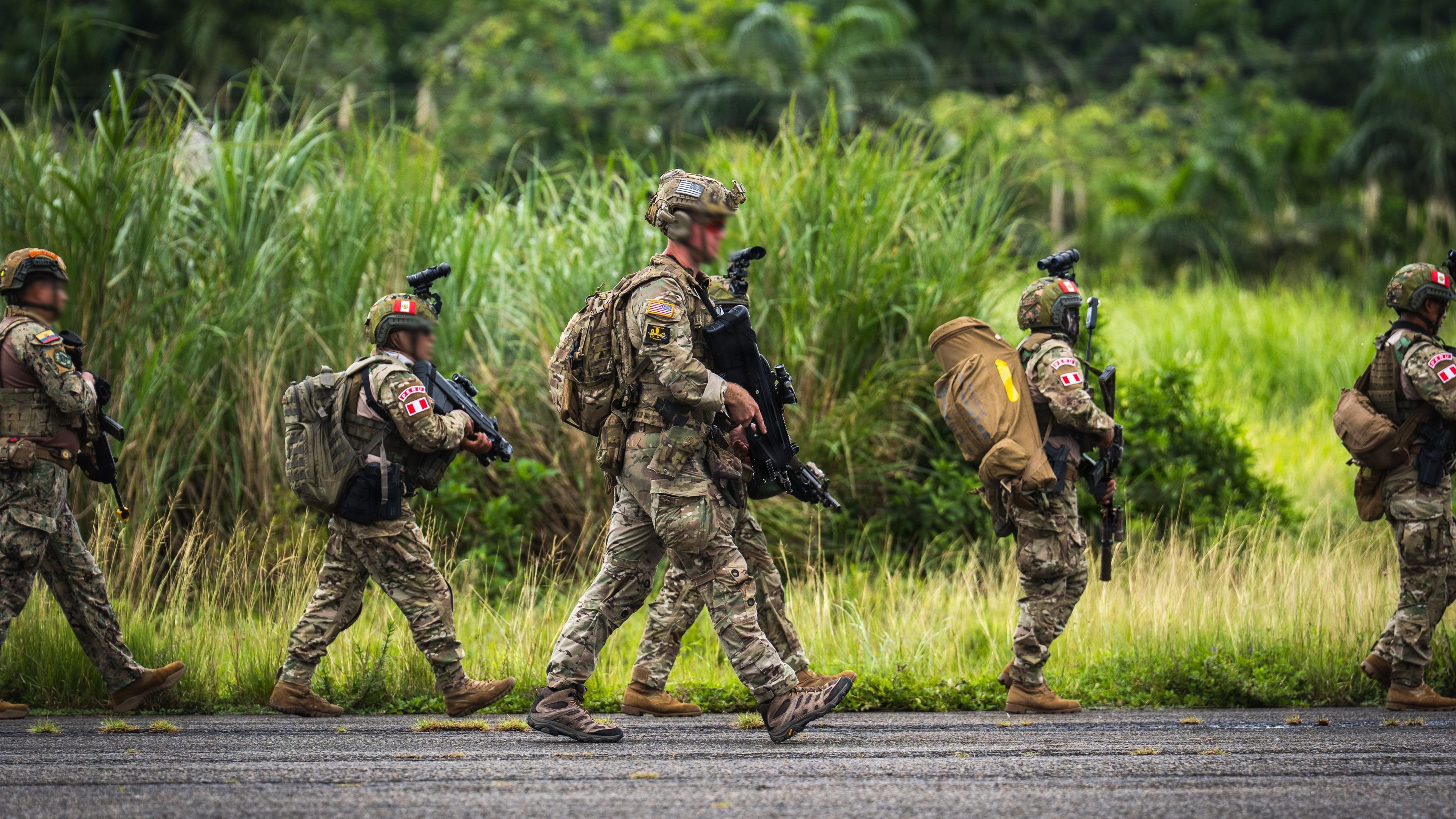
Members of 7th Special Forces Group have been in Ecuador in recent months, training in May with Ecuadorian troops as part of a five-week Joint Combined Exchange Training.
The first land strikes
The campaign targeting traffickers — who the Trump administration has called “narco-terrorists” — has included strikes on small boats that the administration has said are moving drugs. The U.S. has offered almost no evidence about any of the boats struck in the campaign that has killed more than 220 people since September 2025.
In March 2026, the U.S. carried out an airstrike on land, hitting an alleged training camp inside Ecuador near the Colombian border. It was the first direct U.S. action in the country, coming days after SOUTHCOM announced joint operations. Since then, there have not been reported U.S. military operations inside Ecuador until this past week’s comments by Jaramillo.
In June, SOUTHCOM carried out a “lethal kinetic strike” inside Venezuela, allegedly killing Hector Rusthenford Guerrero Flores, the head of the Tren de Aragua street gang. The operation was the first inside Venezuela since American troops captured Venezuelan President Nicolás Maduro.
This spring, more than 1,000 Marines from the 24th Marine Expeditionary Unit deployed to Puerto Rico as Littoral Combat Force-24, with the mission of disrupting “networks utilized by Designated Terrorist Organizations and narco-terrorists.” Some of those Marines are onboard the USS San Antonio.
New mission, new partnerships
In June, Defense Secretary Pete Hegseth said the U.S. was prepared to carry out additional strikes on land. This month, Hegseth said that U.S. forces in the region are “focused on military capabilities against real threats who need to be deterred and defeated.”
Ecuador has been a major part of the Trump administration’s military escalations in Latin America. President Daniel Noboa has been a close ally, agreeing to grant Department of Defense personnel visa-free entry into the country for up to 180 days per year.
Loading comments…
Comments couldn’t be loaded. Please refresh the page.