
The United States military hasn’t operated a seaplane, or amphibious flying boat, since the Coast Guard retired the HU-16 Albatross in 1983. For 73 years, this kind of aircraft had been essential for everything from search and rescue to resupply. With the vast expanses of the Pacific theater in mind, an argument can be made that the versatile seaplanes of yesteryear should return to their former glory.
United States Pacific Command is made up of over one hundred million square miles of territory, which is over half the Earth. The majority of that is water. This puts a premium on land, especially airfields. Despite technological leaps that make crossing thousands of miles faster, and arguably easier, aviators still face some of the same hurdles today as they did back in World War II.
As leaders plan for a potential fight in the region, new doctrine like the Marines’ Expeditionary Advanced Base Operations and the Army’s Multi-Domain Operations all consider the challenge of maintaining logistics for small and dispersed teams in austere conditions, with little infrastructure for traditional cargo aircraft or watercraft.
The situation looks even more dire when you consider that existing airfields and ports would be high-value targets in the opening moments of a conflict, further complicating logistics.
Top Stories This Week
To prepare for that reality, the Marines are purchasing a new medium landing ship they’re calling the McClung Class, and the Army is under pressure to update its amphibious fleet. An emphasis is also being placed on versatile aircraft like the MV-22 Osprey and the upcoming MV-75 for the Army, which are capable of hauling cargo farther than traditional helicopters.
There have also been recent efforts by the Pentagon to build a flying boat. In 2023, the Defense Advanced Research Projects Agency selected General Atomics and Aurora Flight Sciences to develop designs for the “Liberty Lifter.” This massive seaplane would have matched the C-17’s 170,900-pound cargo capacity and operate primarily from the water. Around the same time, the Air Force was working on its own idea for a C-130 floatplane that leaders said would fly in 2023.
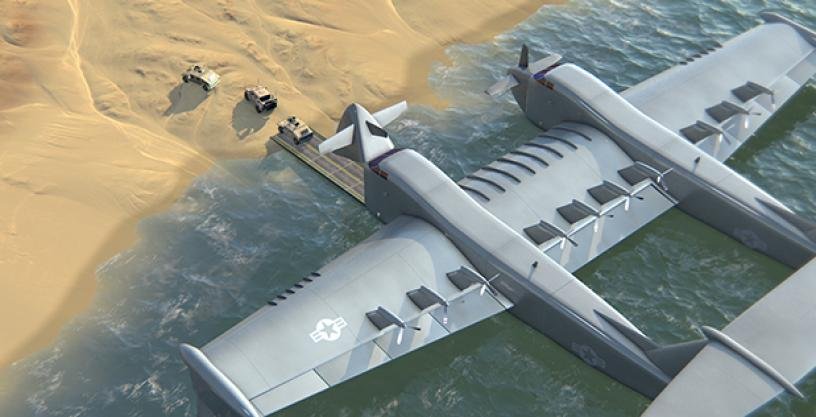
Despite the implied need for a seaplane, neither idea would see the water. And there is a reasonable argument that by the time the Pentagon could develop a new one, we may not need it anymore. Drones are increasingly taking over many of the missions that once made flying boats so valuable.
From the sky, the MQ-9B SeaGuardian can stay aloft for more than 40 hours and patrol thousands of square miles. These can be used to find downed aviators or sailors from a stricken vessel. And with a growing U.S. Navy drone boat fleet, unmanned surface vessels can be dispatched to complete the rescue, as was the case in June when an Apache went down while patrolling near Oman.
Search and rescue is a primary mission of modern flying boats, but as we have seen, unmanned vehicles can accomplish that task without sending more humans into harm’s way. Drones are also being used or developed for resupply, medical evacuations, and submarine hunting — all things that seaplanes are used for.
But many of those unmanned options are not yet mature technologies. Were we to develop our own seaplane, by the time it was operational, drones are likely to have closed the capabilities gap. Which is why we should just buy Japan’s US-2.
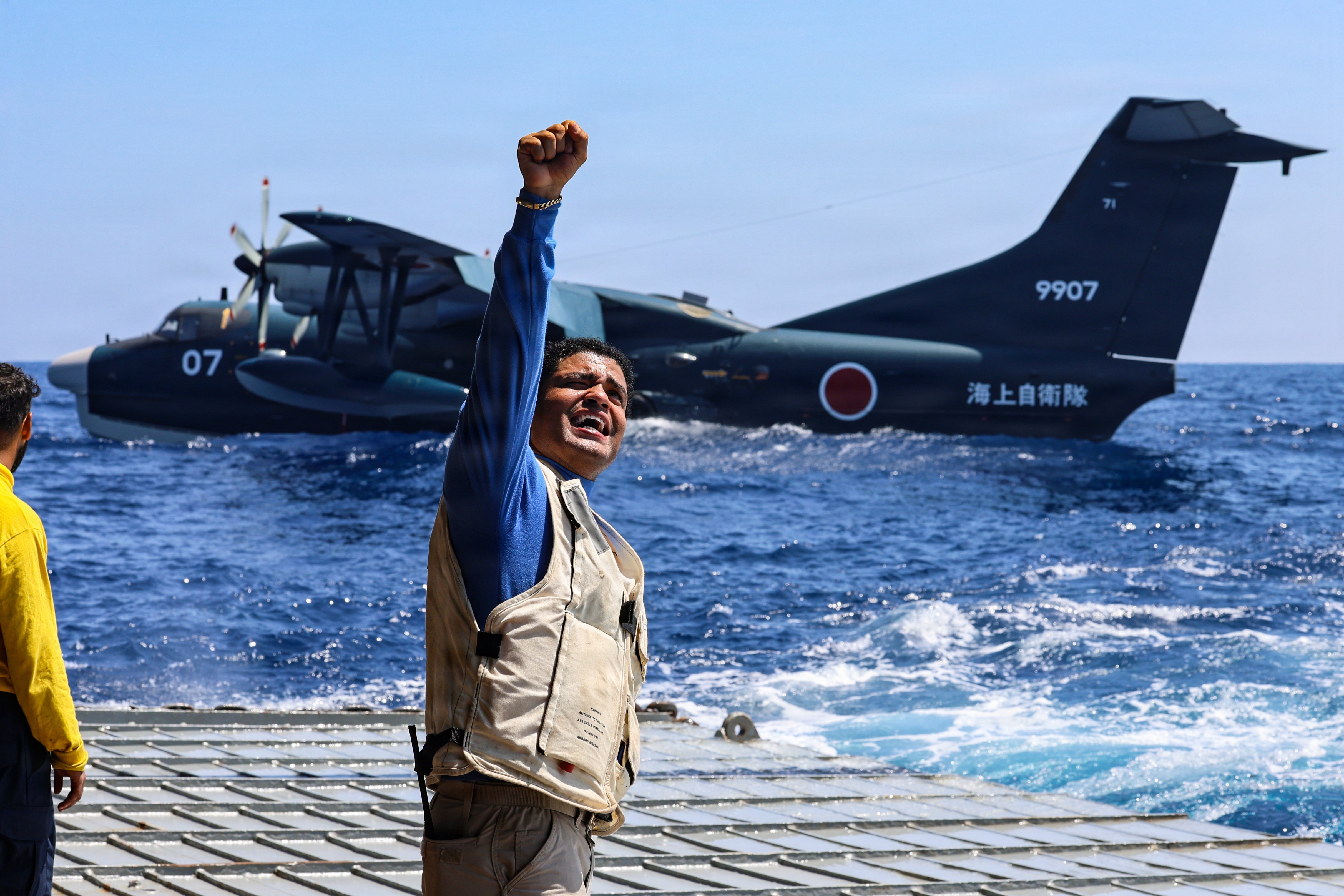
The US-2 is built by ShinMaywa Industries with a design lineage going back to the Albatross the Coast Guard flew. It has a 2,900-mile range, can fly as fast as 330 miles per hour, go as high as 30,000 feet, and only needs about 900 feet of water to take off and about 1,100 to land. The most remarkable trait the US-2 possesses is that it can fly as slowly as 55 miles per hour, thanks to a fifth engine that runs a compressor to blow air over the control surfaces. It can also operate in waves as high as 10 feet, which is a third of the aircraft’s height.
Most importantly, though, it is flown by Japan’s Maritime Self-Defense Force, and U.S. service members have trained alongside the aircraft. A small U.S. fleet would help solve several of the problems that planners are facing in the Pacific theater, and Japan has also started opening up its defense industry to more exports.
We get deeper into the need for a seaplane and Japan’s US-2 on our YouTube channel, which you can watch here.
Loading comments…
Comments couldn’t be loaded. Please refresh the page.