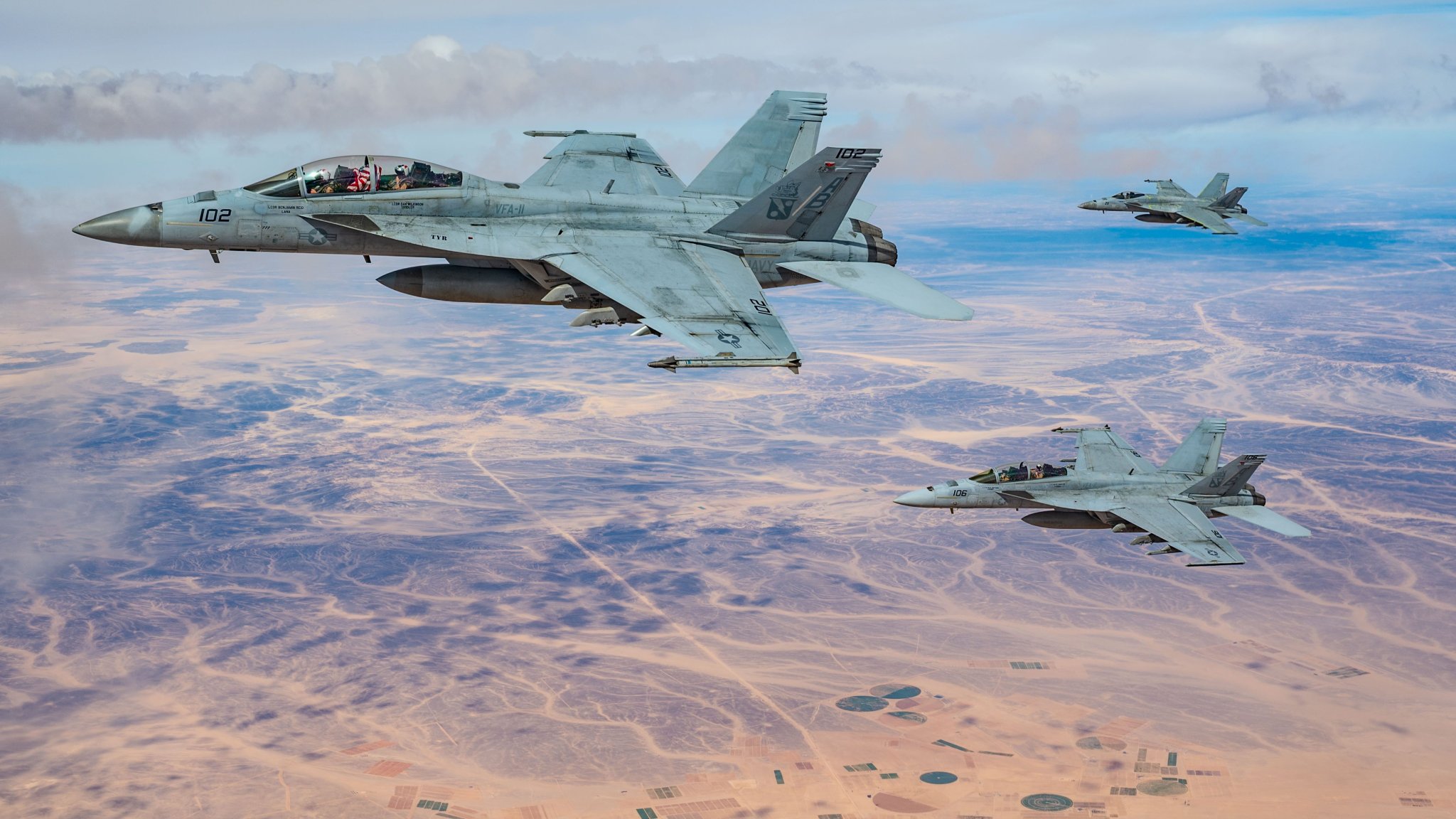
President Donald Trump recently hinted that he may revert the Department of Defense back to the Department of War, an old title dating back to 1789.
“It used to be called the Department of War and it had a stronger sound. And as you know, we won World War I, we won World War II. We won everything. Now we have a Department of Defense with defenders,” Trump said at an Aug. 25 Oval Office event, adding that he didn’t want “to be defense only” but also “offense too.”
“It’s coming, sir,” Secretary of Defense Pete Hegseth said in response.
It wasn’t the first time Trump insinuated that a name change was on the horizon. In a July 11 Truth Social post and last month during a NATO summit, Trump referred to Hegseth as the “Secretary of War.”
It’s the latest name change floated by Trump — a trend that’s become a hallmark of the second Trump Administration, especially when it comes to the Pentagon.
During the first few months of the new administration, Hegseth announced that Army bases originally named for Confederate leaders but were renamed in the wake of 2020 diversity initiatives would return to their original namesakes. However, as the name changes for seven bases were announced, they came with a twist: While the names were fundamentally the same, they were attributed to different soldiers with the same last names.
Top Stories This Week
Department of Defense officials did not have additional information about the pending name change — something that would likely require the help of Congress. It’s unclear if the changes would also include formal restructuring.
The new name would mean changing references to the Defense Department in memos, official manuals, online links and in-person signs across the country.
“The DOD has been writing things now for 70-some-odd years. That’s a large volume of stuff and labels, and for God help us web links,” said Wayne Lee, a military history professor at the University of North Carolina, Chapel Hill.
Officials have not provided any cost estimates for the name change, but to get a sense of similar efforts, the congressionally mandated Naming Commission established to transform military installations and assets honoring Confederate leaders, estimated the costs at nearly $62.5 million.
When the War Department became the Defense Department
While the name change would revert back to an old title, Lee said it’s fundamentally different from the War Department of the 18th century.
“There was never a unified cabinet level defense secretary of war. There was a secretary of war, but that was the secretary of the Army,” Lee said. “The War Department did not run the nation’s wars. It ran the nation’s Army at war.”
The War Department was established in August 1789 after President George Washington signed it into law. He nominated his aid during the American Revolution as secretary of war under the Articles of Confederation, Henry Knox, to lead the new agency.
While the Department of Defense of today is made up of five branches — the Army, Navy, Marine Corps, Air Force and most recently, the Space Force — they all have histories distinct from the original “War Department.”
The U.S. had used naval forces during the Revolutionary War against Britain, but after the conflict, America, which was just “a loose arrangement of sovereign states,” and did not collect enough taxes to sustain a national navy, according to U.S. Navy history. There were various lobbying efforts to stand up a formal navy, but they didn’t take hold until a staunch supporter, President John Adams, officially established the Department of the Navy in 1798.
The Marine Corps was first established in November 1775 by the Second Continental Congress and continued through the Revolutionary War until “the last of the Navy’s ships were sold, the Continental Navy and Marines went out of existence,” according to service history. After the war, the Marine Corps was formally re-established in July 1798.
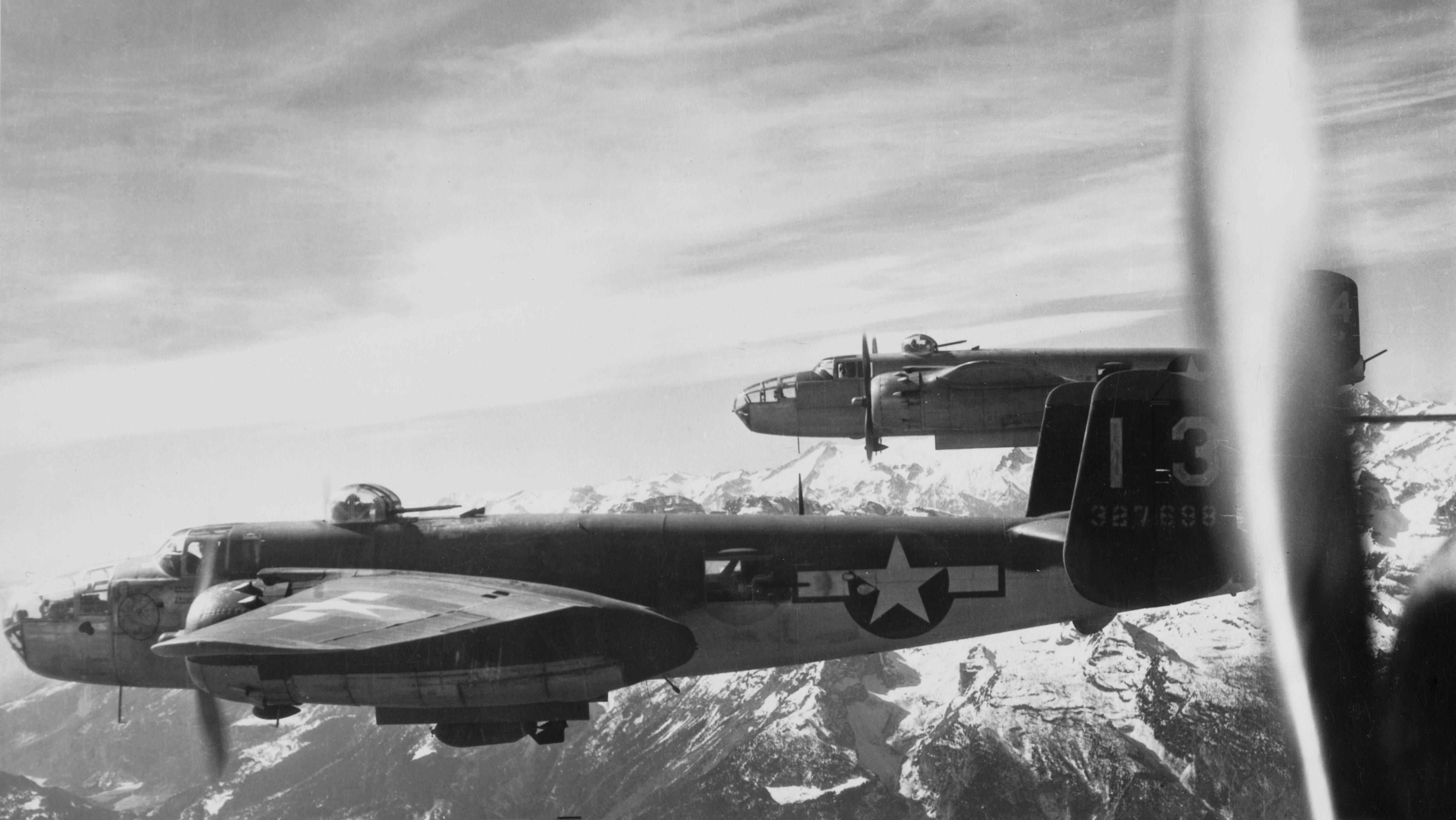
The Air Force was later established in 1947 by President Harry Truman as a successor to the Army’s Air Corps which played a vital role during World War II.
World War II also prompted U.S. leaders to take a look at the entire military enterprise when it became an “obvious problem” that modern wars would require combined operations among the services, Lee said. Leaders at the time saw these problems during the war but thought it would be “too disruptive” to make sweeping restructuring decisions, he added.
“The Cold War is barely even getting started in ‘47, but they can see it,” Lee said. “There’s a recognition that the United States is going to continue to have forces deployed on a global level and in some way and that just is going to require a more unified command structure.”
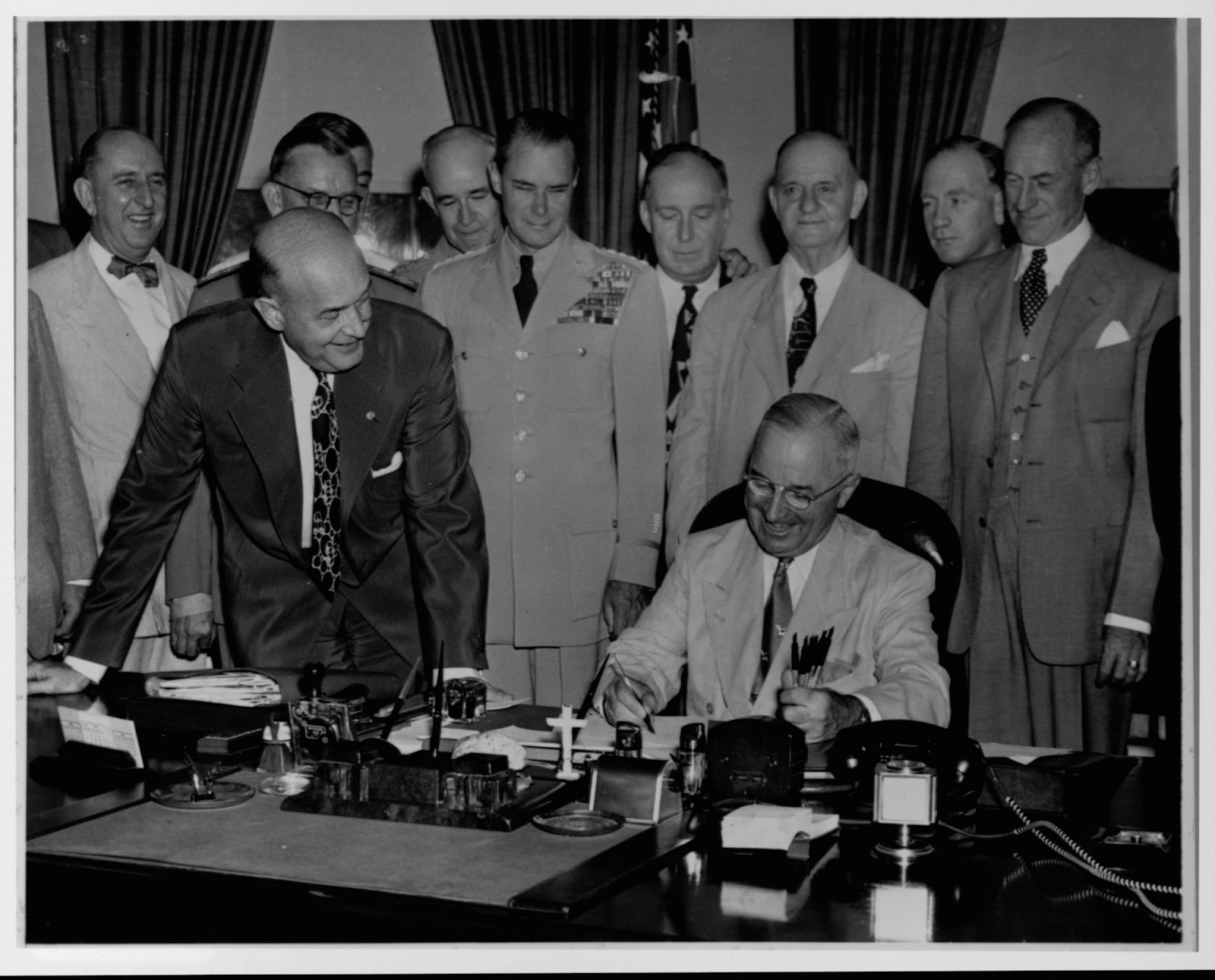
In an effort to bring unity to the armed services, President Truman signed the National Security Act in July 1947. The law merged the Navy, War Departments (Army) and Air Force into the National Military Establishment and put a civilian defense secretary at the helm who also oversaw the Joint Chiefs of Staff. It also created the Central Intelligence Agency, the National Security Agency and the National Security Resources Board, according to a Pentagon history page.
Two years later, in August 1949, the National Security Act was amended, changing the title to the Department of Defense and bringing the Army, Navy and Air Force secretaries under the defense secretary. The role of Chairman of the Joint Chiefs of Staff was also established.
After signing the amended act on Aug. 10, 1949, Truman said it represented a “unification” of the armed forces and would create “increased efficiency and economy and greater coordination of our military forces.”
This created an “ongoing inter-service rivalry” in which the military branches “sort of press their case for how much of the budget they want to the Department of Defense.” This then gets “mediated by Congress,” Lee said about the modern-day structure of the military.
However, Lee also said a similar battle existed before the services were put under one department, but in some ways it was “worse” because the bureaus inside the Army “competed for resources with each other and mostly competed to maintain their autonomy against the commanding general.”
But that competition, he said, was “wiped out by the experience of World War II,” which gave way to the Department of Defense — a title, and organizational structure, that has remained in place for 76 years.