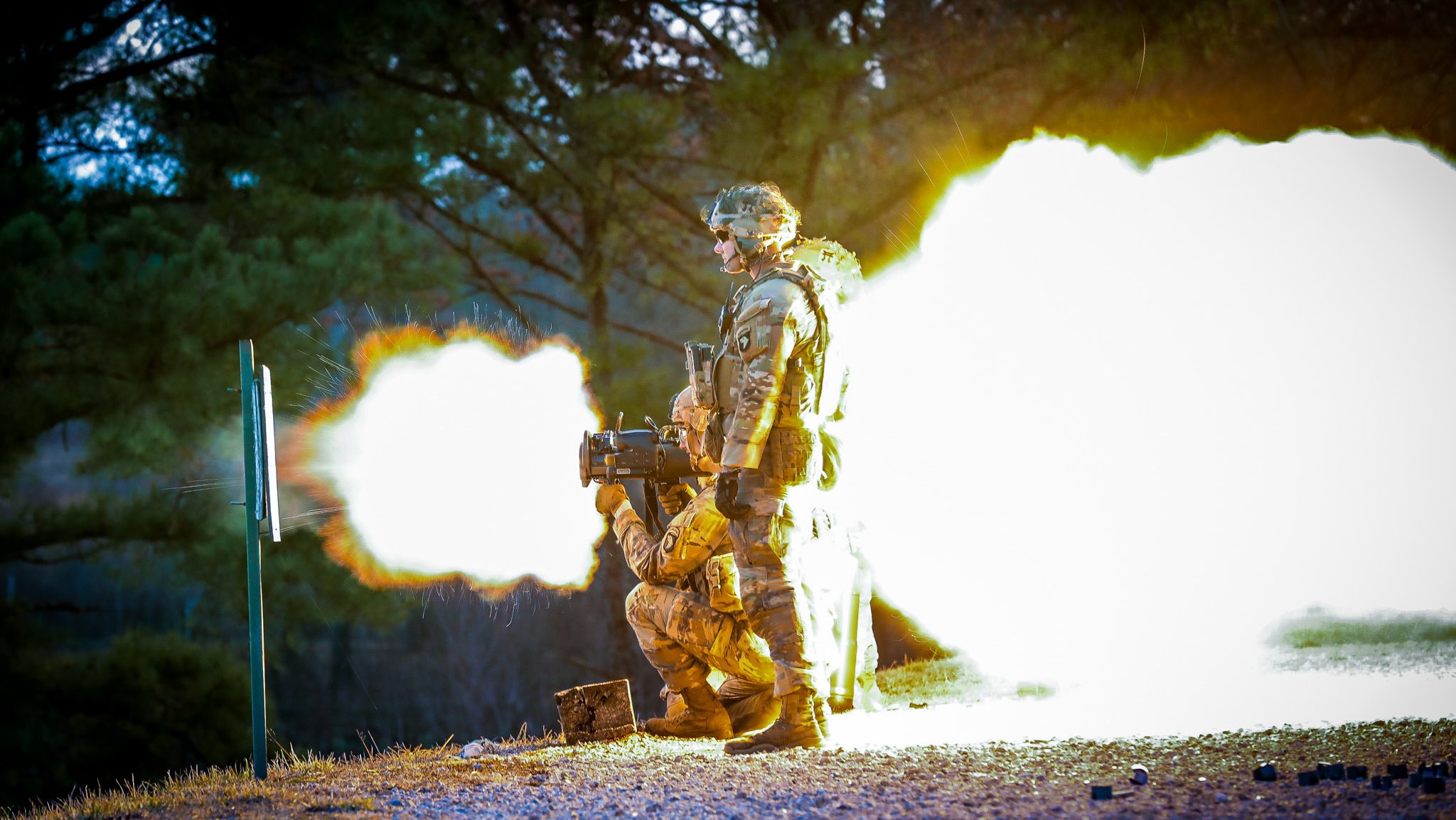
A new congressional measure could require that the military services assign blast safety officers to help enforce safety rules and teach troops about the health risks of blast overpressure caused by heavy weapons during training.
The measure comes as the mental health and physical safety risks of repeated exposures to blasts from heavy artillery and explosives have caught the attention of Congress and the Department of Defense. In August 2024, military officials released new rules with recommended safe distances for troops firing mortars, howitzers, rifles and breaching explosives.
The proposal, included in the fiscal year 2026 national defense bill, ratchets up the enforcement of blast exposure mitigation by requiring blast safety officers to make sure their teammates wear the right personal protective equipment and stand at the established safe distances from certain weapon systems.
The policy was drafted by Todd Strader, a former Army mortarman who runs OverPressured LLC, an advocacy organization dedicated to driving awareness around blast overpressure risks and safety measures.
Strader said there is enough research and momentum within the DoD that recognizes the significance of blast overpressure, but now there needs to be specific actions taken against it. He compared it to the NFL’s new rules and the culture shift that took place after years of research highlighted the devastating effects of brain injuries among players.
“In the NFL, that led to better protective gear, better helmets, stiffer penalties, better training — guys are more aware of their brain health,” Strader said.
While the military already has troops who act as safety officers at ranges for units training with heavy weapons and explosives, Strader says they are “very preoccupied” with their current duties, and it’s “not realistic” to add more to their plates like checking blast sensors, logging data, and overseeing the mitigation techniques happening during the training itself.
Top Stories This Week
“They usually have a walkie-talkie in each hand, coordinating with ammo, coordinating with these people, trying to get the training objectives met,” Strader said. “A blast safety officer would be that additional personnel who can — when the trainees arrive to the range — give them a quick briefing on blast overpressure and the hazards and the potential consequences.”
According to the defense bill measure, blast safety officers would be tasked with coordinating with other safety officers on existing protocols, advising on range designs, operations, and making modifications to improve safety. If passed into law, the measure requires that the branches put blast safety officers in place by Sept. 30, 2026.
Blast overpressure, according to the Defense Health Agency, includes the shockwaves generated by explosions and ammunition from heavy weapons during combat and training. Exposure is categorized as low-level, or acute (single or short-term), to chronic (repetitive or continuous), and can have health impacts that range from headaches, decreased reaction times, to attention difficulties and memory loss in acute or chronic situations.
The new measure would require that blast safety officers coordinate with mental health providers to ensure proper medical follow-ups for troops who display symptoms and monitor the data collected by wearable sensors used to study overpressure exposure. That information would be logged for DoD officials to track long-term risk assessments and medical surveillance, according to the policy.
“In a perfect world, a soldier is wearing his blast sensor. The blast safety officer is monitoring everybody’s sensors. He sees that this soldier got an exceptionally high exposure, he pulls the soldier off the range and then brings the medic over and the medic does their concussion assessment protocol,” Strader said. “They decide whether that soldier is ready to keep training or he should maybe sit out for a couple hours or he’s done for the day.”
For soldiers, their blast overpressure exposure can vary depending on the job, like infantry, armor, special operations or artillery, because of training frequency and weapon systems they use, soldiers told Task & Purpose in June. According to the defense bill measure, the service secretaries would assign blast safety officers where “hazards are reasonably anticipated and in such a manner so as to ensure coverage across operational environments.”
“Now the NFL is a better NFL,” Strader said. “The game is better because of it and the same thing can happen in the Army.”