For as long as troops have loaded bombs onto planes, they’ve marked them with scrawled messages or even their own names.
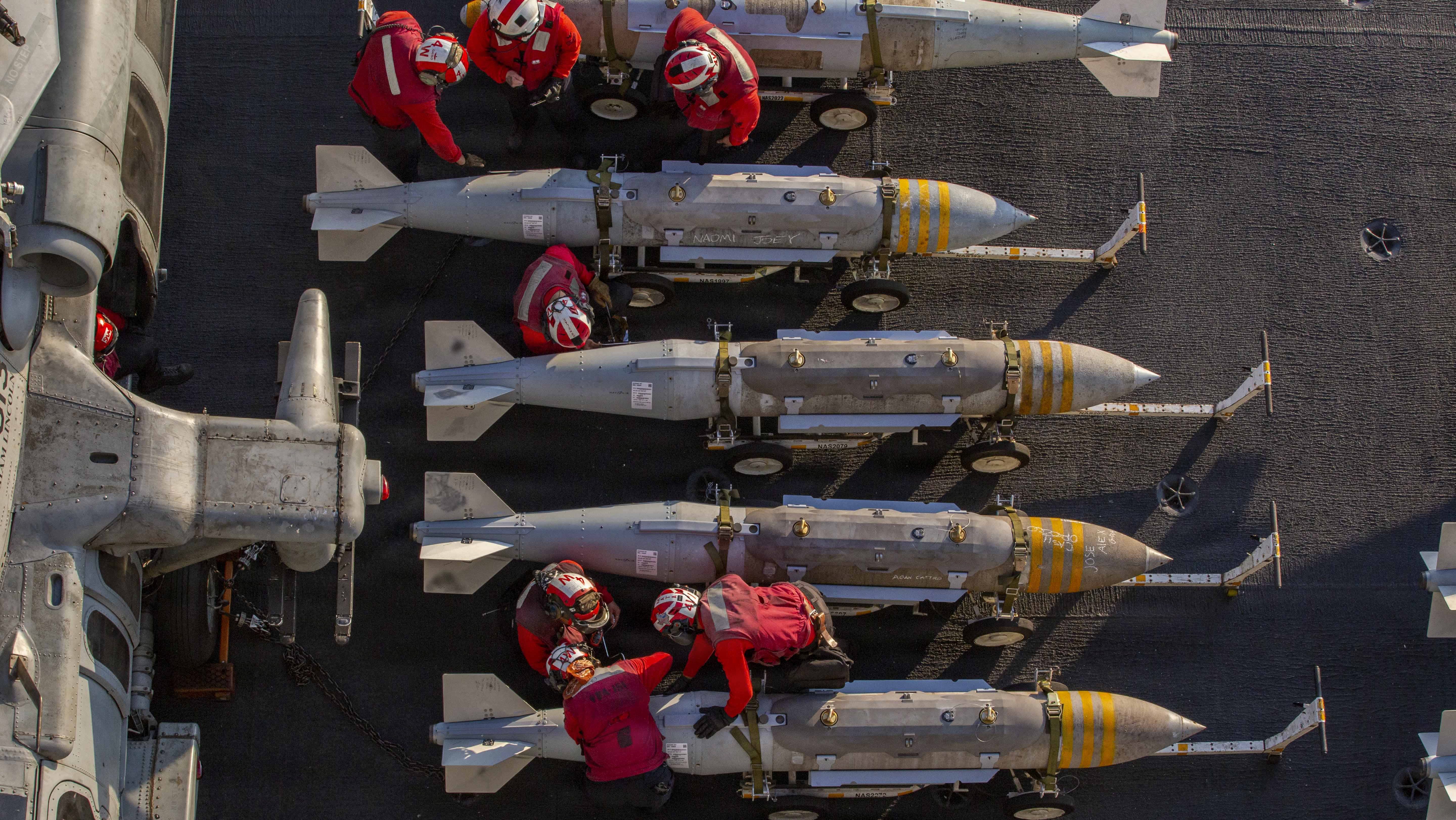
That tradition appeared to continue this week among sailors on the USS Abraham Lincoln, as pictures released by U.S. Central Command showed. A series of photos posted on Department of Defense websites showed sailors on the Lincoln arranging GBU-31 bombs on the ship’s deck, in preparation for loading onto an F/A–18 strike fighter. Navy Aviation Ordnancemen, or AOs, huddled over the weapons in their distinctive red vests.
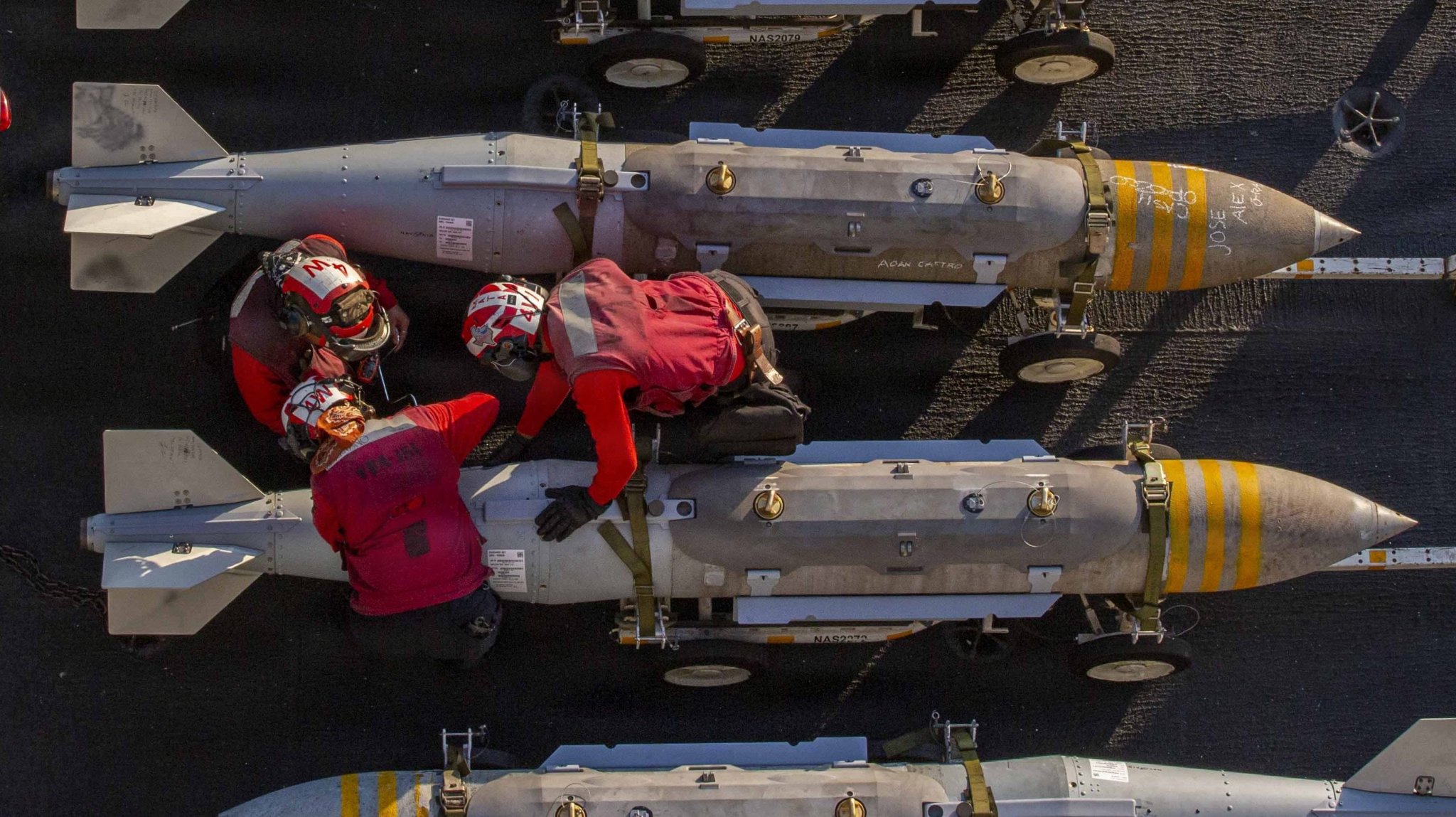
Visible on the noses and flanks of several of the bombs are names and possibly off-hand messages, almost certainly scrawled with chalk by either the AOs or other sailors below deck who prepared the weapons. Several names are visible, including Olivia, Jose, Alex and Adam.
Whether those names belong to the AOs in the photos is unclear, but their red vests mark them as ordnance troops, who will tell you without prompting “IYAOYAS,” which stands for “if you ain’t ordnance you ain’t shit”. AOs are the only sailors on an aircraft carrier flight deck authorized to move and load weapons — including bombs and missiles, air-launched torpedoes, mines, sonobouys, pyrotechnics and ammunition — to and from aircraft.
As We Are The Mighty documented, writing messages on bombs extends back thousands of years, as artifacts collected by the British Museum prove. At least one stone used in Greek catapults has been found etched with “dexai,” Greek for “Catch.”
Fast forward a few centuries, and you’ll find graffiti on artillery shells in World War I, bombs in World War II, and messages about the World Trade Center and even Game of Thrones etched on munitions in the post-9/11 wars.
Most recently, Ukrainian artillery crews put an internet spin on the practice, putting messages on shells requested by anyone who made an online donation.
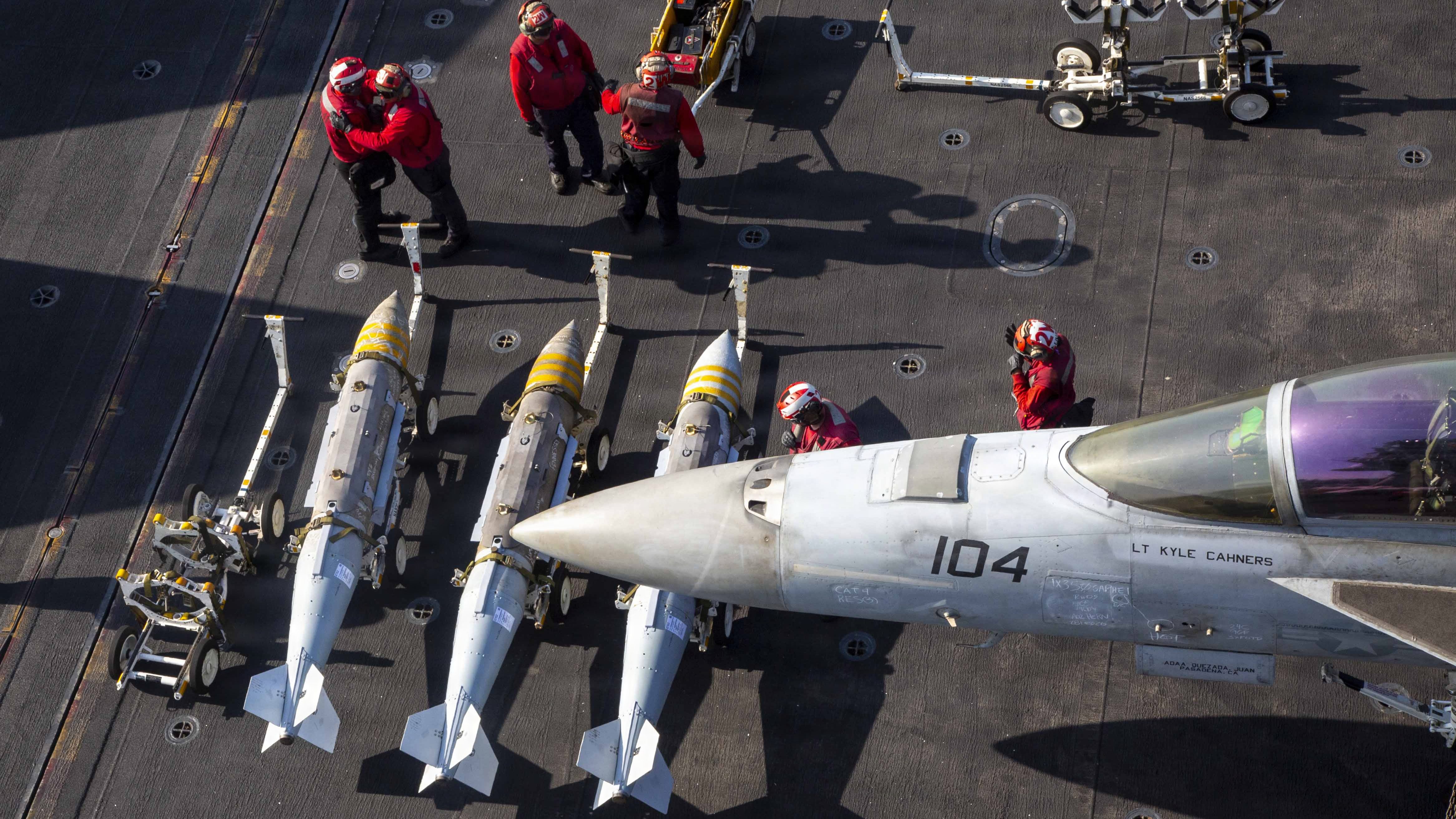
The GBU-31s in the released photos are the largest, 2000-pound version of the Joint Direct Attack Munition system, or JDAMs, which has been at the heart of U.S. bombing campaigns since the 1990s. JDAMs are made up of a “dumb” bomb — in the photo above, that would be a BLU-109 penetrating bomb — fitted with a navigation kit that uses either lasers or GPS to zero in on a target. (The bombs being loaded on the Lincoln appear to be the GPS version.) The fins on the rear cone of the JDAM guide the bomb as it falls.
The yellow stripes tell the crews that these are live, high-explosive warheads (as opposed to an inert training bomb). The bomb’s grey, textured appearance comes from a heat-resistant coating the Navy applies to its bombs to keep them from exploding during an onboard fire (uncoated but otherwise identical versions used by the Air Force are olive green).
Several former and current AOs told Task & Purpose that writing names on bombs is fairly common during even routine flight ops, but particularly popular among crews prepping for live combat missions.
One Afghanistan veteran recalled being in an Air Force hangar as crews scrawled chalk messages on bombs headed for an A-10. A senior officer arrived in the bay and announced that marking on weapons was against regulations and should be stopped immediately — then, with a grin, grabbed a piece of chalk and signed his own name.