Soldiers deployed to parts of the Middle East and Africa who are supporting the war with Iran are now authorized to wear combat patches, according to a memo confirmed Monday by the Army.
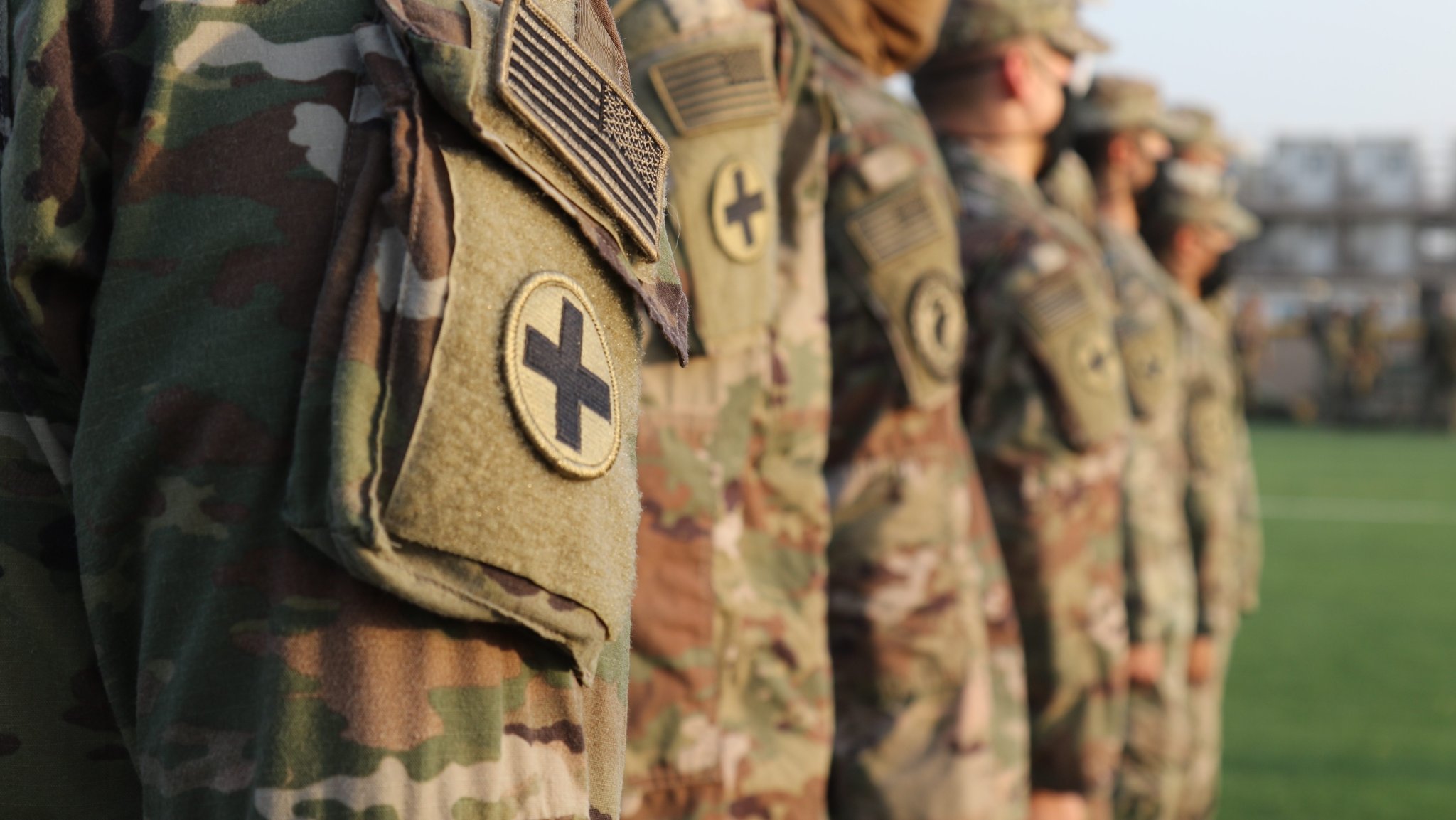
The new policy allows soldiers “assigned or attached to units supporting military operations” in eligible countries — which were not specified — to wear a Shoulder Sleeve Insignia for Military Operations in Hostile Conditions, or SSI-MOHC, which is widely known in the Army as a combat patch.
The combat patch wear was approved in a March 26 memo signed by Army Chief of Staff Gen. Randy George and was shared on social media, including on the Army’s subreddit. The new policy applies to active duty, Reserve, and National Guard soldiers.
The change means that soldiers will switch the insignia of their deployed unit from the left to the right shoulder of their Army Combat Uniform and Army Green Service Uniform. Soldiers wear the insignia as a combat patch while deployed, and can continue to wear that unit patch in that position to signify past wartime experience throughout their careers, even after changing units.
Top Stories This Week
The memo notes that the combat patch authorization applies to soldiers in U.S. Central Command, CENTCOM, and U.S. Africa Command, AFRICOM’s area of responsibility. Army officials did not specify which countries are included, citing operational security concerns.
Earning the right to wear a combat patch is revered in the Army, though it is not equivalent to earning a personal combat action award. Those awards, like the Combat Infantry Badge and Combat Medical Badge, signify that an individual soldier has faced direct enemy contact. They are awarded individually, while the right to wear a combat patch is generally approved for an entire deployed unit.
The new combat patch authorization applies to soldiers in CENTCOM and AFRICOM countries from Feb. 28 to “a date to be determined,” according to the memo. The war — dubbed Operation Epic Fury by U.S. leaders – has been referred to with shifting timelines for when officials expect hostilities to end.
Since the war began, 13 American service members have been killed in action, including six in an Iranian drone attack on a part in Kuwait and six others in an aircraft crash over Iraq. Nearly 300 troops have been wounded so far, U.S. officials said in mid-March. As of Saturday, American forces have hit more than 11,000 Iranian targets, which include more than 150 Iranian vessels, and flown over 11,000 combat flights, according to CENTCOM.