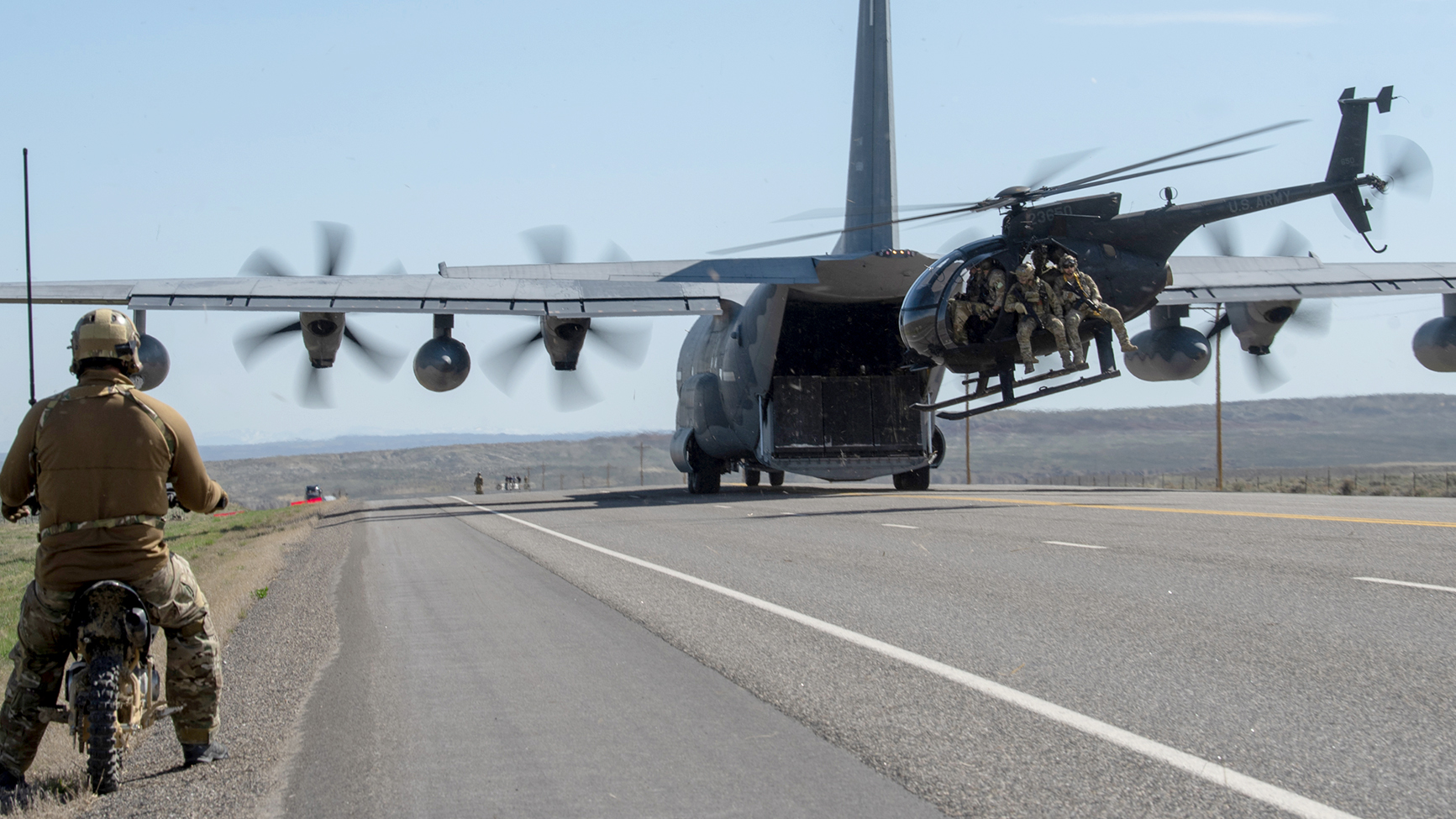
In the spring of 2023, a barren stretch of Wyoming highway briefly became the tactical hub of a three-day Army and Air Force exercise in which special operators unloaded nimble attack helicopters from cargo planes as attack jets and drones watched overhead.
At the center of the exercise — dubbed Agile Chariot — was a “missing pilot.” Once unfolded, the helicopters, draped with commandos dangling their feet in the air, bolted to go find him, as escort fighters buzzed above.
Viewed in retrospect, the exercise was a near-dress rehearsal of the historic rescue mission executed a week ago in Iran. That mission, in which an assault force landed deep in Iran to retrieve the weapons system operator of a downed F-15E, used the same aircraft, tactics, and at least one of the same units of Agile Chariot.
Though the Iran raid was shrouded in secrecy until it was over, the Pentagon gave the Wyoming exercise as much publicity as it could gin up. A large archive of photos, stories, interviews, and videos of the exercise is on the Pentagon’s main media hub, and at least one aviation reporter was on hand for the entire event, writing two stories for the HeliOps website.
Details of the exercise in this story come from those Pentagon sources and HeliOps’ coverage. Held between April 30 and May 2, 2023, Agile Chariot covered two single-day missions, dubbed Cowboy XL and Speed Goat.
For Cowboy XL, crews from Air Force Special Operations Command (AFSOC) set up a Forward Arming and Refueling Point, or FARP, and called in other planes to refuel. Establishing a FARP is a complex operation, but it has been a core tactic for AFSOC crews for decades.
The second exercise, on May 2, was the operation that, in form and execution, bears stunning similarities to the Iran rescue mission that was then nearly three years away.
Agile Chariot included at least one MC-130J Commando II from the 15th Special Operations Squadron; A-10 Thunderbolt IIs from the Michigan Air National Guard; two MH-6M Little Birds from the Army’s 160th Special Operations Aviation Regiment; and MQ-9 Reaper drones from the 27th Special Operations Wing.
The ground teams for both exercises were made up of Air Force pararescuemen and combat controllers from the Kentucky Air National Guard’s 123rd Special Tactics Squadron.
Top Stories This Week
While the Iran mission was, according to Pentagon officials, centered around an abandoned airstrip in the Iranian desert, Agile Chariot used two strips of rural highway in Wyoming. To prep for the exercise, Air Force teams had to follow Federal Aviation Administration rules to certify the roads as usable runways.
As a result, according to the Air Force, Wyoming Highway 287 is now officially certified as a 30,000-foot runway, the longest in the world, Air Force Maj. Matt Waggy, the exercise’s director, told HeliOps’s Ned Dawson.
Planes landing on a highway for ‘Cowboy XL’
Both the FARP and rescue exercise began the same way, according to the Air Force releases, with teams of Air Force combat controllers, or CCTs, parachuting to target sites. Establishing runways where none exist is a primary mission of CCTs. The commandos train on skills as diverse as setting light beacons for incoming aircraft to aim at to analysing soil samples to ensure soft dirt will hold a cargo plane.
Notably, Pentagon officials have not said if the Iranian mission included a similar preliminary ground team to scrutinize the airfield. Both MC-130s on that mission, according to the Pentagon, became mired in sand on the airstrip after landing, requiring three smaller aircraft to retrieve the rescued pilot and scores of operators.
For Agile Chariot, the CCTs cleared the highway strips of debris and then guided the MC-130 in. In a release, one of the pilots admitted that putting the big cargo plane down on a two-lane highway was unique.
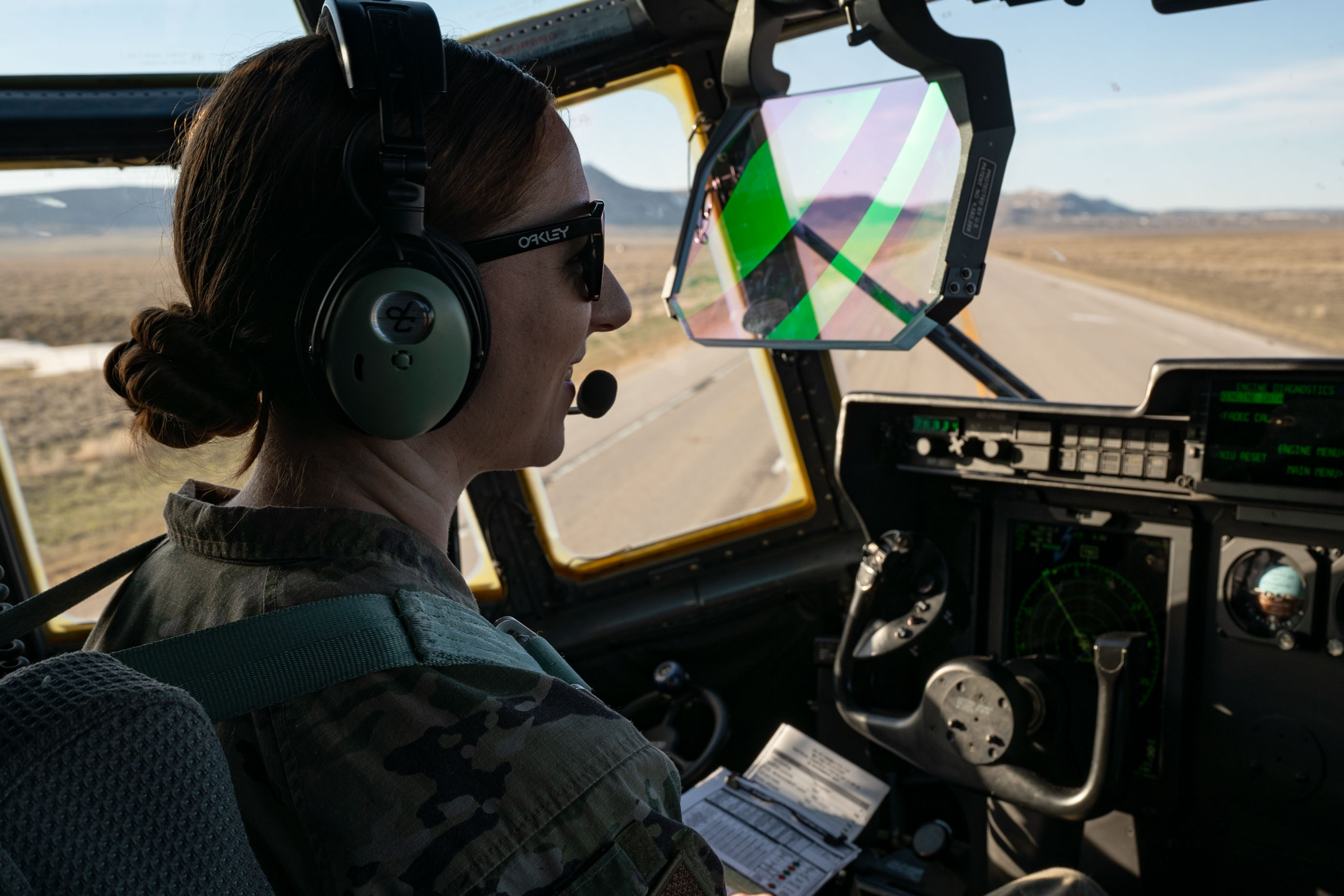
“Going into it, the crew told ourselves to treat this as just another landing, because we land in unique places all the time,” said Capt. Katheryn Richardson, an MC-130J aircraft commander. “We all had a moment where we were looking at the highway and thought about how unnatural it felt.”
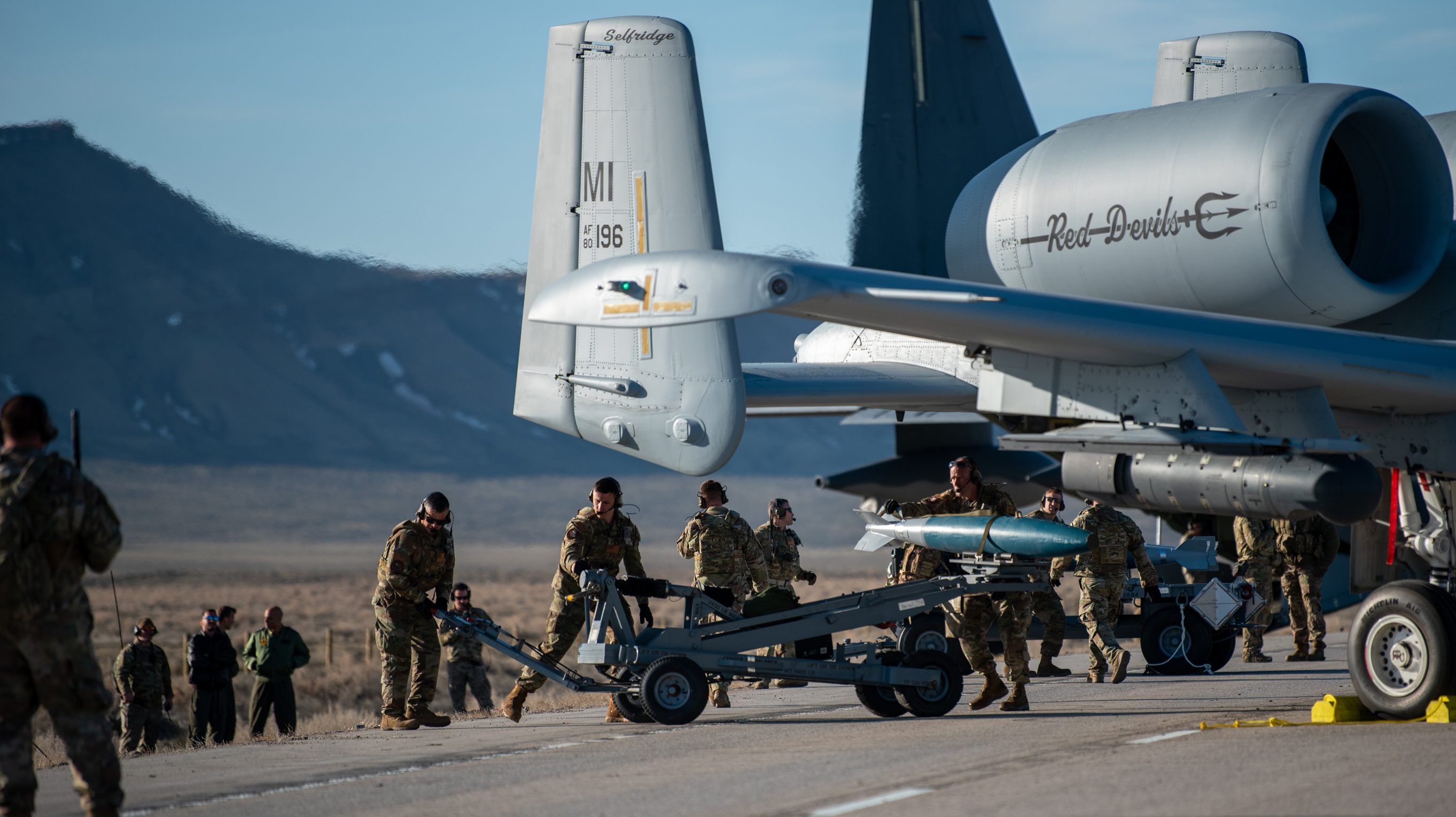
Once on the ground for Cowboy XL, the exercise to establish a FARP, crew from the MC-130 ran hoses to the tanker’s wings, tapping into its fuel system. After CCTs guided the A-10s and an MQ-9 Reaper drone onto the highway, ground crews ran to refuel and rearm them.
The A-10s in the exercise were from the Michigan Air National Guard’s 107th Fighter Squadron, a unit that has made road landings a bit of an in-house specialty in other exercises. But AFSOC officials said Agile Chariot was the first time a Reaper had made a highway landing.
A preview of the Iran mission
The simulated rescue mission came two days later.
After a CCT team again guided an MC-130 to the ground, a mix of Air Force commandos and Army pilots and mechanics immediately spilled out the back. Within minutes, the black, insect-like body of two MH-6 Little Bird Army helicopters eased their way out.
As A-10s buzzed overhead, 19 Air Force CCTs and pararescuemen, or PJs, from the Kentucky Air National Guard unit spread out for security. High above it all, an MQ-9 Predator circled, watching as the rotors began to turn on the Little Birds as the heavily-armed PJs and CCTs, climbed aboard.
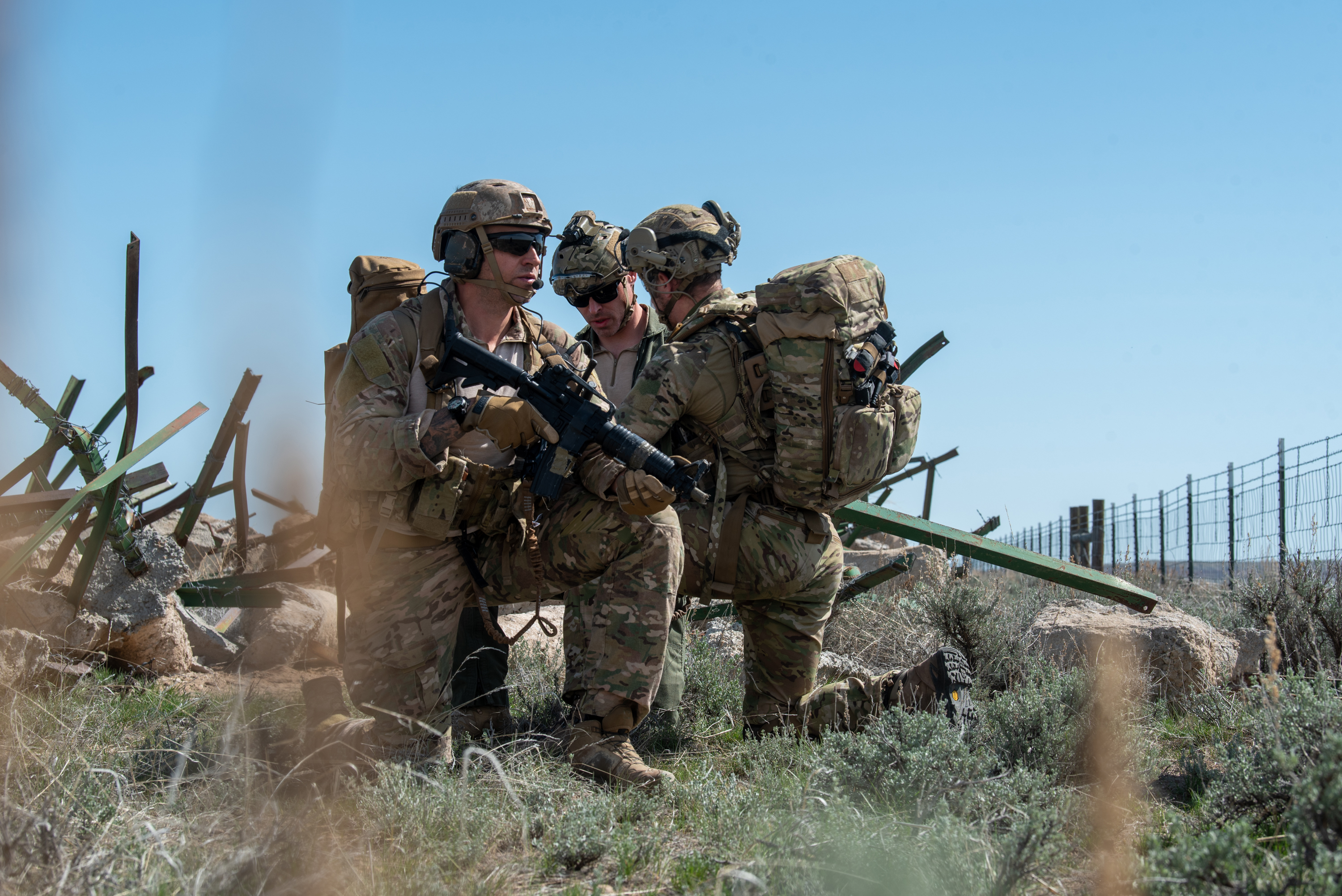
After finding the “missing” pilot and treating his injuries, the helicopter teams returned to the MC-130’s landing site.
The Iran rescue mission’s ground force was twice the size of Agile Chariot’s and included Navy SEALs, along with several more layers of fighters and bombers overhead. The Iran mission also went off in darkness, while the Wyoming exercise was in daylight.
But the concept that brought back the F-15 aviator was an almost beat-for-beat repeat of the 2023 event.
Back on the MC-130, the force disappeared as fast as it had arrived.
“Once the exercise was over,” Waggy told HeliOps, “the only sign we had been there were the tire marks.”