The Air Force says a new policy will streamline access to health care for reservists and Air National Guardsmen who are hurt on duty. But airmen and veterans with firsthand experience say the new policy does little to address the actual roadblocks that many encounter trying to collect health care and longer-term benefits.
“It’s not fixing the problem,” said Cody Kirlin, a former F-15 fighter pilot who retired from the Louisiana Air National Guard earlier this month after a four-year benefits battle with the Air Force.
The new guidance was released on Feb. 1 and announced in a press release on Monday. It promises access to Tricare, the military’s health insurance network, to members of the Air Force Reserve and Air National Guard who are hurt on active duty orders for 31 days or more and clear several paperwork hurdles.
It sounds like a good deal, considering that about 130,000 Guardsmen and Reservists do not have consistent health insurance, according to 2023 data.
But a trio of airmen, veterans, and advocates say the new guidance does not address the deeper issues that lead to hundreds of injured airmen a year being denied both immediate pay and health care, and longer-term disability benefits.
The basics
Guard and reserve troops who are injured while serving on active duty orders for 30 days or longer qualify for the same healthcare that active duty troops enjoy: cost-free Tricare. If an ARC member gets hurt or sick during that active duty time, they are supposed to move to “medical continuation” or MEDCON orders with active duty pay and Tricare until they recover.
If they haven’t recovered after a year, a board evaluates whether they can still serve or if they should receive disability benefits. These benefits can add up to tens of thousands of dollars over a lifetime.
The key to the whole system is an “In Line of Duty” determination, or ILOD, an official judgement that their injury or illness came from their active duty service. Under Air Force rules, an In Line of Duty status — issued first by their local commander and ultimately decided by a high board — should be automatic unless “clear and unmistakable evidence” shows otherwise. But according to airmen, veterans, advocates and a 2024 Air Force inspector general report, the Air Force rarely provides evidence for the hundreds of ILODs it cancels every year.
“[T]his is undoubtedly a significant source of frustration for members that remain unanswered by policy or process,” the inspector general wrote.
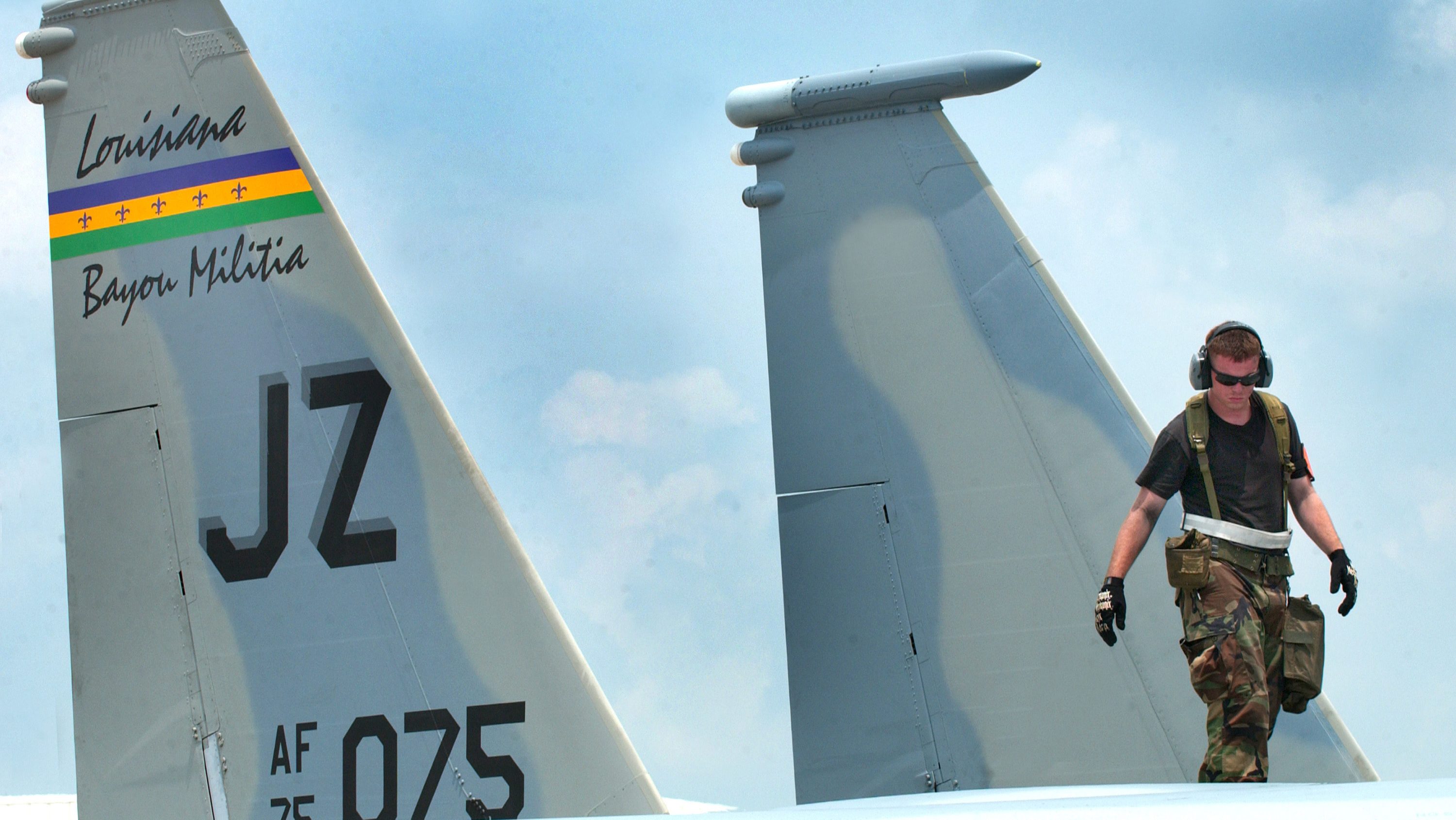
Kirlin was one of them. In 2019, he was diagnosed with two herniated discs from flying F-15s while deployed to Guam. His injuries were initially ruled In Line of Duty but reversed by National Guard officials in 2022.
Tricare helped cover Kirlin’s surgeries, but without extended orders, he had no income during the two months he was confined to bed. He had to use all of his civilian sick time and take short-term disability with financial support from his airline.
“It was very fortunate, but absurd that Southwest even lifted a finger for something that happened in the military,” he said.
One KC-135 tanker pilot without a civilian job couldn’t pay her mortgage after receiving a NILOD, also without explanation, while a technical sergeant with 20 years of service and stage four cancer is working part-time at an auto-parts store to make ends meet, according to ABC 15.
Doubts about long-term disability benefits
Advocates say one issue with the memo is that it adds paperwork and requirement hurdles to qualify for an in-line-of-duty and access to health care that federal law and regulations say troops hurt on active-duty orders should already be getting—unless the Air Force has clear and unmistakable evidence saying they shouldn’t.
“Most of the people we help are getting medical care one way or another,” said Jeremy Sorenson, a retired Air National Guard fighter pilot who has helped dozens of ARC airmen wade through Line of Duty issues. “All of the issues that come up as a result of the LOD process this doesn’t address at all.”
Sorenson said the most alarming part of the guidance is that the ILOD determination it lays out applies only to access to Tricare, not to MEDCON orders or the disability evaluation system.
That should not be possible, Sorenson said. Once an injury or illness is determined to be In Line of Duty, the ARC member is eligible for MEDCON and the disability evaluation system.
“That totally goes against the regs,” he said. “An LOD is an LOD.”
When asked why the new guidance excludes MEDCON and DES, an Air Force reserve spokesperson said LOD, MEDCON, and DES “are all separate processes requiring separate determinations.”
That is “100 percent false,” Sorenson said. “An LOD is the determination. MEDCON is a military status provided based on an LOD determination. The disability evaluation system is a process based on the LOD determination and whether or not you’re back to duty generally within 365 days. All of those are based on one determination and one determination only.”
Reversed decisions on Line of Duty
Lt. Col. Mitch Hall, a former Washington Air National Guard tanker pilot, does not think this memo would have helped in his situation, where the National Guard Bureau overturned his In Line of Duty determination without providing the required evidence.
“I don’t think it would have done me any good,” he said. “The root problem is they should not have overturned my ILODs. I should not have been cut off from MEDCON.”
Hall, Kirlin, and Sorenson worry that the new policy will further muddy the waters for airmen and medical personnel. The Air Force inspector general reported “a lack of fundamental understanding” at all levels of the process, which Kirlin experienced firsthand.
“I had no guidance,” he said. “This whole process has just been one hoop after the next with people not knowing how to do their part of it and me trying to figure it out on my own.”
The trio feared that the new guidance might lead airmen to walk away with health care, but nothing else. Airmen and advocates say they would rather see the Air Force follow the rules laid out by federal law and regulations regarding timelines, transparency, and the burden of proof for denying a line of duty.
“LODs have been a systemic problem for many years,” Sorenson said. “Instead of addressing it head-on and complying with federal law and DoD instructions, this memorandum is yet another attempt to obfuscate the issue and to further make it difficult for injured airmen to obtain their due benefits.”