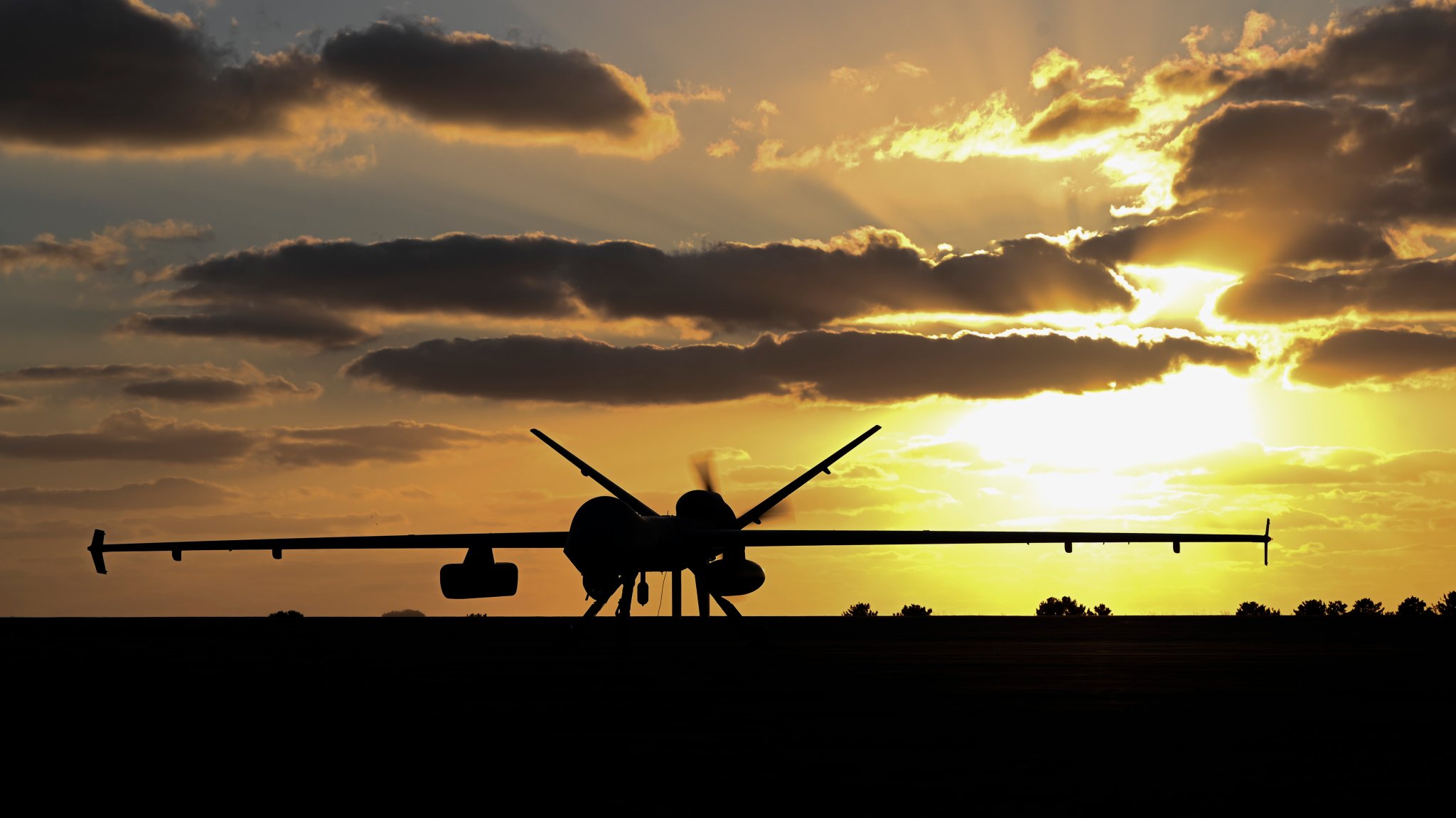
The Air Force brought a permanent deployment of MQ-9 Reaper drones to South Korea on Monday to serve as a surveillance and reconnaissance unit, and in doing so, revived a World War II-era squadron.
The 7th Air Force announced the activation of the 431st Expeditionary Reconnaissance Squadron, based out of Kunsan Air Base in South Korea. The new squadron will provide aerial reconnaissance of the border with North Korea, but also conduct surveillance missions around the Indo-Pacific theater, the Air Force said.
“Deploying the MQ-9 brings a powerful capability to the region,” Lt. Col. Douglas J. Slater, the squadron’s commander, said as the unit was reactivated. “We’re here to support the mission, deepen cooperation, and demonstrate our shared commitment to maintaining security and stability across the Ind[o]-Pacific.”
Top Stories This Week
The Air Force did not say how many Reapers would be assigned to the squadron or how large the unit is. The drone system is operated by both the Marine Corps and the Air Force and is used for reconnaissance roles as well as combat. In the latter role, it is often outfitted with air-to-surface missiles. Beyond its combat and surveillance capabilities, the drone can operate for a range of more than 1,100 miles and for more than 24 hours.
The Air Force has moved Reaper drones into the Korean Peninsula over recent years for rotations and training exercises — including some this spring — but the activation of the 431st marks the first permanent deployment in South Korea.
According to the Air Force, the new unit was previously activated as the 431st Fighter Squadron during World War II. Created in 1943, it flew escorts for bombers in the Pacific during the war.
Initially based out of Australia, it relocated to a base in Seoul in September 1945 before deactivating in 1949. The 431st Test and Evaluation Squadron was active during the 1980s and shut down in 1992. During that time, it was based stateside and was a test unit for the F-111.
The U.S. military often stages multinational drills and exercises around the Korean Peninsula, in shows of force aimed at deterring North Korea. These have continued as Pyongyang has continued to carry out missile tests.
The creation of the drone squadron comes as the Air Force continues to bolster its forces in Korea. This summer the Air Force began moving 31 F-16s from Kunsan to Osan Air Base, closer to the Demilitarized Zone, in order to “consolidate air power and increase combat capability on the Korean Peninsula.” The move creates a “super squadron” at the base, with a larger-than-normal complement of fighters.