After pulling off a major open-ocean rescue hundreds of miles off the coast of Mexico’s Baja California, two U.S. Air Force helicopters landed at a Mexican airport last week on the mission’s return leg. But as the Arizona-based crews rested and slept after a grueling 12 hours of flying, a wave of online rumors and misinformation erupted around their arrival.
By morning, the Mexican defense department had issued a statement clarifying that the U.S. airmen were just passing through.
“On this date, it authorized the overflight in national airspace of two Hercules tanker aircraft and two helicopters from the @usairforce,” the X account for the Mexican Secretariat of National Defense, or SEDENA, posted. “This reaffirms Mexico’s commitment to international cooperation to safeguard human life and regional security.”
Despite the online confusion, the real story behind the Air Force helicopters’ brief visit to the Mexican airport was a remarkable day of flying by U.S. rescue crews, which included a pilot recruited at the last minute from a separate unit.
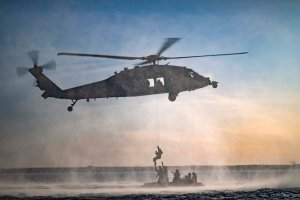
To reach a crewman on a merchant ship 400 miles off the Mexican coast, the two HH-60W rescue helicopters from Davis-Monthan Air Force Base, Arizona, flew 2,000 miles in a two-day operation. An HC-130J from Davis-Monthan — the “Hercules” in the Mexican tweet — refueled the two helicopters four times midflight.
But even before the mission began, crews at Davis-Monthan had to scramble to find enough pilots to fly it.
Not enough pilots
Alerted for the mission on early February 5, officials at the 55th Rescue Squadron knew that deployments and training schedules had stretched their ranks of HH-60W flyers. To meet the mission, they’d need another pilot.
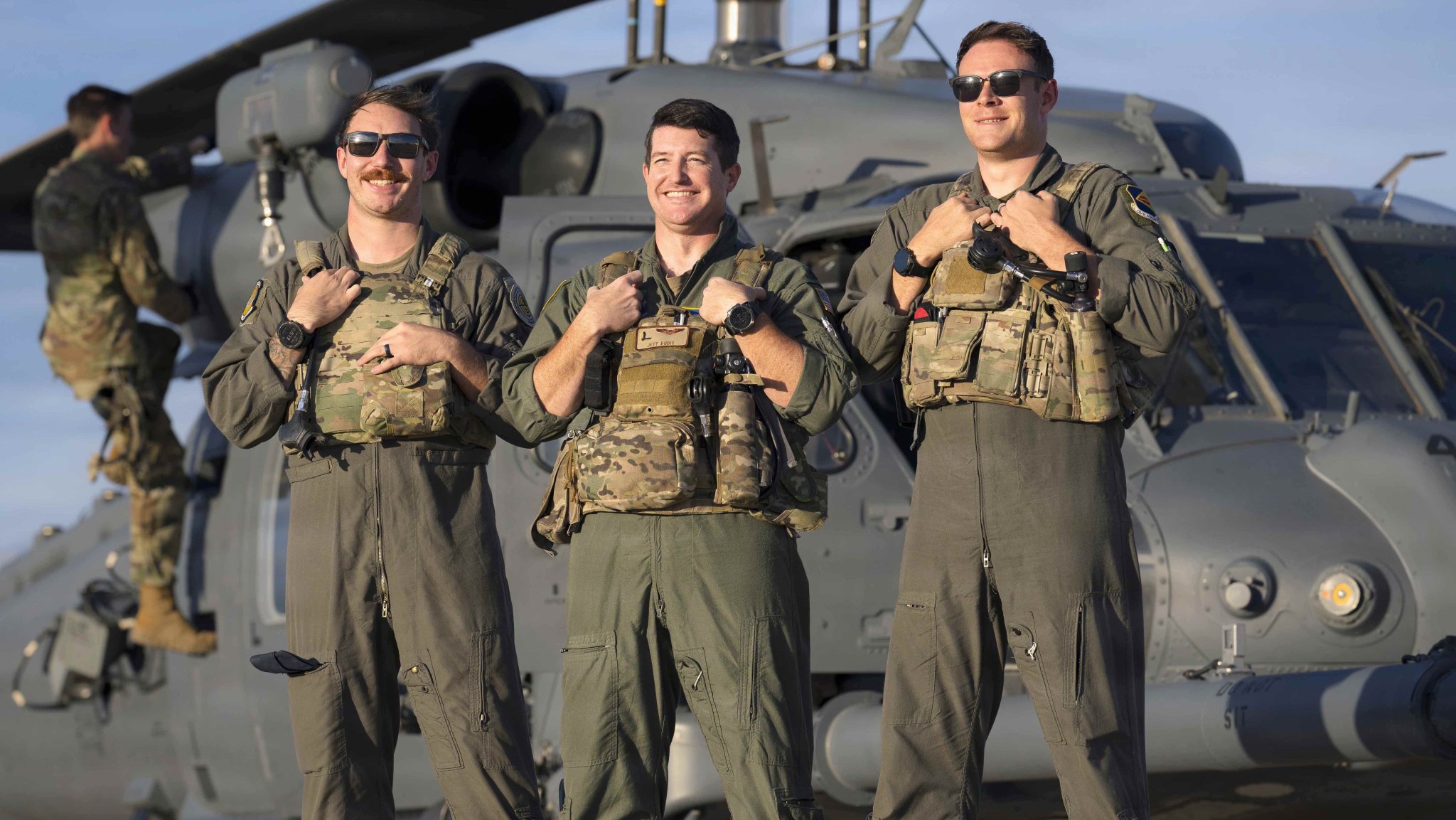
Lt. Col. Jeff Budis is chief of exercises and airshows at Air Forces Southern, which is headquartered at Davis-Monthan. But as a career HH-60 rescue pilot, Budis regularly rotates into the 55th’s flying schedule as an “attached” pilot to keep his flight currencies up to date.
Which meant he was mission-ready on Feb. 5.
“I wasn’t on formal alert that day. I got a call to check my availability and was told to be ready to support. Within about an hour, I was headed to the squadron,” Budis told Task & Purpose in an email. “From notification to takeoff was roughly four hours.”
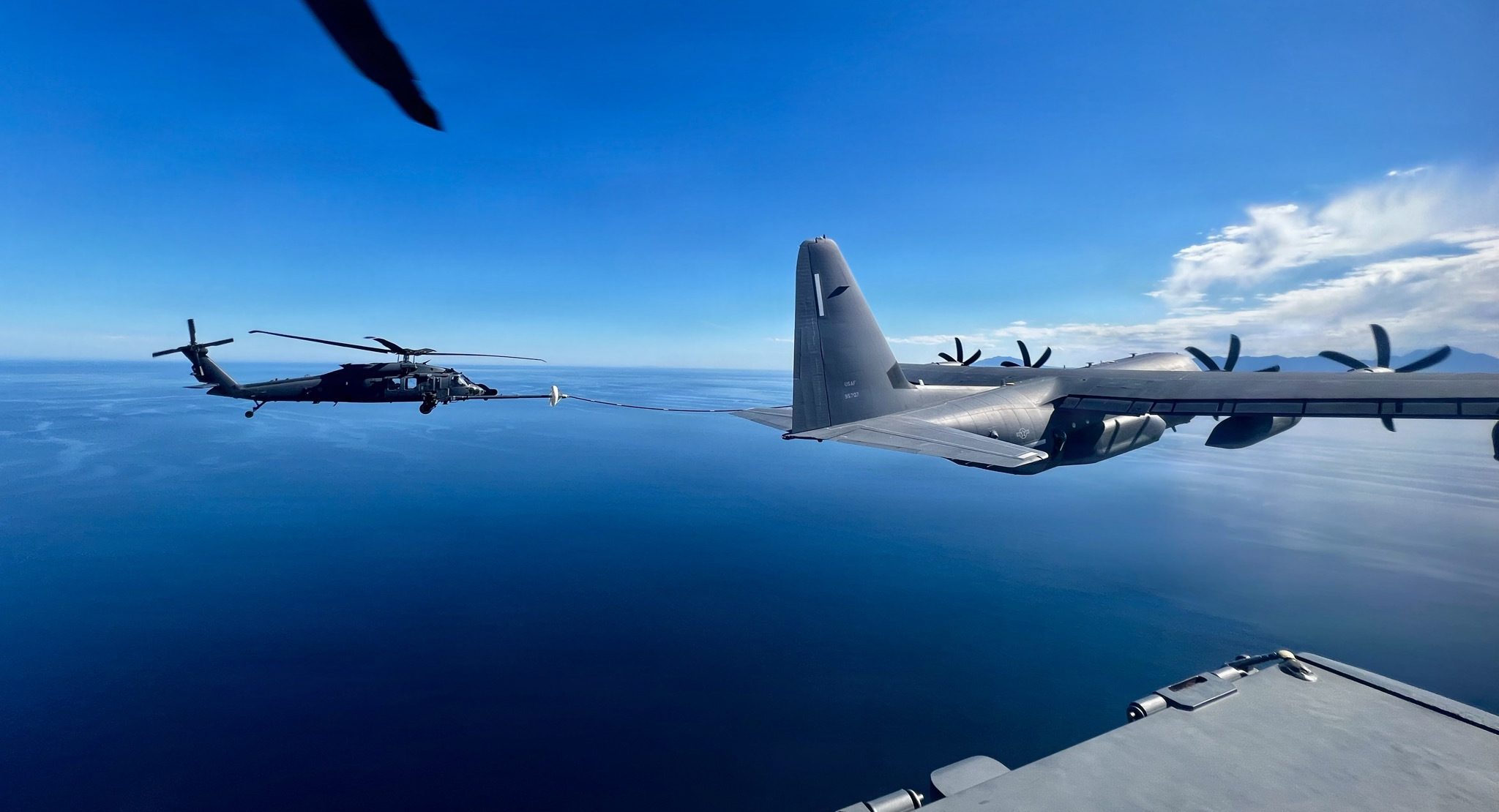
Along with Budis, crews scrambled from three squadrons, which is typical in Air Force rescues: helicopters from the 55th, HC-130J tankers from the 79th Rescue Squadron, and pararescuemen, or PJs, assigned to the 48th RQS.
Departing the Tucson–area base, the crews flew to the Mexican coast, then about 400 miles out to sea to the Maran Gas Olympias, a Greek-flagged liquefied natural gas tanker.
Once over the ship, the crews lowered PJs to its deck on the HH-60’s hoist. The PJs medically stabilized the patient before being pulled back aboard the helicopters for a return flight to a hospital at Cabo San Lucas, the popular but remote tourist city at the southern tip of the Baja California peninsula. There, Air Force regulations on flying hours required the crews to land for the night, while the HC-130J returned to Arizona.
Rumors erupt
But as the crews slept, rumors started, perhaps inevitably.
Just two weeks earlier in late January, the arrival of a U.S. C-130 at the Toluca airport near Mexico City kicked off a political storm intense enough that Mexican President Claudia Sheinbaum was forced to publicly explain the flight. She and U.S. authorities both said the plane was a shuttle for Mexican officials attending training in the U.S., and was not related to U.S. anti-narcotics or border operations.
Top Stories This Week
Davis-Monthan officials said their mission, including the overnight stay, was fully coordinated through the U.S. Defense Attaché Office in Mexico. The SEDENA social media post was perhaps an effort to head off more rumors.
Internet drama aside, Budis insisted that the mission was a demonstration of the rescue unit’s commitment to teamwork.
“What’s important to understand is that rescue is never about one person or even one aircraft. It’s a team effort from start to finish,” Budis told Task & Purpose. “The HH-60 crews, the HC-130 crews, and the pararescue teams are the visible tip of the spear — but none of it happens without maintainers turning wrenches, support personnel building the plan, intelligence and logistics teams coordinating in the background, and the Air Force Rescue Coordination Center connecting all the pieces. Every one of them plays a role in making sure we can launch safely, execute the mission, and bring everyone home.”