
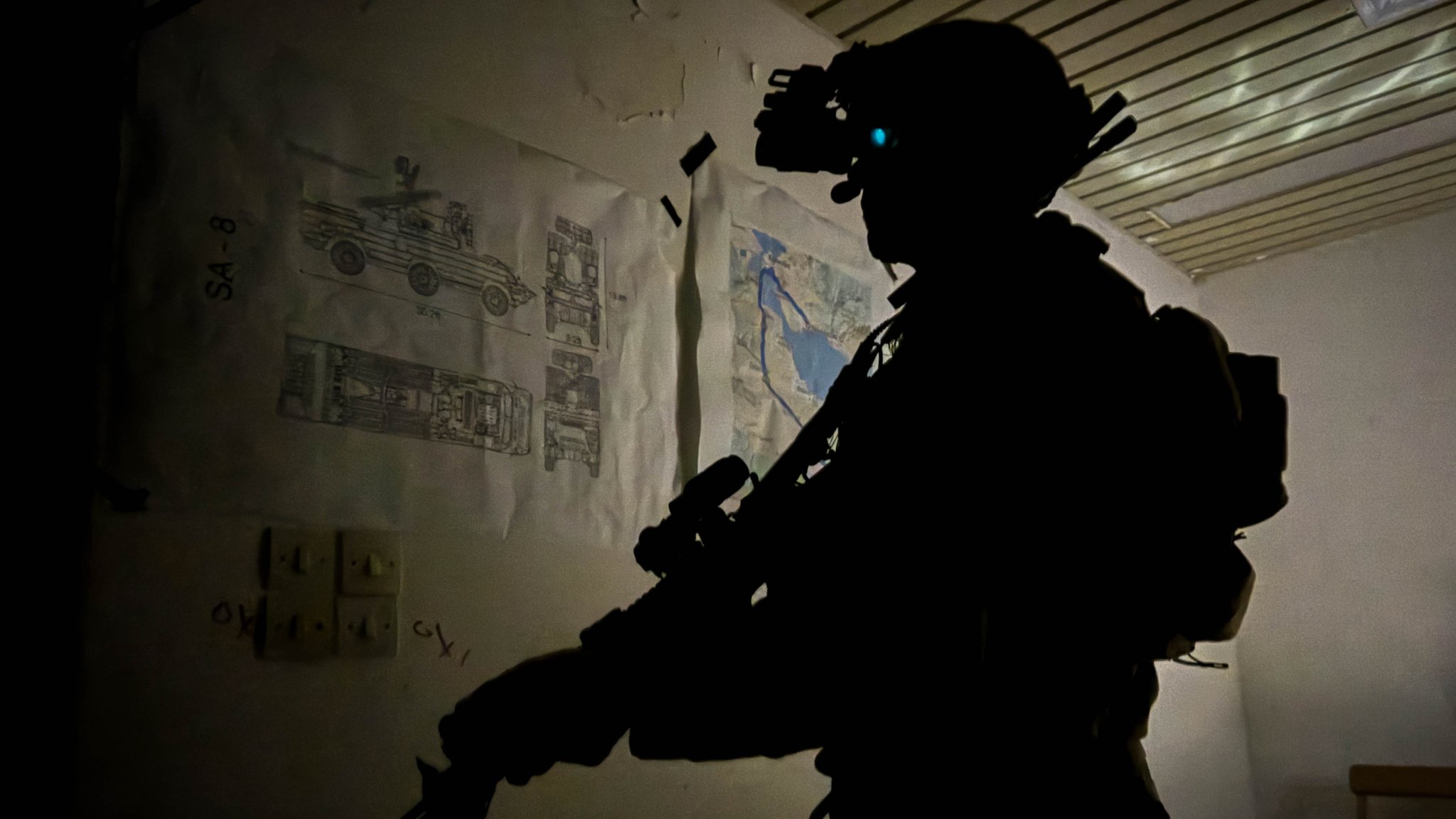
One in every 10 soldiers in the Army works in a special operations role, but the commanders of the service’s most dynamic force are considering how they would fit in a conflict between traditional, large-scale formations.
“Obviously, 90% of the Army is not part of USASOC,” said Lt. Gen. Lawrence “Gil” Ferguson, referring to the U.S. Army Special Operations Command, which he leads. “So in our small formation we, you know, punch above our weight so to speak with what we do for the joint force.”
The wars in Iraq and, in particular, Afghanistan were defined by special operations teams. From the post-9/11 assault on Kabul organized by Task Force Dagger and other Army Special Forces teams, to the killing of Osama Bin Laden by Navy SEALs flown by Army special ops helicopters, the wars often relied on special operations troops.
But a war with a foe like China or even Russia would likely be much more like past engagements of large division-sized units than the small teams of the last 20 years. The 2nd Infantry Division in Korea, as an example, has 17,000 soldiers. How could a team of 12 Green Berets affect a fight they might take on?
Ferguson and Brig. Gen. Joseph Wortham, who directly oversees the Army’s Green Beret teams and associated units as commander of 1st Special Forces Command, spoke at the annual Association of the United States Army conference this week about how special operators might fit in a larger war.
The answer, they both said, may lie in the many skills special operations forces possess outside of direct combat, like reconnaissance, psychological operations and rallying allied forces within a warzone.
“You think of influence, you think about deception.”
“You’ll hear the sensor-to-shooter conversation. We are one of those sensors out there,” Wortham said. “We can combine and help with the other elements of the joint force, and we certainly have the ability to bring either partnered or other capabilities to affect things deep in the [battlefield]. When you think about our PSYOP capabilities specifically, and you think about information dominance, right? Those [large-scale conventional] commanders are asking us to move back into a lot of the places that we have done historically. You think of influence, you think about deception.”
USASOC’s 22,000 soldiers, backed by 10,000 civilian employees, make up both direct action assault units and unconventional units. Its “shooters” include the light infantry of the 75th Ranger Regiment, the seven Special Forces groups that deploy 12-man teams to connect with friendly local forces and the helicopters of the 160th Special Operations Aviation Regiment. Its influence operations include seven psychological operations, or PSYOP, battalions and five Civil Affairs battalions.
Ferguson said that the Civil Affairs and PSYOP groups are likely to be in high demand for any large-scale war of “consolidation,” the critical phase after large units take ground, but then move on.
“Our Civil Affairs may be able to help with the consolidation of gains, as we would put it, to free up some of the corps and division’s combat power, so the division and corps can move and do what they’re being asked to do,” Ferguson said. Civil Affairs units, he said, are trained in “bringing in our partnerships with partners and allies in the host in the host country to transfer some of that capability onto our back. They build with the emergency services, first responders, et cetera, with our partners and allies. That’s really where they come in and make their money, because that takes a load off of the [conventional] commander and frees up decision space and and some combat power for him.”
PSYOP units, he said, are adept at spreading false information to confuse and slow down the decisions of enemy commanders.
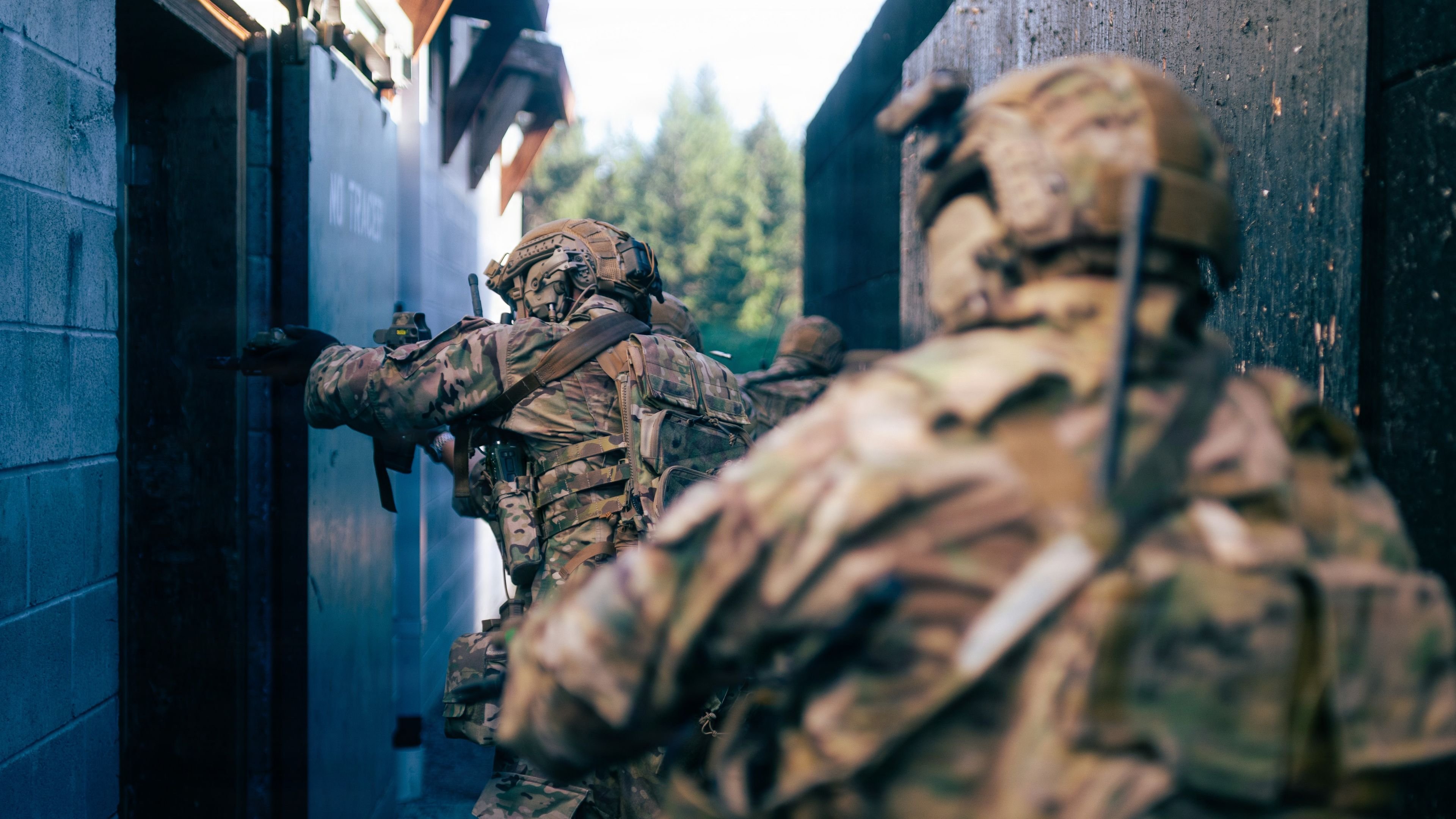
And Green Berets, he said, can help commanders of large units without firing a shot through personal relationships with leaders in allied nations.
“They’re culturally aware, culturally trained in language and all of those groups spend almost all of their career inside of that geographic combatant area,” Ferguson said. “Most of our senior officers and NCOs, will have generational relationships with chiefs of countries, to chiefs of defense, to senior folks that have come up over time. If a [conventional] commander wants to go somewhere, there is a probably 100% chance there is somebody in our force that knows those senior leaders and they’re able to make those connections out there.”
As for frontline fights, Wortham would not say how special operators have been used in the largely conventional Iran war, but insisted they’ve had no lack of missions.
“Just in the last 12 months, not getting into too much detail, obviously, but there have been undertakings that the nation has pursued where Army Special Operations, Special Operations as a whole have been the main effort and all of the capabilities, all the joint capabilities, were brought to bear and converged in order to enable Army Special Operations to execute an operation,” Wortham said. “There are other times on the opposite end of the spectrum where we may be supporting effort two or three.”
Loading comments…
Comments couldn’t be loaded. Please refresh the page.