In a major shake-up of how the Army divides up the world, the service announced Friday the activation of the Western Hemisphere Command, shuffling three commands under a single four-star general.
Gen. Joseph Ryan will be the first commander of the Army Western Hemisphere Command, which the Army is referring to as USAWHC. Ryan will take over from his role as the Army’s Deputy Chief of Staff for Operations, Plans, and Training at the Pentagon.
USAWHC will be tasked with the defense of U.S. territory, supporting humanitarian assistance and relief missions for natural disasters like wildfires, hurricanes in both the continental U.S., its neighbors and countries in South America.
“This reform modernizes the Army’s command structure, reduces overhead, eliminates duplication, and puts more soldiers in operational formations where they can directly contribute to warfighting readiness. It’s based on threat, strategy, and the need to prioritize the homeland and the need to treat the homeland as a priority theater,” said Col. Mike Burns, a spokesperson for the USAWHC.
The new command combines Army North, Army South, and many units currently assigned to Army Forces Command under one roof. Army North is responsible for forces within the U.S. and North America tasked with homeland defense. Army South is the service’s component responsible for troops focused on South America. Forces Command oversees the Army’s readiness among its deployable forces.
USAWHC’s four-star headquarters will be based at Fort Bragg, North Carolina, where Forces Command is located. A forward command post at Joint Base San Antonio (JBSA), Texas, will be focused on rapid deployments for natural disasters and humanitarian relief.
“Think about bowing out the door when an emergency happens right there to support that team that will get out into the community,” Burns said.
Army officials did not give details on the number of troops that would be assigned to Fort Bragg or JBSA under the new command, nor the total manpower under the new USAWHC structure.
Top Stories This Week
Some major combat units currently under Forces Command will be reassigned based on their regional affiliations. I Corps, which oversees the 11th Airborne Division in Alaska and 25th Infantry Division in Hawaii, will shift under Army Pacific. III Armored Corps, based at Fort Hood, Texas, will now fall under Army Europe-Africa, according to Army documents.
The XVIII Airborne Corps, which oversees the Army’s top rapidly deployable infantry divisions, like the 10th Mountain and 82nd Airborne, will remain under USAWHC.
The new Army command will also coordinate annual exercises like PANAMAX, a U.S.-led multinational readiness training with troops from nations like Brazil, Colombia, Ecuador, Honduras, Jamaica, and Mexico, as well as the yearly U.S.-based exercise called Vigilant Shield, where troops simulate and practice against attacks on the states.
Army officials are planning for the Western Hemisphere Command to reach full operational capability by June 2026 and for the three combining commands to be formally inactivated soon after. Commanders of all three formations will remain in position until those inactivations, officials said.
Military and civilian personnel who will be reassigned to Fort Bragg as part of the restructuring can expect to move sometime prior to September 2027, Burns said.
“It gives you one commander responsible for the entire Western Hemisphere from the Army perspective. If you think about the map and how bifurcated it is, is Mexico [assigned to Northern Command] or is Mexico [assigned to Southern Command]? A lot of people don’t even know that,” Burns said. “What about Central America? Everything from Brazil to Canada is bifurcated.”
Command reflects goals of new National Security Strategy
The Friday activation of the Army’s new command coincided with the Trump administration’s new National Security Strategy, which calls for the U.S. to “restore American preeminence in the Western Hemisphere” and “reassert and enforce the Monroe Doctrine.” That 1823 doctrine, announced in an address to Congress by President James Monroe, was a warning to European imperial powers to stay out of the region known today as Latin America.
However, it became a fundamental part of American foreign policy, as the U.S. simultaneously asserted its influence and developed trade partnerships throughout the region.
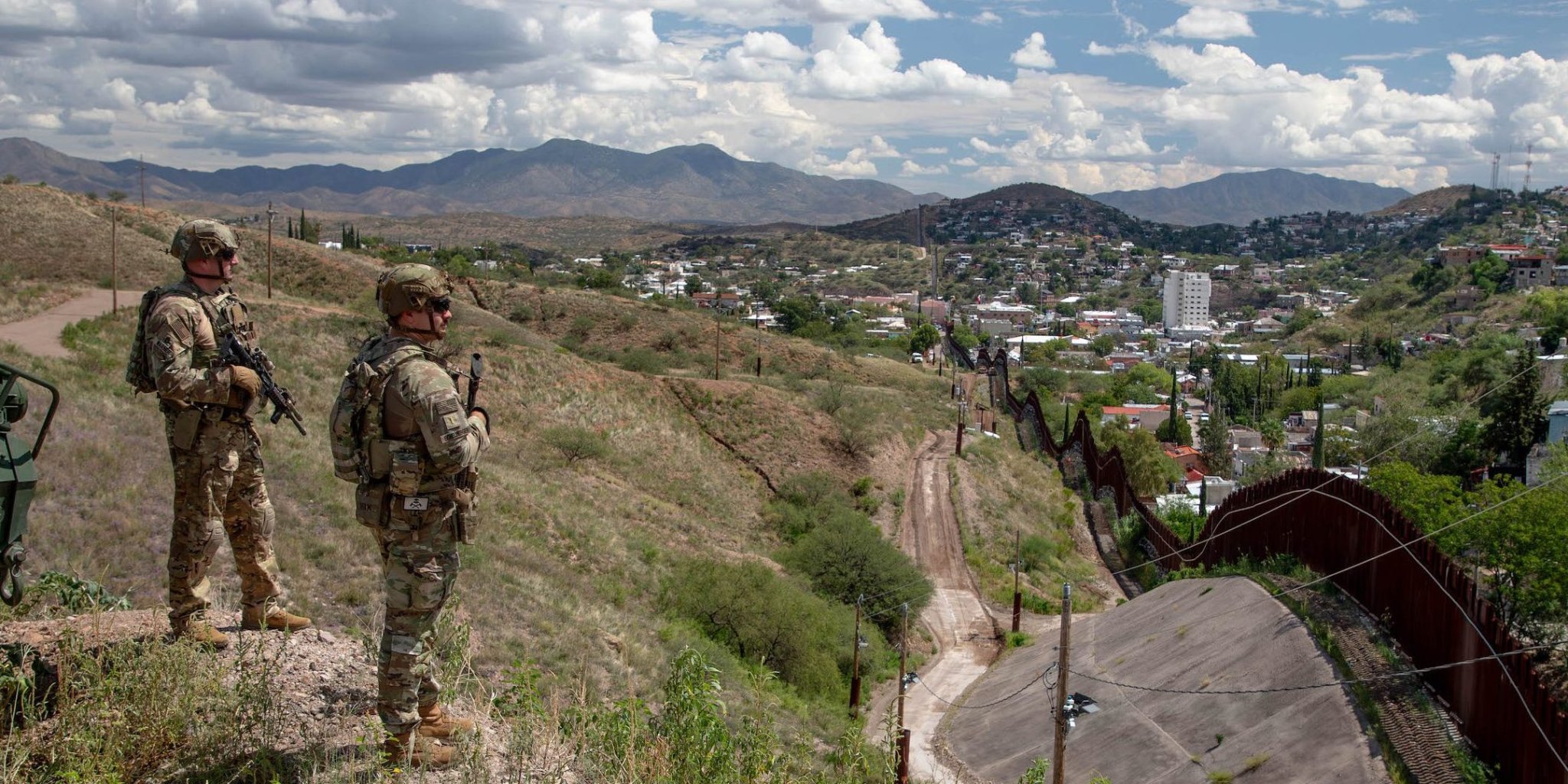
The new command also comes as the U.S. has made a hard military pivot to South America with thousands of troops stationed at the U.S.-Mexico border, a massive buildup of Naval forces and Marines in the Caribbean, and ongoing Pentagon-led strikes on fishing boats that Defense Department officials say are part of drug cartel operations.
Burns said the new command “is not predicated on any anticipated orders for rapid deployment of additional troops in the area.”