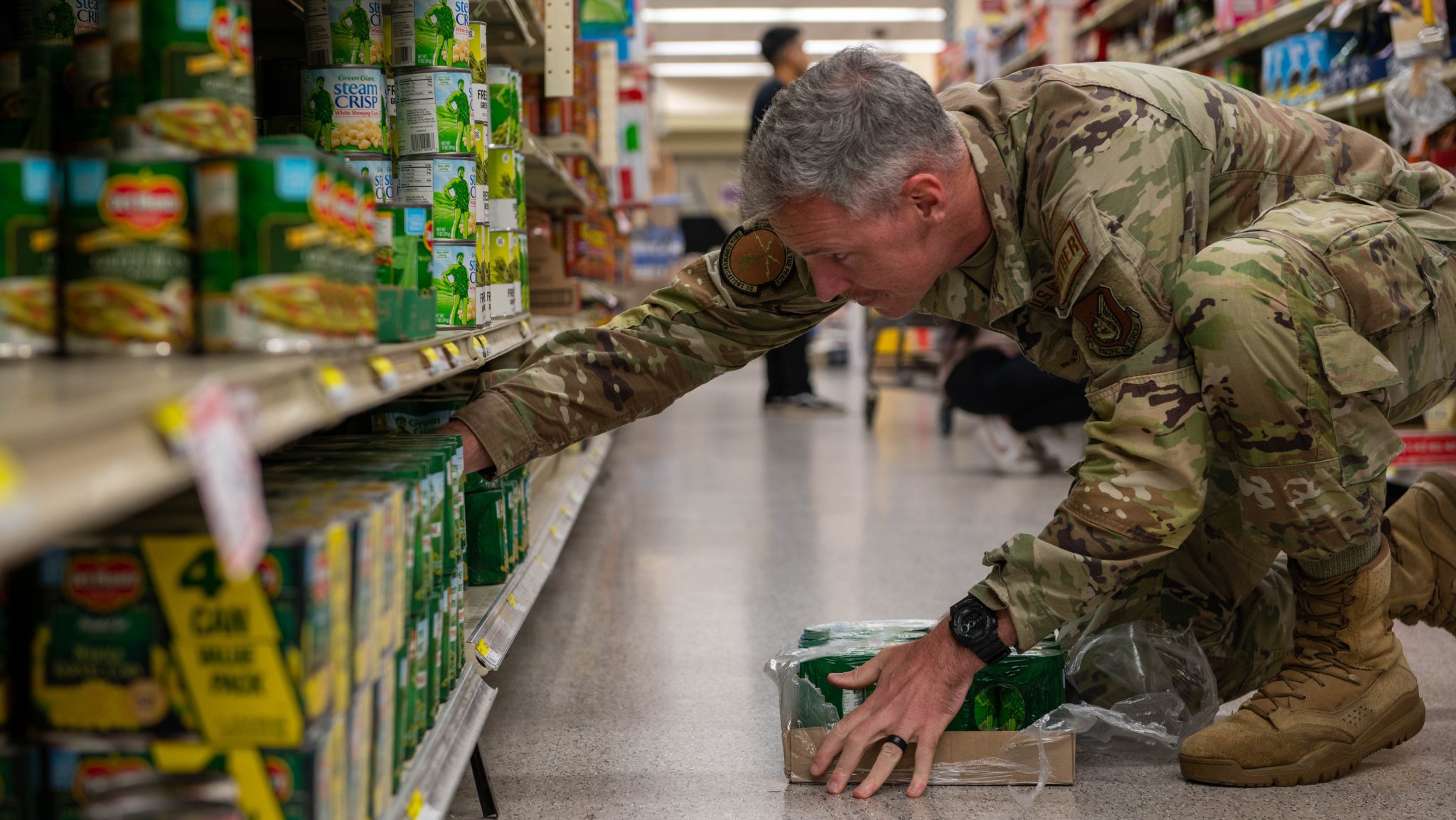
The agency in charge of running base stores where many troops buy their groceries is preparing to stay open through March in the event of a government shutdown, officials said in a release.
“All military commissaries will continue to operate worldwide for a limited amount of time during a potential lapse in appropriation,” officials with the Defense Commissary Agency said, adding that if funding lapses, the agency will “operate commissaries worldwide through the end of March.”
All commissaries in the U.S. and at American bases abroad will be funded using Defense Working Capital Funds, a type of flexible funding that keeps business operations, like commissaries, running and are not tied to Congressional appropriations, officials said.
“Commissary employees would continue to work and are not subject to furlough during this time frame,” Defense Commissary Agency officials said.
The agency announcement comes as national politics over funding for Immigration Customs and Enforcement, or ICE, takes center stage in Congress, and could force a shutdown as early as this weekend. The deadline traces back to November, when federal lawmakers failed to enact the fiscal year 2026 budget and instead passed a continuing resolution — a temporary measure that partially funds the federal government and keeps agencies running to avoid a government shutdown.
If Congress fails to pass a new appropriations bill by the end of January, the federal government faces a partial government shutdown when November’s continuing resolution, which provides funding for agencies like the Department of Defense, expires on Jan. 30, according to the Committee for a Responsible Federal Budget.
Kevin Robinson, a spokesperson for the Defense Commissary Agency, said that overseas and “remote” and “austere” stores could stay open even longer, running “after working capital funds are exhausted” and in accordance with the Pentagon’s contingency plans. These commissaries are “categorized as remote/austere U.S. locations based on remoteness and availability of other sources of food,” he said.
“Remote” store locations within the U.S are: Coast Guard Base Kodiak and Fort Greely in Alaska; Fort Irwin and Marine Corps Mountain Warfare Training Center Bridgeport in California; Naval Air Station Fallon, Nevada; and Army Dugway Proving Ground, Utah.
“Austere” commissaries are at Joint Base Elmendorf-Richardson, Alaska; Los Angeles Air Force Base, California; Naval Air Station Jacksonville, Florida; and Naval Air Station Whidbey Island, Washington.
Troop paychecks
As the political heat increases over the immigration crackdown and the fatal shooting of a Department of Veterans Affairs ICU nurse on Saturday, Congress will return to Washington, D.C., to debate funding for the current fiscal year.
Senate Democratic leader Sen. Chuck Schumer (D-N.Y.) has indicated that Democrats will not support the annual appropriations bill if it includes funding for the Department of Homeland Security, which manages ICE and the Customs and Border Protection. Republicans have said they don’t want to make any changes to the bill, like separating Homeland Security funding.
A potential government shutdown has troops turning to social media to voice their concerns over missed or delayed paychecks come February if Congress doesn’t approve funding.
When the government was on the verge of a shutdown in October, President Donald Trump announced the Pentagon would use research and development funding to pay troops.
In the fall, some members of Congress had introduced stand-alone bills specific to military pay.
The Shutdown Fairness Act, introduced by Sen. Ron Johnson (R-Wis.), would guarantee funding for troops and federal employees and is supported by military and veteran advocacy groups like the Military Officers Association of America which said in a release that it is “vital for protecting service-earned pay and benefits,” since budget delays “extend uncertainty for servicemembers, veterans, families, and the civilian workforce that supports the all-volunteer force — even as missions and commitments continue uninterrupted.”
As continuing resolutions have become more of a feature rather than a bug of congressional politics, there has been more attention on the unforeseen impacts that lapsed funding can have on the military and its mission. Task & Purpose previously reported that the shutdown not only causes troops to miss paychecks but also supposedly delays the Pentagon’s reporting on annual suicide statistics.
A federal watchdog report released last week detailed effects that went beyond the obvious budget-related changes to defense contracts and found that continuing resolutions also impact timelines for large-scale training exercises and even pilots’ ability to schedule flying hours.