
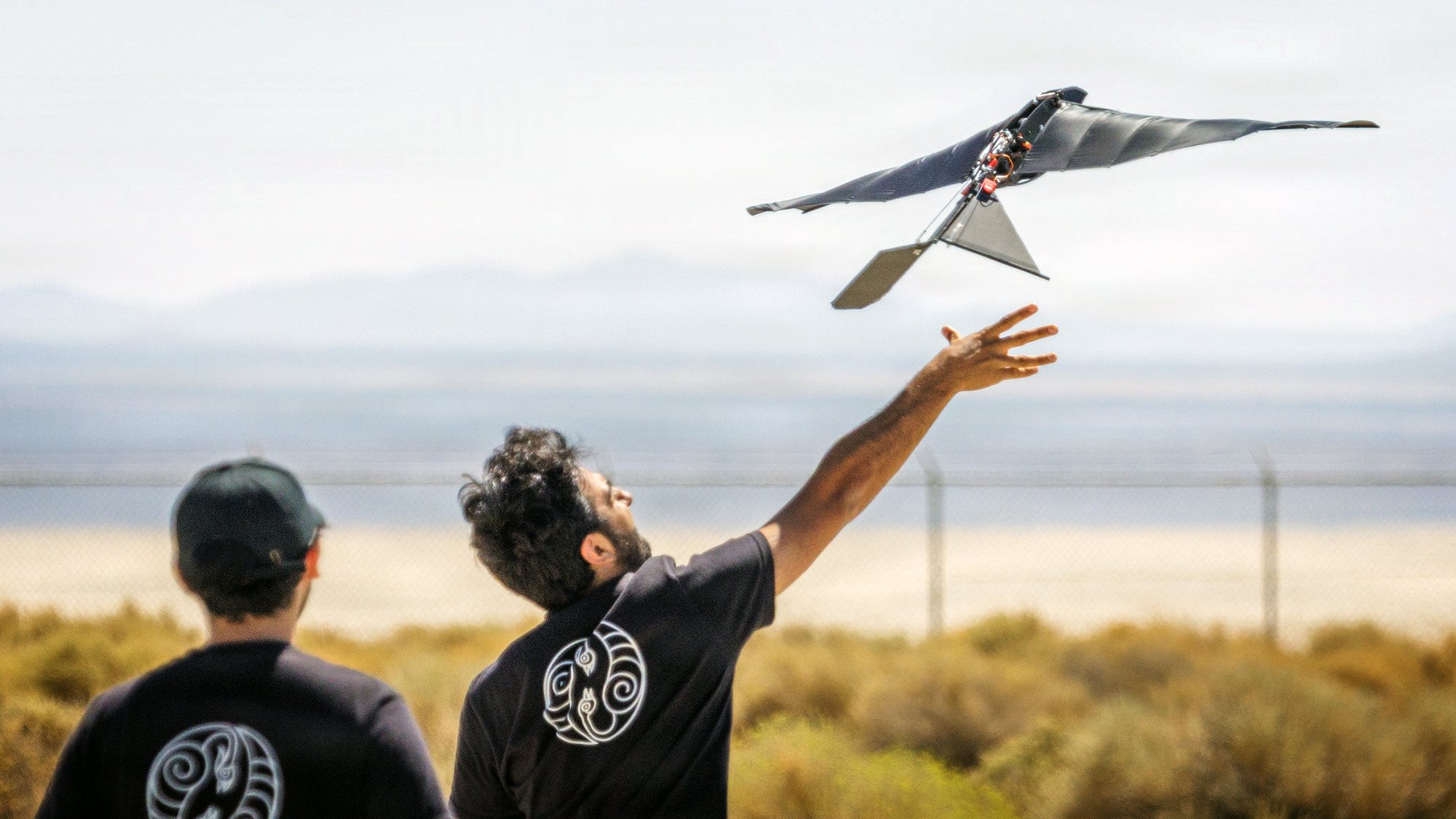
A wing-flapping drone appearing to fly like a bird evaded sensor detection at a recent Air Force tech exercise in the Mojave Desert.
Ornadyne’s small O1 ornithopter drone doesn’t use propellers like most drones. Instead, it mimics the flight mechanics of a bird by flapping its wings to stay in the air. The small unmanned aerial system (UAS) is designed to resemble a bird, while it collects intelligence or surveys an area at low altitudes.
“It looks like a bird, it moves similar to a bird, and humans and counter-UAS systems can misclassify it as a bird,” Armen Arakelyan, one of Ornadyne’s co-founders, said in a Department of Defense release. “It’s also a lot quieter because we replaced propellers with flapping wings.”
The test was part of the military’s annual “Game of Drones” event in September at Edwards Air Force Base, which sits in the Mojave Desert in Southern California. The base hosts drone exercises each quarter to test new tech. The event is sponsored by the Air Force 412th Test Wing’s Experimental Test Force and the Defense Contract Management Agency’s Blue List team, which approves commercial drones for sale to the U.S. military.
It was the first time that the U.S.-based drone manufacturer tested its ability to hide from detection systems built by other private companies, said Arakelyan, who is also a former engineer for Elon Musk’s SpaceX.
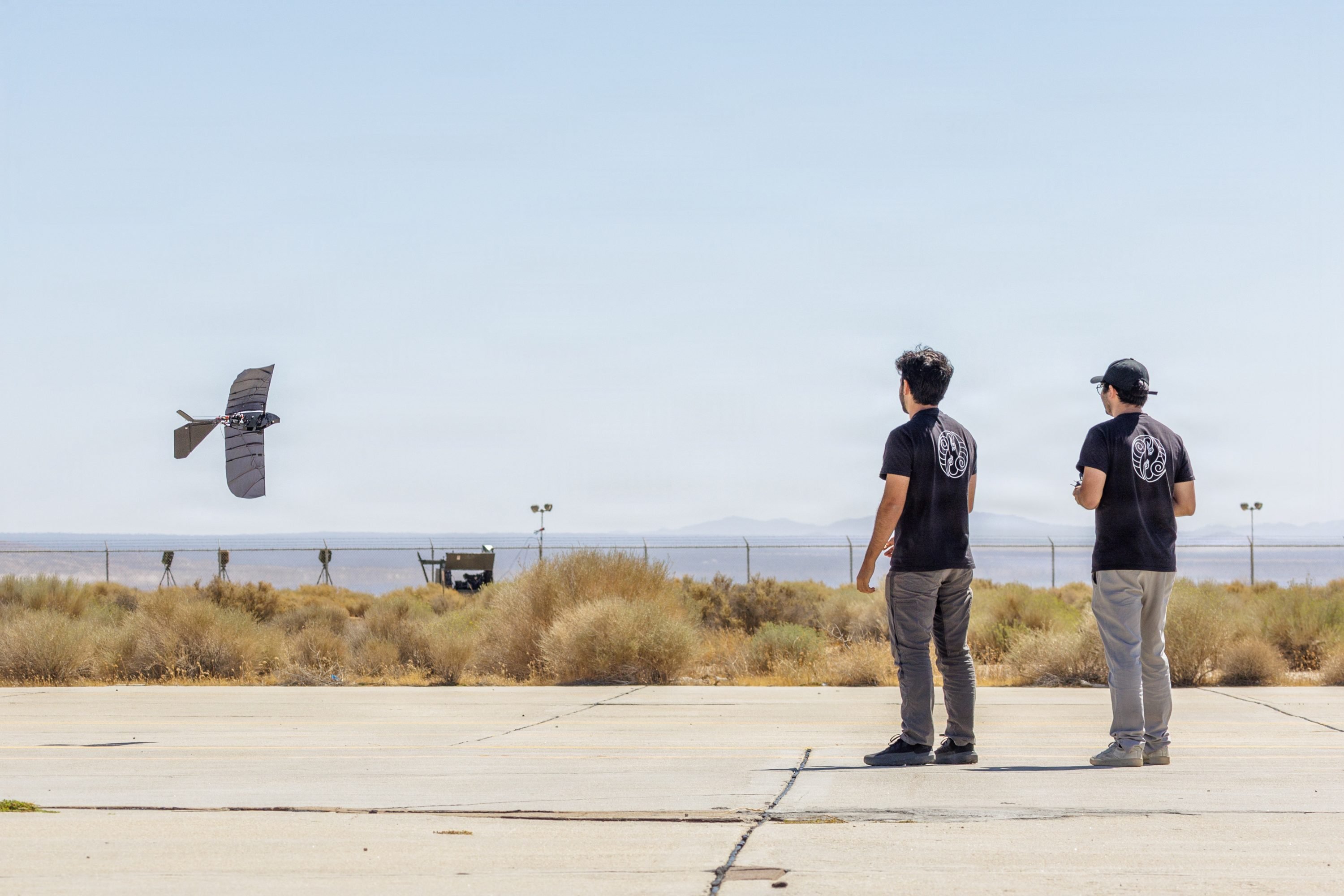
The O1 drone weighs 1 pound and can fly up to 10 kilometers, which is a little more than 6 miles, for over an hour, according to a company fact sheet. The drone can carry a small payload, like a camera used to do target recognition for surveillance missions.
Many drones are built to evade detection by masking the signatures they emit, using different frequencies or mobile SIMs, flying autonomously with a pre-planned flight path, or using fiber optic cables to bypass electronic surveillance.
The O1 takes the method of blending in with the environment since the company says it can change the drone’s color, wingspan, proportions and silhouette to match a native bird species operating in a particular region.
“We learned during ‘Game of Drones’ that sensors deployed by the other companies here could not establish our drone using their detection equipment,” Geourg Kivijian, Ornadyne’s other co-founder, said. “It registered as a bird, which is exactly what we wanted.”
Ornadyne is not the first company to dream up a bird-like drone.
The innovation also hasn’t been lost on a group of conspiracy theorists promoting, somewhat satirically, that Birds Aren’t Real. The notion behind the group’s claims is that the U.S. government has replaced all birds with surveillance drones. Well, they might not be far off.
In fact, an entire category of unmanned systems known as ornithopter drones use ‘wings’ instead of propellers or jets to mimic birds or insects in the sky.
In 2024, video of a People’s Liberation Army exercise showed a Chinese Jiaolong Commando — which are akin to the Navy SEALs — releasing their own bird-like drone resembling a Eurasian tree sparrow flapping its wings.
Fortunately, the robo-birds in that video appear to be non-migratory.
Loading comments…
Comments couldn’t be loaded. Please refresh the page.