
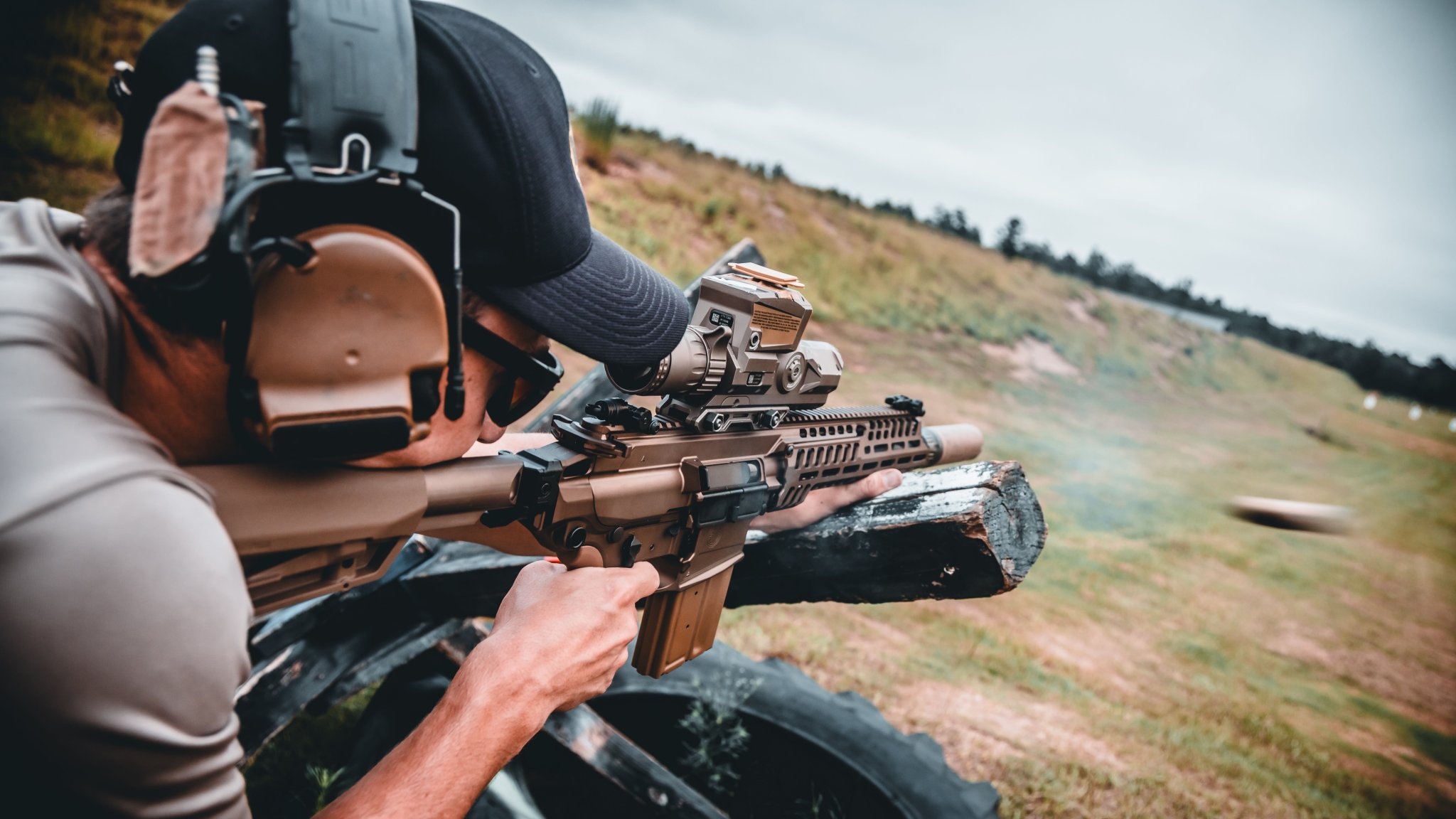
The Army’s new generational replacement for the M4-style rifles that infantry soldiers have carried into battle for nearly 50 years will receive less independent and real-world testing after it was taken off a Pentagon oversight list.
The M7 is part of the Army’s Next Generation Squad Weapon program that will replace the service’s M4 carbine. The service officially designated the M7 as its new rifle in May, announcing that it met “stringent standards for operational performance, safety, and sustainment.” The milestone came weeks after the gun came under heavy criticism from an Army captain whose research led him to call it a “tactically outdated service rifle” with a “mechanically unsound design that will not hold up to sustained combat on a peer-on-peer conflict.”
Now, the rifle’s removal from oversight by a Pentagon-level office tasked with conducting tests that are independent from the Army is getting heat from a federal watchdog.
Greg Williams, a lead defense analyst for the Project on Government Oversight, said that between May and August, the Department of Defense Test & Evaluation office, DOT&E, dropped 99 programs from the list of programs it oversees — including the M7 rifle.
“The XM7 is intended to be the first successor to the M16/M4 series of rifles, which had so many malfunctions it helped lead to the creation of DOT&E. We can only hope this drastic reduction in testing doesn’t lead to the same kinds of deadly combat failures that occurred with the M16,” Williams wrote in an online analysis.
Without that DoT&E oversight, Williams argues that the weapon won’t get enough testing that puts the gun through realistic combat scenarios or has oversight by an agency outside of the Army.
“For meaningful operational testing to occur, it must be overseen and evaluated by a party independent of the Army and the rifle’s manufacturers,” Williams told Task & Purpose. “Just doing the tests isn’t enough. You wouldn’t let a student take an exam and then grade their own test, would you?”
A defense official said that M7 fire control assessments were dropped from the oversight list in July after “extensive” operational tests completed by the Army between October 2023 and 2024 — which were observed by DOT&E personnel. The official said DOT&E completed “associated reporting to inform fielding and full-rate production” and fulfilled a Congressional requirement with its Early Fielding Report published in June.
Pentagon testing
DOT&E, established by Congress in 1983, oversees testing for the military services’ acquisition programs which range from space satellites to the weapons that troops carry into combat, like the M7. The office also conducts its own tests under realistic conditions and reports its findings on whether the weapon is ready for use to Congress. This way, federal lawmakers can decide whether to set aside funding for the services to enter into production contracts.
“For a weapon system that is not on the oversight list, the individual service can decide to put it into full-rate production whether or not those tests are complete and regardless of the outcome of those tests,” Williams said. “Congress and the American people will be less aware or have less opportunity to be aware of any of those kinds of operational shortcomings.”
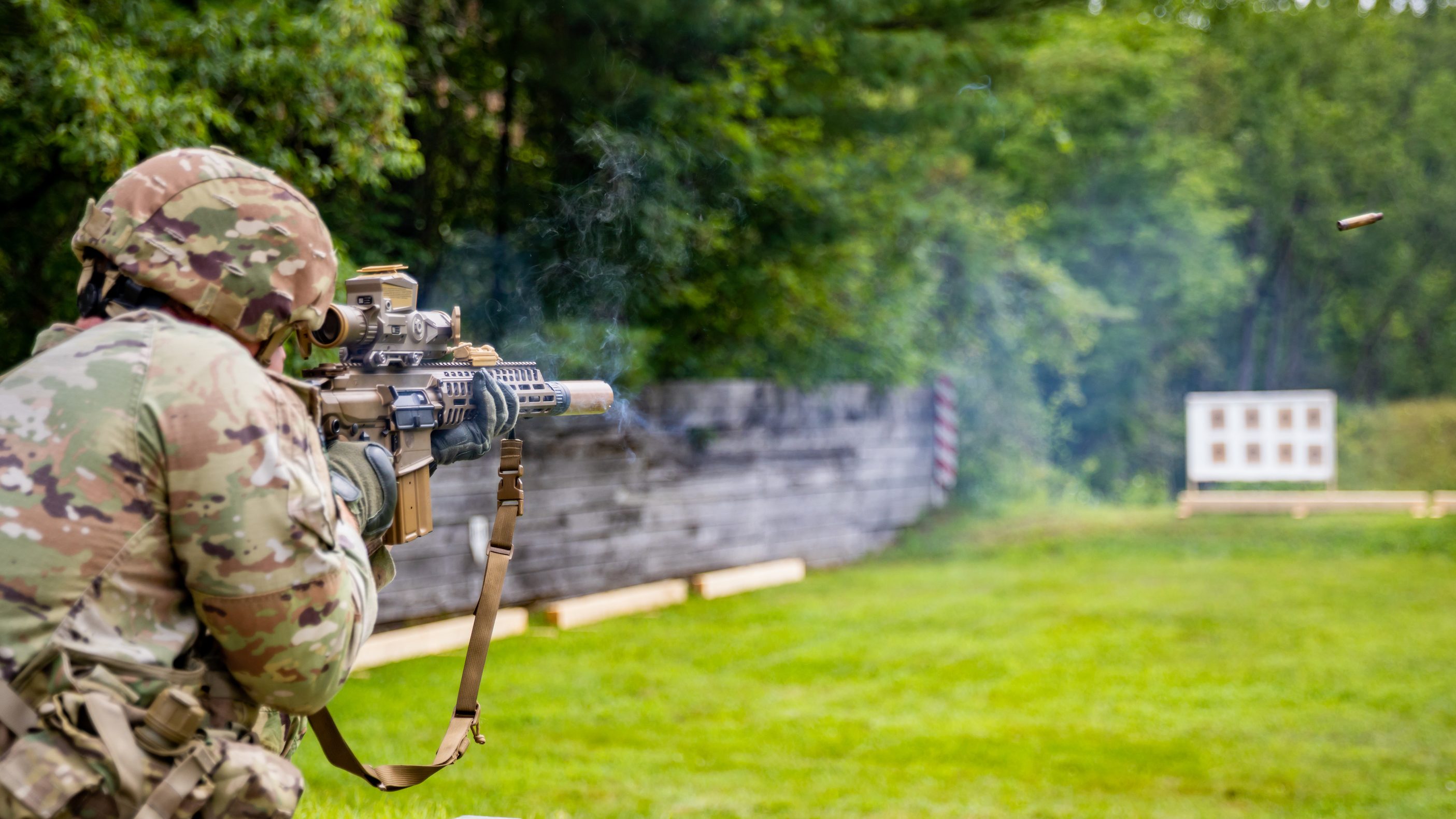
The decrease in Pentagon testing oversight comes months after Defense Secretary Pete Hegseth axed more than half of the office’s staff.
“With some of the restructuring that the Department of Defense is doing with the Director of Operational Test and Evaluation, they happen to make some adjustments on what they’re looking at, how they prioritize those things,” Daryl Easlick, a test and evaluation specialist for the Army’s Soldier Lethality Cross Functional Team said. “It’s just not under DOT&E oversight at this point. That’s subject to change, obviously if priorities change.”
Williams said part of the agency’s operational testing helps to verify the weapon’s use in real-world combat, like whether the gun jams or if its suppressor affects how soldiers can hear commands on the battlefield. Those tests are different from early developmental assessments that the Army does with a private contractor, in this case, Sig Sauer.
“Operational testing might assess, for example, the safety of a soldier when they run out of ammunition and can’t return fire, whereas that’s not the kind of thing you would address in developmental testing,” Williams said.
Army officials said that the M7 will still undergo live fire testing, which will assess whether the rifle can be used to hit a target. Easlick said DOT&E does the live fire evaluation to assess ammunition that the M7 fires.
“Despite removal from [the] Operational Test Oversight List, the program completed all DOT&E required operational testing,” Peter J. Stambersky, an acquisitions director with Program Executive Office Soldier, the Army office in charge of the M7 program, told Task & Purpose in a statement.
The M7 has undergone limited user, arctic, and airborne testing, logistics demonstrations and an operational assessment. Tropic testing is planned for fiscal year 2026, according to the Army.
Top Stories This Week
But Williams said the fact the DOT&E testing is independent from the services is crucial since it ensures that Congress receives reports “without the data first being manipulated by service secretaries or other people who have a vested interest in the success of the program.”
Williams said independent testing is warranted because problems with the M7 are not “merely theoretical” and have been previously documented by the testing and evaluation office.
In the DOT&E’s annual report issued in January, officials reported that “soldiers assessed the usability of the XM157 [the weapon’s fire control mechanism] as below average/failing” and that rifles equipped with the mounted optic lens “demonstrated a low probability of completing one 72-hour wartime mission without incurring a critical failure.”
While defense contractors are involved in early development testing, the mission of DoT&E is to provide an “unbiased, unfiltered assessment” of the military’s weapons.
Stambersky said the Army‘s Evaluation Center will “continue to independently assess” the M7’s safety, effectiveness, suitability, and survivability, “whether on DOT&E Oversight or not.”
UPDATE: 9/4/2025; This article has been updated with a statement from a defense official on the DOT&E list and quotes from Daryl Easlick, a test and evaluation specialist for the Army’s Soldier Lethality Cross Functional Team about the M7 being taken off the DOT&E list and the office’s remaining live fire test.
