
The federal government’s use of an active-duty Army lawyer to prosecute a civilian in Minnesota runs afoul of military regulations, U.S. Magistrate Shannon Elkins said Friday.
But Elkins ruled the case could proceed, as she does not have the authority to enforce Pentagon rules.
“Department of Defense regulations recognize that having military lawyers prosecute civilians in cases that lack a military nexus would be ill-advised,” Elkins wrote. But, she said, “these regulations do not authorize this Court to strike the appearance of a (military attorney) that the (Department of Justice) appointed.”
Military veterans who served as Judge Advocate General attorneys told Task & Purpose that the case is part of a worrying trend in which domestic policing is increasingly militarized, a pattern that may now be spilling into courtrooms as JAG officers are assigned to civilian criminal cases nationwide.
Former JAG officers said the practice also appears to contravene Secretary of Defense Pete Hegseth’s instructions to military officials to refocus the JAG corps on “advising commanders in the fight, on operations,” rather than civilian legal matters.
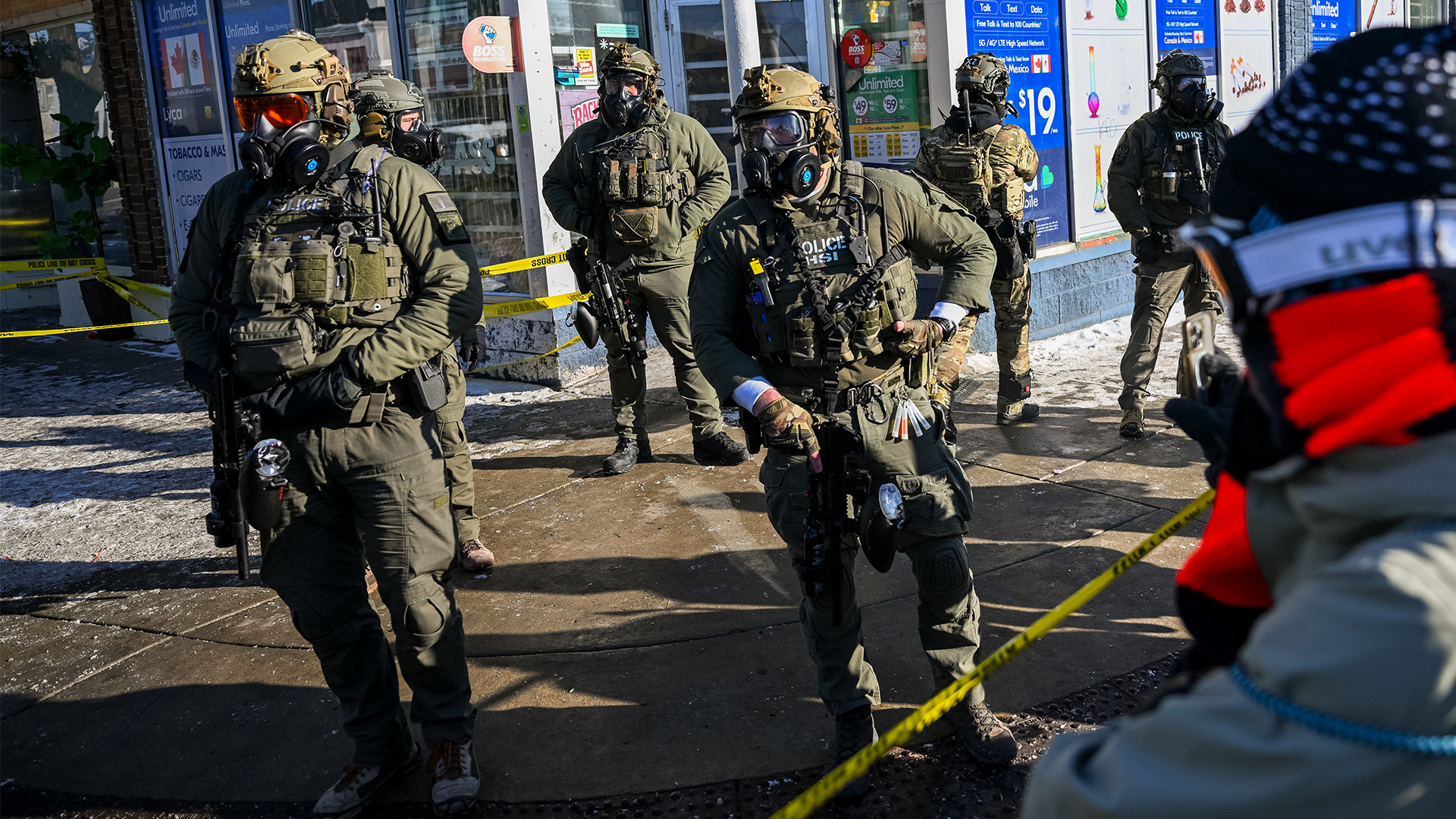
Friday’s ruling came after Paul Ervin Johnson, a Minnesota man, asked Elkins to prevent Army JAG officer Michael Hakes-Rodriguez from serving as a prosecutor in his case. Johnson is accused of pepper-spraying a Customs and Border Protection officer during President Donald Trump’s crackdown on migrants in Minneapolis this winter.
Although Johnson’s trial will continue with a military lawyer in the role normally filled by a civilian, one former JAG called the judge’s ruling “a first step toward ending this troubling overreach.”
“The court made a crucial ruling: the government is violating its own binding regulations by using military lawyers to prosecute ordinary civilian cases,” said Zachary West, the national security counsel at the nonprofit Protect Democracy project.
West, who served in the Air Force, helped organize a group of 11 former JAG officers to file an amicus brief arguing that the use of military lawyers to prosecute civilians in cases with no military issue violates the Posse Comitatus Act and Pentagon policy.
The Posse Comitatus Act forbids the military from enforcing civilian laws or operating as law enforcement domestically. Elkins ruled that Congress had carved out exceptions in the law that allowed the U.S. Attorney’s Office to appoint Hakes-Rodriguez.
However, Elkins agreed that the military was out of step with Army regulations instructing JAGs to only prosecute cases “in which the Army has an interest.”
“In this case, it is undisputed that the Army has no interest in the prosecution of Mr. Johnson,” Elkins wrote. “Additionally, when the Court directly asked the Government about the regulations, the Government opined that the regulations do not matter.”
The Justice Department did not return a request for comment.
Rachel VanLandingham, a professor at Southwestern Law School and a former JAG officer, said the military can create regulations that restrict their own authority granted by Congress, but a civilian federal judge can’t enforce those rules.
“She has no authority to issue some kind of injunction,” VanLandingham said. But, she noted, the case does create an ethical dilemma when JAG officers are given tasks that their own regulations discourage.
“That causes some kind of moral dissonance,” VanLandingham said. “Plus, it’s another creeping measure of the militarization of domestic law enforcement. And that’s not good.”
Dozens of JAG officers have been sent in recent months to help prosecute cases in Memphis, Tennessee, Washington, D.C., and Minneapolis as part of the Trump administration’s immigration crackdown. And while JAG officers have long worked alongside civilian prosecutors to tackle crimes that involve military property and personnel, the way they’re now being used in cases without a military connection is unprecedented.
Army spokesman Christopher Surridge said JAG officers assigned to civilian prosecutions receive “substantial courtroom and litigation experience.”
Top Stories This Week
That experience, he said, “directly benefits the Army’s military justice practice.”
Surridge did not indicate that Army rules against civilian work for JAGs had been rewritten or rescinded.
But the effort appears to run counter to Hegseth’s goal of ending practices within the JAG corps that he believes pull JAG officers “away from what matters most: advising commanders in the fight.”
Hegseth said in a March video statement that he had directed each service secretary to “execute a ruthless, no excuses review” that would clarify roles and functions.
“Right now, military lawyers are sometimes stuck doing civilian sidework that belongs to general counsels instead, and that drains readiness and leaves gaps where we can’t afford to have them,” Hegseth said. “That ends today.”
Loading comments…
Comments couldn’t be loaded. Please refresh the page.