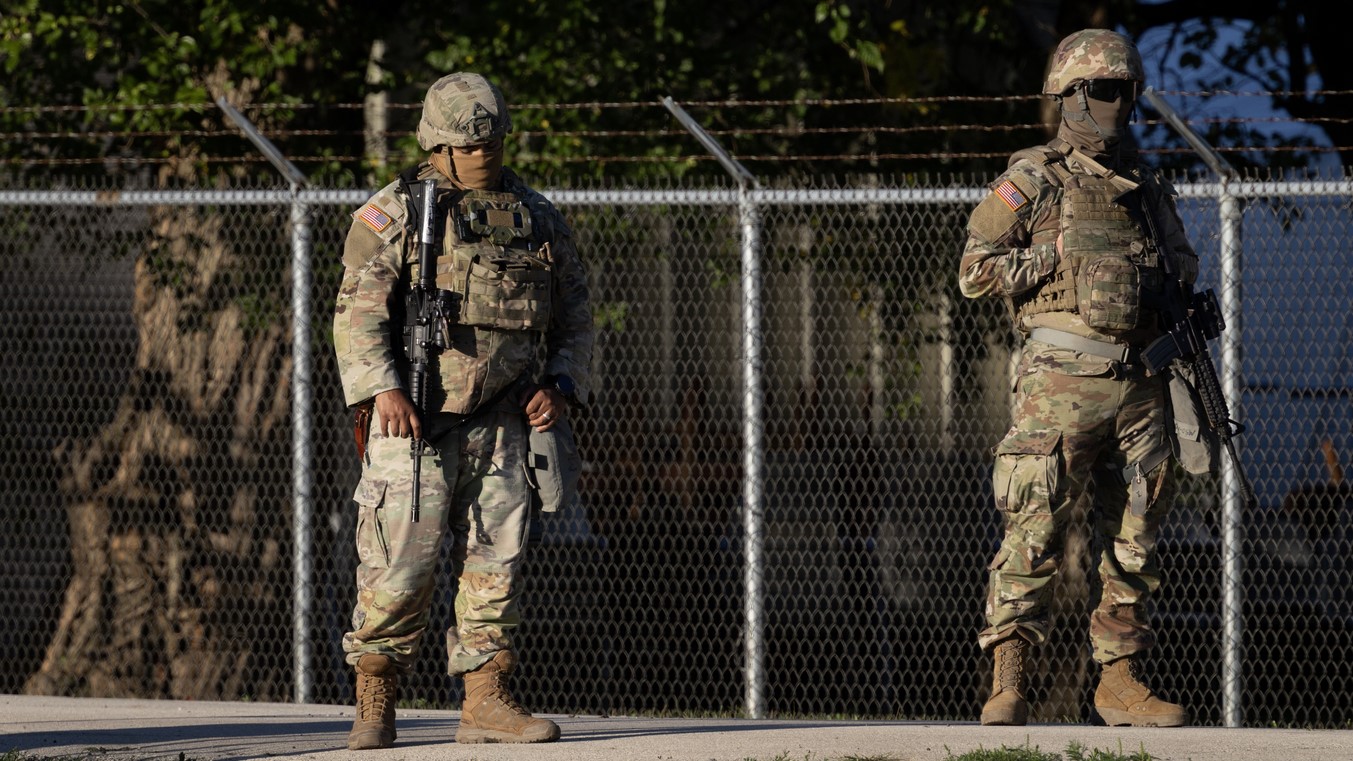
Hundreds of federalized National Guard troops will begin leaving Portland and Chicago in the coming days, weeks after they were ordered to the cities by the Trump administration to aid law enforcement deal with what it called rampant crime and chaos.
The drawdown affects both National Guard troops federalized and sent to cities in their own states and ones deployed from other states, such as members of the Texas National Guard. The news, first reported by ABC News, was confirmed by a defense official. The official told Task & Purpose that a large number of troops will be released back to state control, although 700 will remain under federal control.
On Friday night, U.S. Northern Command posted on X that ”in the coming days, the Department will be shifting and/or rightsizing our Title 10 footprint in Portland, Los Angeles, and Chicago to ensure a constant, enduring, and long-term presence in each city. Our troops in each city (and others) are trained and ready, and will be employed whenever needed to support law enforcement and keep our citizens safe.”
Top Stories This Week
Hundreds of National Guard personnel were activated via Title 10 of the federal code, which allows for such a move in the potential or actual case of rebellion. The Trump administration federalized those forces to protect federal buildings, accusing people protesting against immigration raids in cities of inciting violence.
California National Guard troops, among the remaining members still under NORTHCOM control after being federalized in June, will leave Oregon. 100 California soldiers will stay federalized, but remain in the Los Angeles area. Meanwhile 200 Texas National Guard troops that were sent to Chicago will leave Illinois, but will remain on standby for potential later deployments, the defense official said.
For troops federalized to operate in their home states, many will remain on active duty. 300 Illinois National Guard members will stay mobilized, while 100 of the 200 Oregon National Guard members activated under Title 10 will also stay active.
The drawdown also comes after several legal challenges blocked the outright deployment of National Guard troops, leaving many idling in limbo on military bases. In Oregon earlier this month, Judge Karin Immergut issued a final ruling, permanently blocking the deployment of the National Guard into Portland.
In Illinois, a federal judge temporarily blocked the deployment of troops in October. The planned deployment was meant to support the Department of Homeland Security’s Operation Midway Blitz; some of the federal agents sent to Chicago for that operation have left, with many going to Charlotte, North Carolina.
National Guard troops activated under state authority in support of the administration’s efforts remain active in other cities, including Washington, D.C., where their mission has been extended into next year. The National Guard is also developing plans for a quick reaction force.