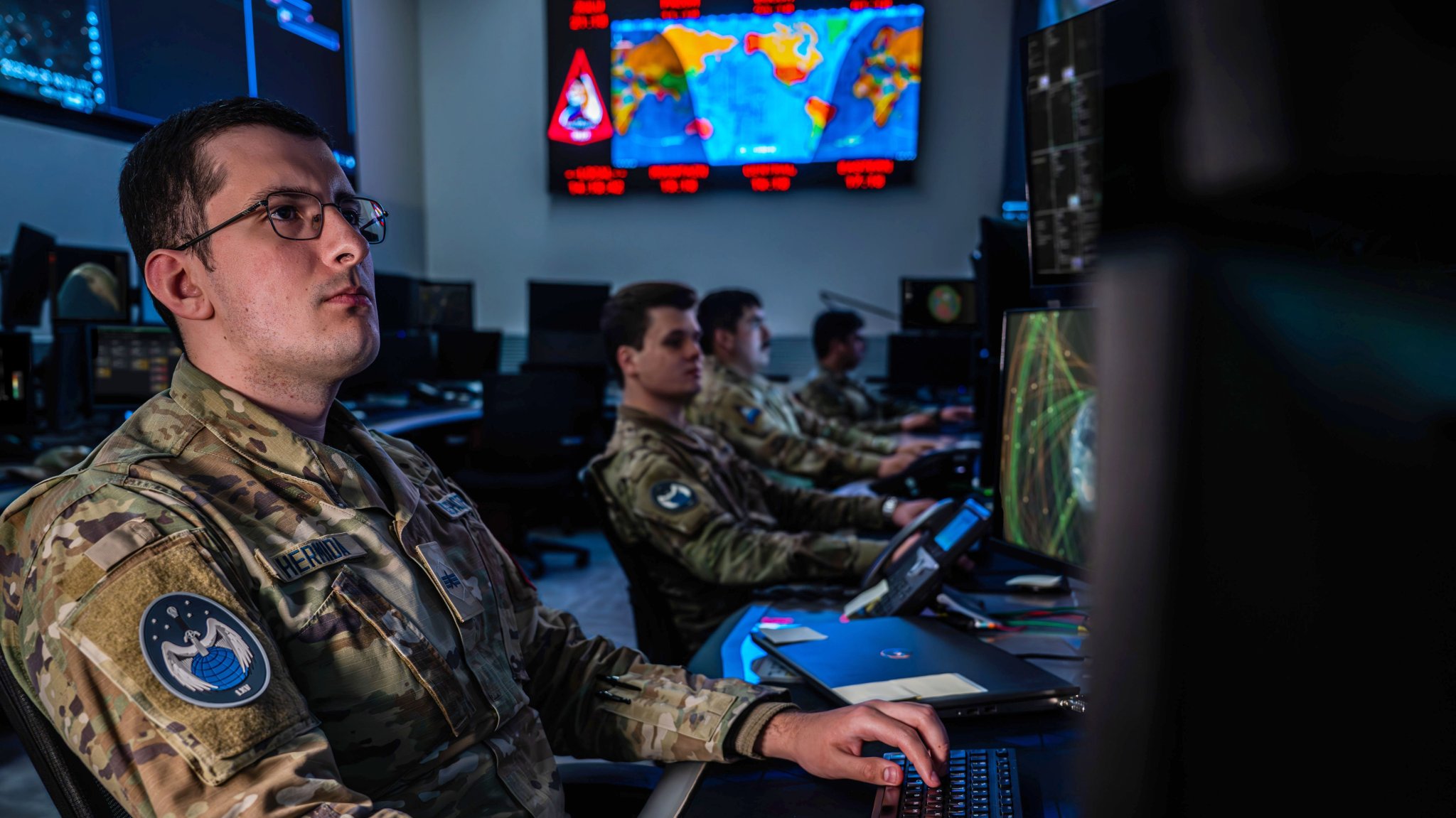
Space Force wants to double the number of guardians in its ranks, and is making progress on that, having already beat its recruitment goals for this fiscal year.
This past week the six senior enlisted leaders for each branch of the military were testifying before Congress about quality of life in the armed forces. They spoke on a range of issues, from housing to women’s capabilities in combat. Along the way, Chief Master Sergeant of the Space Force John Bentivegna said that the service is currently at 125% of its recruiting goal for the 2026 fiscal year.
It also wants to double its current size of 10,000 guardians to meet a “national security necessity,” something Bentivegna told Congress was “entirely achievable.” He pointed to specific concerns that Space Force wants to grow to address, noting threats such as Chinese space weapons and Russian anti-satellite missiles and ground-based lasers.
According to the Department of the Air Force, Space Force has met its goals every year since it was established in December 2019. This fiscal year, Space Force wanted to bring in 730 new recruits, Air & Space Forces Magazine noted, which is significantly smaller than the other military branches. New trainees going through basic military training are also now getting Space Force’s new dress uniform.
Top Stories This Week
Space Force leadership has said for the last few years it wants to rapidly grow, but it’s only in the last few months that much of the infrastructure and organizing structures of that growth came into focus. Alongside deploying new satellites into orbit at a high rate of launches, Space Force has set up terrestrial outposts in strategic locations and worked on defining what it calls “orbital warfare.”
This past month it formally activated Space Force contingents in U.S. Northern and Southern Command, following the latter taking part in Operation Absolute Resolve against Venezuela. The service and Chairman of the Joint Chiefs of Staff Gen. Dan Caine noted Space Force’s role, alongside U.S. Cyber Command, in helping to “create a path” for American forces into Caracas, allowing special operations units to capture and extradite Venezuelan President Nicolás Maduro.
Bentivegna also provided more insight into Space Force’s role in the attack on Iran’s nuclear sites last summer, something the service and Caine have only discussed in vague terms. According to Bentivegna, Guardians “provided precision navigation, critical intelligence, and life-saving missile warning” as U.S. forces carried out a series of airstrikes inside Iranian territory and flew out of danger.