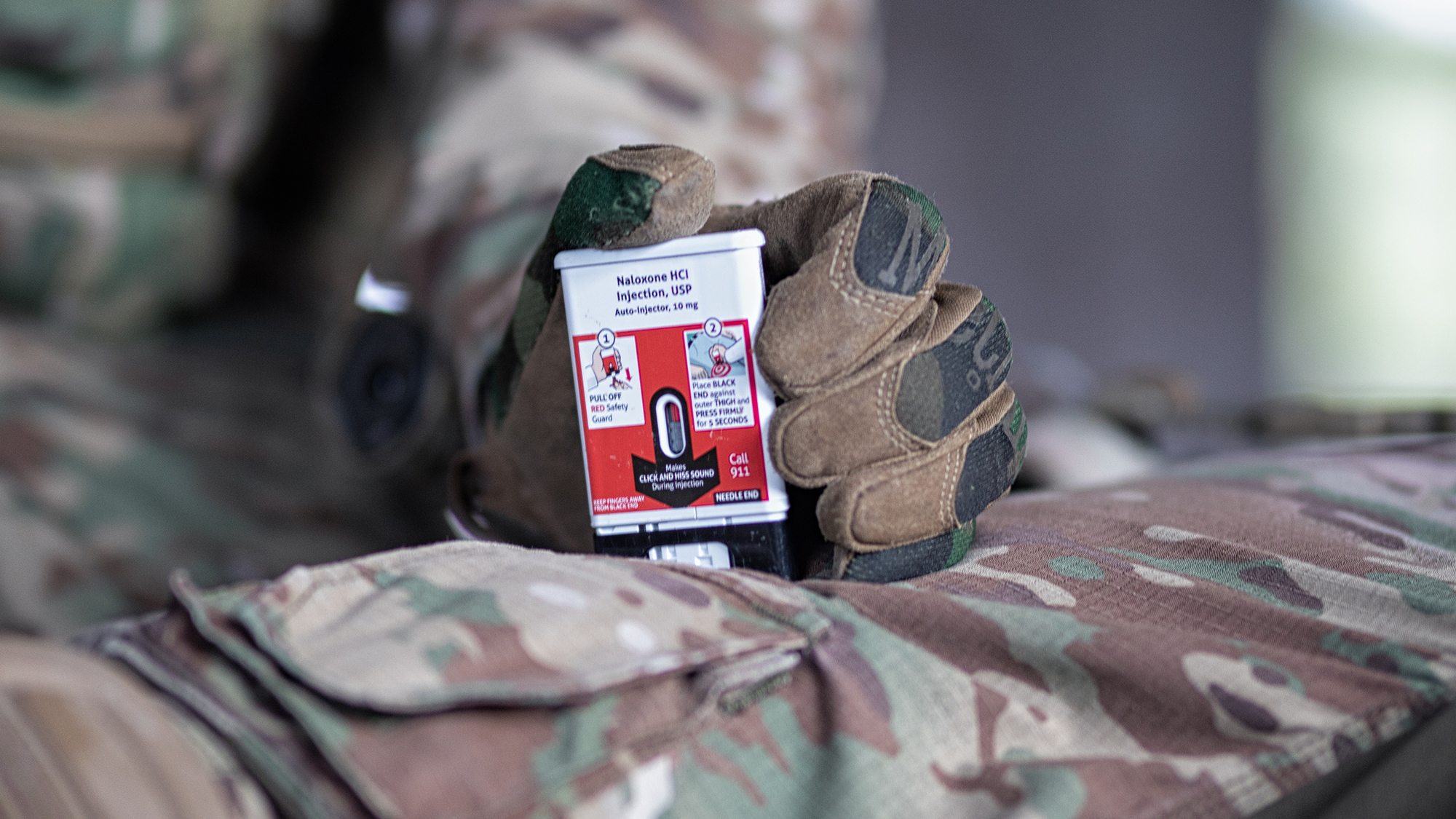
Veterans may get more access to a medication for reversing opioid overdoses if a new bill becomes law.
Currently, veterans can get naloxone for free with a prescription from medical providers at the Department of Veterans Affairs. But a new bipartisan bill would make naloxone and other overdose reversal medications available to veterans at VA pharmacies without one.
The “End Veterans Overdose Act” introduced last week by Sens. Jeanne Shaheen (D-N.H.) and Mike Crapo (R-Idaho) would also give this prescription-free option to veteran caregivers.
Naloxone, more commonly known under the brand name Narcan, rapidly reverses an opioid overdose in minutes by blocking the effects of drugs like heroin, fentanyl, oxycodone (also known as OxyContin), hydrocodone (sold under the brand name Vicodin), codeine and morphine. Naloxone is used to “quickly restore normal breathing to a person if their breathing has slowed or stopped because of an opioid overdose,” according to the National Institute on Drug Abuse. Naloxone is not a treatment for opioid use disorder, according to the institute.
“Veterans are among those most acutely impacted by the opioid crisis,” Crapo said in a statement to Task & Purpose. “Expanding direct access to opioid overdose reversal medications like Naloxone builds upon existing VA programs, reduces stigma around seeking treatment and ensures life-saving medication is available when it is needed most. This legislation is an essential part of a broader effort to confront the opioid epidemic head-on for veterans and their families.”
Top Stories This Week
A significant number of veterans are prescribed opioids to manage high rates of chronic pain because of service-related injuries and trauma. According to VA data, more than 50 % of veterans who were prescribed opioids in 2023 were on long-term opioid therapy, meaning they use them for more than three months. In 2022, nearly 2.8 million, or 14% of veterans, reported having at least one substance use disorder.
National Legislative Associate Director for the Veterans of Foreign Wars Meggan Coleman said expanding prescription-free access to naloxone through the VA is “a critical step to prevent avoidable veteran deaths.”
“Veterans face higher rates of chronic pain, mental health conditions, and substance use disorders, which increase overdose risk for both veterans and their households. Removing cost and administrative barriers within the VA aligns with evidence-based public health practices, empowers caregivers to respond in emergencies, and reduces stigma around seeking help,” Coleman said in a statement.
In recent years, the VA has made a number of strides towards bringing down the number of opioids given to patients with new prescribing methodologies and internal policies. At the local level, the VA has recognized medical centers with targeted programs to improve naloxone access, like in Minneapolis, Minnesota. That VA center began giving kits to veterans at community centers, resource fairs, through their mobile medical unit and informing veterans of availability through automated calls.
In 2023, Narcan was approved for over-the-counter use by the U.S. Food and Drug Administration, making it more widely available online and in drug stores, convenience stores, and gas stations. In 2024, an advocacy group made up of active duty airmen helped bring Narcan to local military exchanges for troops and military families to buy it in stores on base and online.
“It is our duty to look out for those who bravely served our nation, and while we’ve made great strides towards ending the substance use epidemic, far too many veterans are still losing their lives due to overdoses. That is unacceptable, and it’s imperative that we explore every avenue to make life-saving treatments more accessible at the VA,” Sen. Shaheen said in a statement.
According to the bill’s text, the VA secretary can collect veterans’ personally identifiable information for prescribing the reversal medication but “solely for the purpose of delivering, evaluating, and enhancing the quality of health care.” The personal information cannot be used to prevent a veteran from future employment as evidence of a history of drug use or addiction.
If the bill becomes law, the VA secretary would be required to report to Congress on the number of veterans and caregivers who received naloxone, utilization trends, and “feasibility” assessments on expanding the authority to veterans’ immediate family members and to other VA community care providers.
The bill was introduced Feb. 2 in the Senate and referred to the Committee on Veterans’ Affairs.