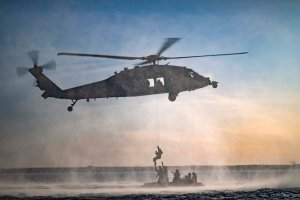
Women who have served in combat arms for the last decade say a new Pentagon-ordered review of their “effectiveness” is the latest frustrating chapter in what they say has been the theme of their careers: proving themselves capable in combat units on a daily basis. They worry that the Pentagon-wide review of the “effectiveness” of women in ground combat jobs ordered by Defense Secretary Pete Hegseth could just be more of the same double standards and misinformation they live with every day.
“We’re not talking about just the everyday person off the street who’s willing to enter these roles,” said Elizabeth Dempsey Beggs, who served as an Army armor officer for nearly five years. “We’re talking about serious soldiers who want to go into combat arms and take that level of responsibility seriously.”
Though women have qualified for and served in combat arms roles, such as the infantry, armor and artillery, since 2016, several say they often find their careers are not judged on individual merit.
“Just because you meet one woman who can’t carry her buddy, doesn’t mean that all women can’t carry their buddy. If a man screws up, somebody says, ‘Man, Bob, you suck,’” said Kris Fuhr, a U.S. Military Academy graduate and former advisor to Army Forces Command on gender integration. “If a woman screws up, men say ‘all women suck.’”
Task & Purpose interviewed five women who are currently serving in combat positions or who left combat arms jobs in 2024 or 2025. Several spoke on the condition of anonymity to address the new push by Pentagon leaders to once again put women like them at the center of a political debate.
Fuhr insisted that similar reviews and surveys have been done.
As soon as women were first assigned to combat roles, she said, “the Army recognized that they would have to maintain high standards and they set up longitudinal studies and gathered quarterly data on both individual and unit performance of integrated units so that they could make sure there was no degradation to unit effectiveness.”
Between 2019 and 2023, the Army collected data on unit readiness like individual soldiers’ weapon qualifications, expert badges, crew training on weapons and other platforms, as well as platoons’ combat training center performances, she said. Fuhr worked in various roles advising the Army on gender integration between 2015 and 2023, including under the four-star commanding general of Forces Command, which oversaw the majority of frontline infantry soldiers in the Army.
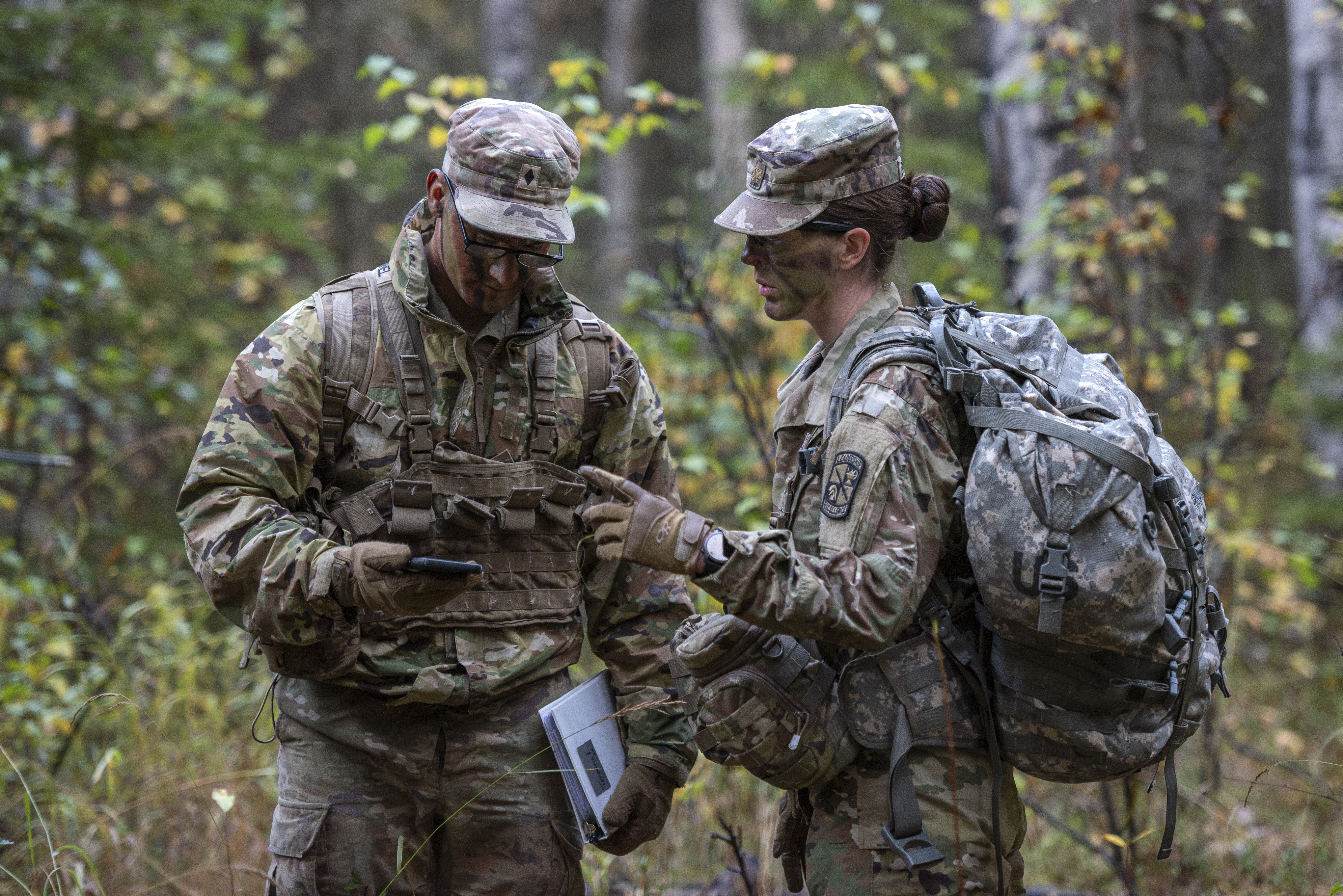
“They gathered this data for five years and never saw a single problem,” Fuhr said. “This data pool is gonna be an incredible burden on units. Think about how many people have served in combat arms individually over the last 10 years. Units have a lot better things to do than pull data to answer a question that’s already been answered.”
‘A solution in search of a problem that does not exist’
Before taking the lead of the Pentagon, Hegseth voiced skeptical opinions of women serving in combat jobs in his book and during interviews. At his Senate confirmation hearing, Hegseth softened his stance and said women should be in combat roles if they can meet the same standards as men.
Every woman who spoke to Task & Purpose emphatically disagreed with the broad insinuations echoed by Hegseth and other Pentagon officials that women in combat jobs are not already held to the same standards as men.
In fact, combat arms jobs across the military — from conventional troops like infantry and artillery in the Army or Marines to small special operations fields like Navy SEALs or Air Force Combat Control — have had gender-neutral requirements since women were allowed to join them.
“He has a solution in search of a problem that does not exist,” Fuhr said.
There are nearly 4,600 women in the Army’s conventional combat arms forces, like infantry, armor, and artillery, according to data collected by the Women in the Service Coalition, Inc., with a relatively small number in special operations jobs. Another 700 women were in Marine Corps combat roles in 2024. The Army and Marine Corps referred Task & Purpose to the Pentagon for up-to-date numbers, which declined to provide them.
Top Stories This Week
All five women who spoke to Task & Purpose gave numerous examples from their careers where they were held to the same “quantitative” and “objective” criteria as their male counterparts. Their examples included the physical demands of Ranger School and other formal training courses; armor, artillery, and infantry-specific fitness and physical tests; carrying peers over their shoulders during training; and loading artillery shells into howitzers.
Dempsey Beggs, who is running for a Congressional House seat in Virginia, was one of the first 50 women in the Army to join a combat arms unit. As a tank platoon leader at the 1st Infantry Division in 2019, Dempsey Beggs was the only woman in her company for her first six months.
To qualify as an armor officer, Dempsey Beggs said all soldiers faced the same physical tests.
“It includes picking up dummy rounds, putting them down, running with gear on, sled pulls — these things that actually measure whether you’re capable of doing that job physically and those never changed when you were first starting out,” she said. “The targets, like gunnery, are the same whether you’re a man or woman.”
A former field artillery officer told Task & Purpose she was one of the first women in her job. Part of her officer fitness assessments included picking up and loading Howitzers with artillery shells weighing between 30 and 100 pounds — an experience that left her with a wry sense of humor on fitness issues.
“I wouldn’t say that field artillery has a reputation for being in amazing shape anyway, so it’s also kind of funny to me. I mean, especially as an officer, you’re just riding around in a truck, and literally anyone can do that,” she said. “If you’re a 13 Bravo, like the [enlisted] cannon crew member, you’re picking up shells. But I mean, they’re not that heavy.”
At Ranger School, ‘they can’t tell if you’re a boy or a girl’
Four women who spoke to Task & Purpose were graduates of Ranger School, one of the Army’s most notoriously demanding courses for physical fitness (and which recently made its PT test even harder). Since 2015, more than 170 women have earned Ranger tabs, according to the Women in the Service Coalition, Inc., all under strict gender-neutral standards.
All four Ranger graduates said they believed they were monitored more closely than their male peers at the course and were often worried about messing up for the sake of all women who had or would attend the school.
Still, Hailey Buck, an armor officer who left the service in 2024, insisted the experience of Ranger School was “gender neutral,” adding that the course’s requirement that students shave their heads meant “a lot of times they can’t even tell if you’re a boy or a girl” until soldiers speak.
All soldiers in Ranger School have to complete the same number of push-ups, sit-ups, pull-ups, ruck times, and other exercises for each phase to progress, said a former Army intelligence officer who was assigned to the 75th Ranger Regiment for two years.
“These are very quantitative measures that you either meet or you don’t,” the former intelligence officer said. “Plenty of men fail. Plenty of women fail. Plenty of women pass. Plenty of men pass.”
A former field artillery officer who left the service in July 2024 said many men believe women get a pass at the school. In fact, she said, “the opposite is true because there’s a microscope on a woman” from instructors and even other students.
Testing, evaluations, and rankings are constant at the school, and after every phase, soldiers anonymously rank their peers among a squad of 15 to 20, a process that affects whether a soldier advances in the course and eventually graduates.
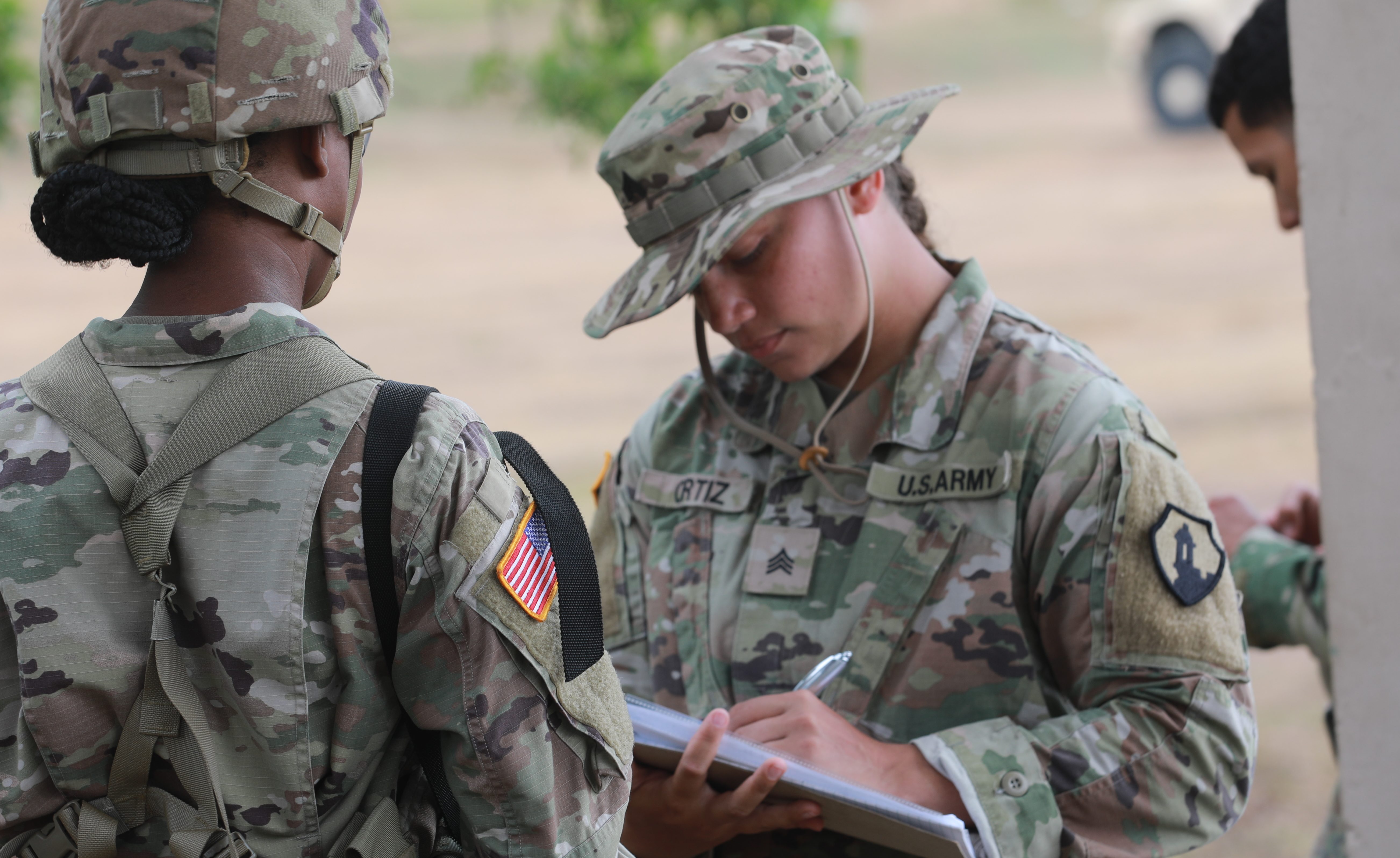
“If you don’t ‘peer’ a certain percentage, then you have to repeat that phase, or you get dropped from the school,” an Army infantry officer said.
But even with a Ranger tab, Buck sometimes felt like she “stuck out like a sore thumb.” After graduating, she reported to Fort Bragg, North Carolina, to join the 82nd Airborne Division. She said she immediately noticed the difference in how she and other women were treated.
“I had high enlisted men come up to me in front of my platoon and say, ‘How many Ranger instructors did you sleep with to get your Ranger tab?’ and say off-the-wall things like that,” she said. “My response would be, ‘None, how many did you?’”
Carrying a 200-pound dude
One of the most common doubts that women say they hear about their abilities is whether they can carry the full weight of a wounded fellow soldier. It’s a talking point that women say never goes away.
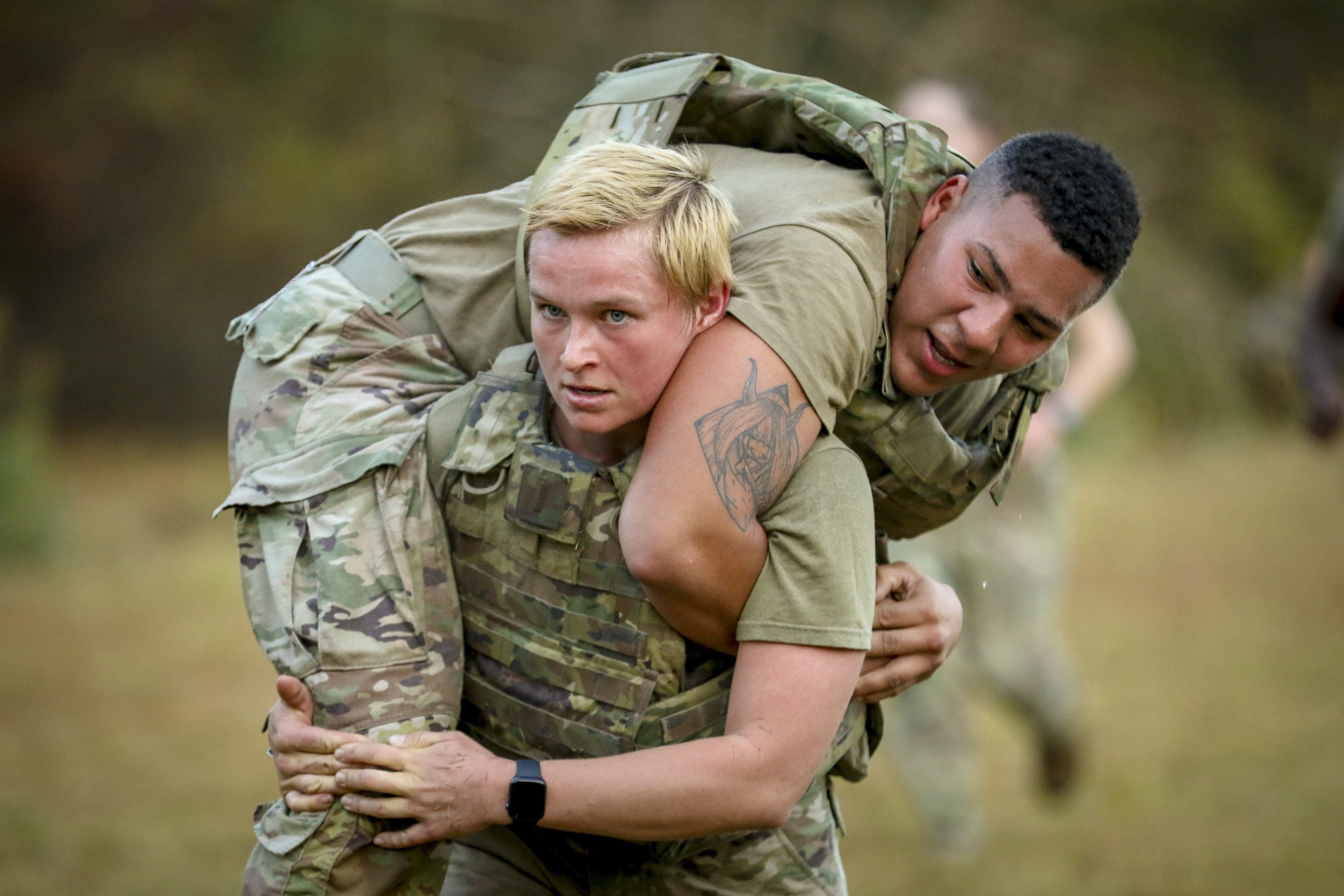
“That seems to always be brought up like, ‘Oh well, how is a woman gonna carry a man that weighs 200-plus pounds?’” said a current infantry officer who was among the first women to graduate from an integrated Infantry Basic Officer Leader Course.
At both the infantry school and in unit training, she said, carrying other soldiers in a fireman’s carry or other method was a regular part of training.
“We’ve done that. I’ve done that,” she said. “It’s a non-issue.”
Another officer who served in the Army’s 75th Ranger Regiment said concerns like buddy carrying disappear quickly in a unit where virtually all of daily life is gender neutral.
“It becomes abundantly apparent very quickly if you are contributing to the team or detracting from the team when you have to move 40 ammo cans from point A to point B,” she said. “There is no different standard. You either pull the weight, or you don’t.”
Another major misconception, Dempsey Beggs said, is the varied standards for men and women in Army-wide fitness testing. While performance standards in combat arms jobs are gender-neutral, Army-wide fitness tests have long been curved for both gender and age.
“People love to neglect the age part of that scale too — that it gets ‘easier’ as you get older,” Dempsey Beggs said.
But combat arms soldiers are held to a higher, gender-neutral standard in job-specific physical training. And women in combat arms now must meet male numbers on the Army-wide fitness test.
“People like to push that and say, ‘Oh, well, like there’s a different physical fitness standard.’ No, there’s not. There is not to be in these combat roles,” said Dempsey Beggs. “There is not a different fitness standard. And there are a lot of men serving in these roles who also cannot make this fitness standard.”
A decade of women in combat roles
Dr. Erin Kirk, founder of Not In My Marine Corps, was photographing the press conference in 2013 where then-Secretary Leon Panetta announced that the Pentagon would remove the ban on women serving in combat jobs. Integration efforts officially began in January 2016.
“I cried the whole time I was taking those pictures because it was finally a day where all of the work that we as women in combat had done and were finally able to be recognized for,” she said.
Even if the Pentagon attempts to put limits on women in certain jobs, Kirk said they will still continue to serve in combat just as they had during 21st-century wars in the Middle East. The former Marine combat photographer who deployed to Iraq said she was 111 pounds and carried more than half her body weight in gear, including body armor, camera equipment, side arms, and other necessities.
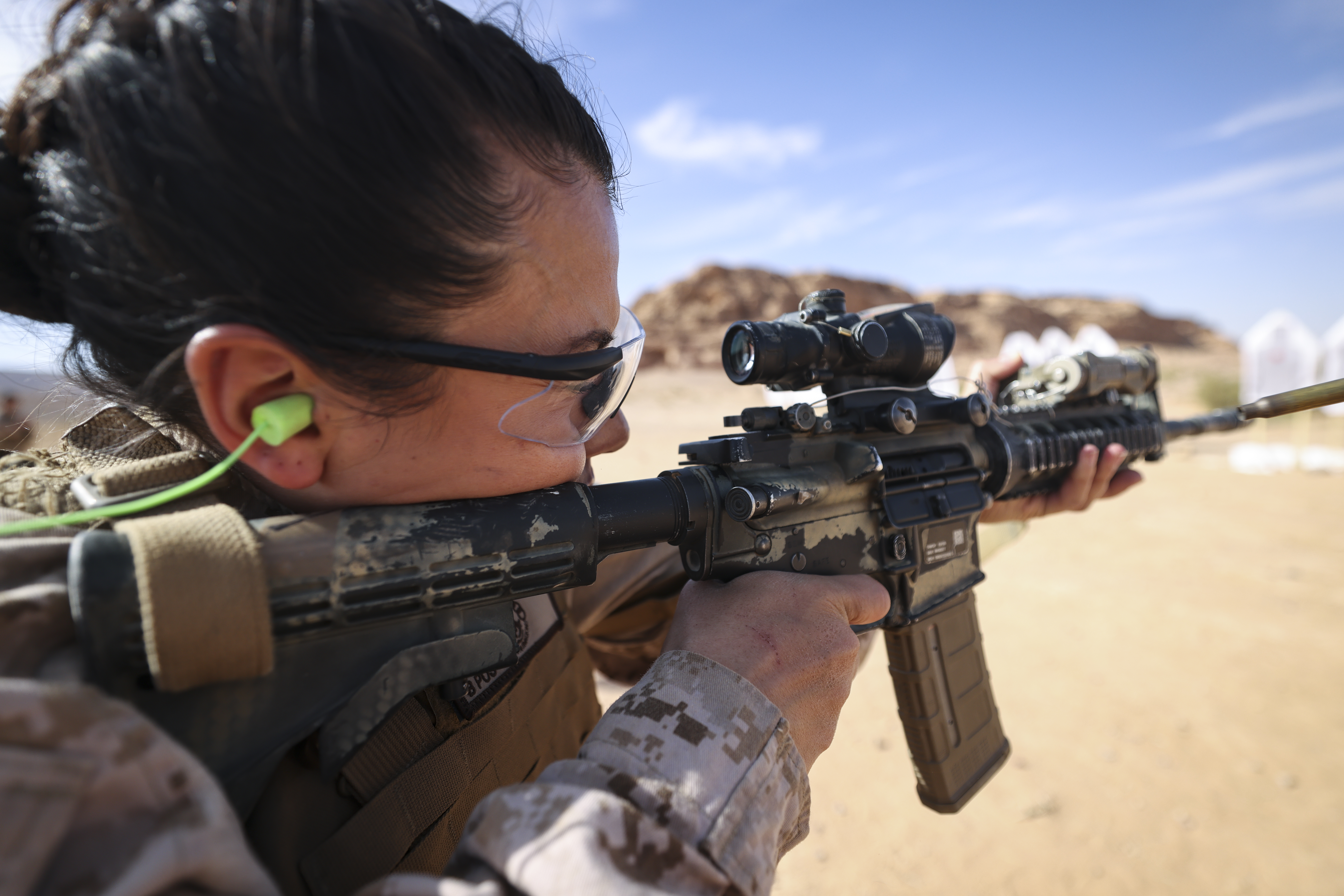
“On a daily basis, I was side by side, shoulder to shoulder with infantrymen, artillerymen, mounted patrols,” Kirk said. “You had women assigned on paper to non-combat units who were on a regular basis in combat receiving incoming fire, were getting blown up and killed in combat, and yet we’re not receiving the same recognition, the same benefits, the same awards as the men that they were standing directly next to, and it inherently hindered the progression of women.”
The infantry officer with nearly 10 years of experience said the discussion is frustrating after she and other women have continuously proved that they can do these jobs.
“We felt like this was kind of history in the making, and we felt like we had to be successful, to remain open for women who came after us, so there was a lot of pressure,” she said. “But we absolutely stepped up to the task and did overwhelmingly well.”