U.S. troops have long been based in Greenland, a self-autonomous territory within the Kingdom of Denmark that is strategically located between North America and Europe.
During World War II, weather stations on the island helped the Allies determine the best time to launch the D-Day landings in Normandy, France. The island later played an important role in NATO efforts to monitor Soviet forces, and it currently hosts a Space Force Base that is critical in detecting any ballistic missiles launched from Russia.
Greenland’s importance to U.S. national security was underscored by President Donald Trump’s recent efforts to acquire the island, which resulted in a “framework” of an agreement with NATO, few details of which have been publicly released.
With both Russia and China looking to increase their presence in the Arctic, Greenland will continue to be a vital location for the U.S. military’s early warning systems, said Iris A. Ferguson, a former deputy assistant secretary of defense for Arctic and global resilience.
“Greenland has been central to U.S. national security for decades because of its geography,” said Ferguson, now with the Center for Strategic and International Studies think tank in Washington, D.C. “During the Cold War, it became a cornerstone of early warning and missile defense for the U.S. homeland, and that role hasn’t gone away. If anything, Greenland, along with Alaska, are becoming more important.”
‘A strategic lifeline’
The U.S. military’s modern relationship with Greenland began in April 1941, when the American government signed an agreement with Danish Ambassador to the United States Henrik Kauffmann that allowed the U.S. military to establish bases on the island.
Because Greenland is the “breeding ground” for storms that hit Western Europe, it was vital for the Allies to set up weather stations on the island, according to the Arctic Institute think tank in Washington, D.C. That also prompted the United States and Greenland’s local government to establish a unit tasked with locating any German weather bases on the island.
“In World War II, Greenland wasn’t an ordinary battlefield; it was a strategic lifeline,” said Anthony Heron, of the Arctic Institute.“Its weather stations let the Allies protect shipping and plan operations with Arctic intelligence no one else had, allowed safer and shorter transatlantic routes, and vitally supported the overall Allied logistics.”
The U.S. military’s presence on Greenland also prevented any hostile power from being able to establish itself in the Western Hemisphere, a role that remained important after the war, Heron told Task & Purpose.
An agreement, then a crash
It wasn’t long after Germany was defeated in 1945 that Greenland became a front on the new Cold War. After Denmark rejected a U.S. offer in 1946 to buy Greenland for $100 million, both countries struck an agreement in 1951 that granted the U.S. military access to the Island.
At one point, the U.S. military had more than a dozen bases in Greenland along with thousands of troops.
One of the island’s most important roles was serving as an anchor for a string of seafloor hydrophones meant to detect Soviet ballistic submarines that passed through a naval chokepoint known as the Greenland-Iceland-United Kingdom Gap to come within striking distance of the United States.
Relations between Denmark and the United States became strained in 1968, when an American B-52 bomber armed with four nuclear weapons crashed in Greenland, spreading radioactive debris. The crash also revealed that the United States had been violating Denmark’s 1957 policy against having any nuclear weapons in the country or its territories.
Despite this rough patch, U.S. troops stayed in Greenland through the remainder of the Cold War.
Tracking Russian missiles
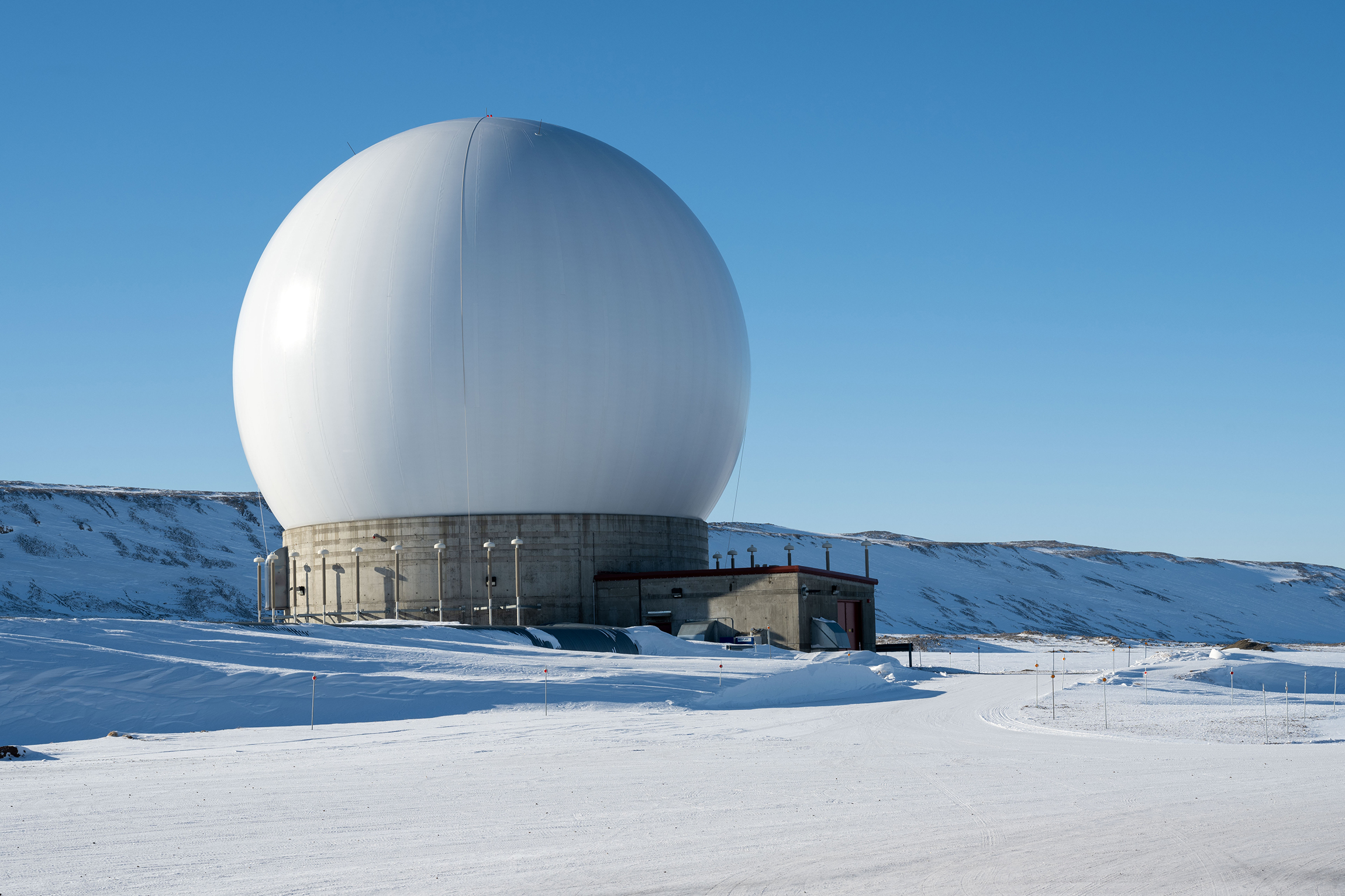
The United States currently has one remaining military installation in Greenland: Pituffik Space Base. The early warning radar at the base is vital to the U.S. military’s ability to keep an eye on Russia’s nuclear forces, said Erin D. Dumbacher, with the Council on Foreign Relations think tank, based in New York City.
Top Stories This Week
“That could mean, especially, watching for incoming ballistic missiles,” Dumbacher told Task & Purpose. “It could also mean just having a better sense for what might be launched from the sea. The geography is such that U.S. eyes and ears, if you will, are very well served by having that strategic outpost in Greenland.”
This capability is becoming especially relevant with the end of the last remaining strategic nuclear weapons treaty between Russia and the United States, which expired on Thursday, Dumbacher said. The New START Treaty allowed both countries to use technologies such as satellites to monitor the other’s nuclear forces, she noted.
“We’re not going to have the mutual commitment anymore — maybe informally, but not formally — to not interfere with one another’s early warning systems,” Dumbacher said. “So, this would not be the time for the United States to lose access to or vital information from one of our most critical early warning radars in Greenland.”
For more, check out our YouTube channel, where Task & Purpose’s video producer Kyle Gunn explains the island’s role in U.S. national security.