China’s military strategy for future conflicts has evolved into “national total war,” a whole-of-nation mobilization effort aimed squarely at overcoming “the strong enemy” it sees in the United States. That’s the conclusion of a recent Pentagon report to Congress on China’s military developments as the country’s leaders eye Taiwan and other regional ambitions.
Pentagon planners say the People’s Liberation Army (PLA) leaders envision future conflict not simply as a clash of armies and navies, but as a “clash of national systems” that integrates civilian and military power.
The report’s point is that China’s leadership and the PLA aren’t preparing for a future conflict that looks like a clean, military-only fight. The Pentagon argues that the PLA envisions its future “great power conflict” with the U.S. as a top-to-bottom fight using all of Chinese society, with traditional military combat backed by industrial and economic pressure, technology denial, and widespread social control.
What the Pentagon says China’s ‘national total war’ could mean
The report says the PLA expects future warfare to include high-tech and autonomous systems, but also maritime blockades, forced isolation, and comprehensive sanctions — lessons it says the PLA has learned from the Western response to Russia’s 2022 invasion of Ukraine.
The Pentagon also tries to defuse a common misunderstanding about the term “total war.” The term traditionally implies an all-out conflict that ends in total political goals and unconditional surrender. The report says PLA usage implies something different: complete mobilization of strategic resources to resist the United States and allies while still holding limited political objectives that allow maximize control and chances of success.

Put simply, China is working toward mobilizing the country as a billion-person weapon system while avoiding any escalation that could find it bogged down in its own version of Russia’s “special military operation” in Ukraine, which has now run longer than the Soviet involvement in World War II.
The report cites a series of national reforms announced in Beijing in July 2024 as a major turning point. Those new laws and goals, ostensibly aimed at cleaning up corruption, also included changes meant to improve military-civilian integration and to refine national defense mobilization reporting, communications, and mobilization systems. It also included changes to the military system and border and coast defenses in order to boost support from civilian sectors and local governments.
An eye on Taiwan
The Pentagon’s “systems war” framing is easiest to visualize in the report’s sections on Taiwan.
Many analysts point out that China may lack the military assets to pull off an amphibious invasion of Taiwan. But with dozens of civilian ferries to plug the gap, China could surge amphibious capacity without raising too many eyebrows.
Top Stories This Week
The authors note that the PLA Navy continues to train with civilian roll-on/roll-off commercial vessels, which may indicate it is trying to mitigate a lift shortfall by using dual-use civilian-lift vessels.
Many feel China will make a move on Taiwan in 2027, something known as the “Davidson Window” after U.S. Navy Admiral Philip Davidson, who warned Congress in 2021, “Taiwan is clearly one of their ambitions before then. And I think the threat is manifest during this decade, in fact, in the next six years.” It would also line up with the PLA’s centenary, which Chinese President Xi Jinping has set as a milestone to achieve “world-class” military modernization.
Military-civil fusion
The report also notes that Beijing’s push for military-civil fusion, or the idea that civilian technology and industry should feed military modernization. Chinese leaders have rolled this society-wide vision into a broader concept the Pentagon calls an “integrated national strategic system and capabilities.” This is described as “a whole-of-nation effort to advance China’s military.”
It then ties this concept to real-world tech realities, noting Chinese commercial enterprises and research institutions continue to acquire components from U.S. suppliers to support research and development in critical dual-use technologies, including artificial intelligence (AI), biotech, quantum technology, advanced semiconductors, and advanced energy general and storage.
The report gets particularly detailed on technology chokepoints, especially high-performance AI accelerators such as Graphics Processing Units (GPUs) and other advanced chips that power modern AI. The Pentagon says China’s AI sector remained constrained in 2024 by limited access to high-performance AI accelerators, and it lays out the methods Beijing is using to work around those constraints, including stockpiling and attempts to circumvent export controls.
Cyber warfare as part of the ‘national systems’ picture
The summary also says Chinese cyber campaigns such as Volt Typhoon “burrowed into U.S. critical infrastructure” in 2024, “demonstrating capabilities that could disrupt the U.S. military in a conflict and harm American interests.”
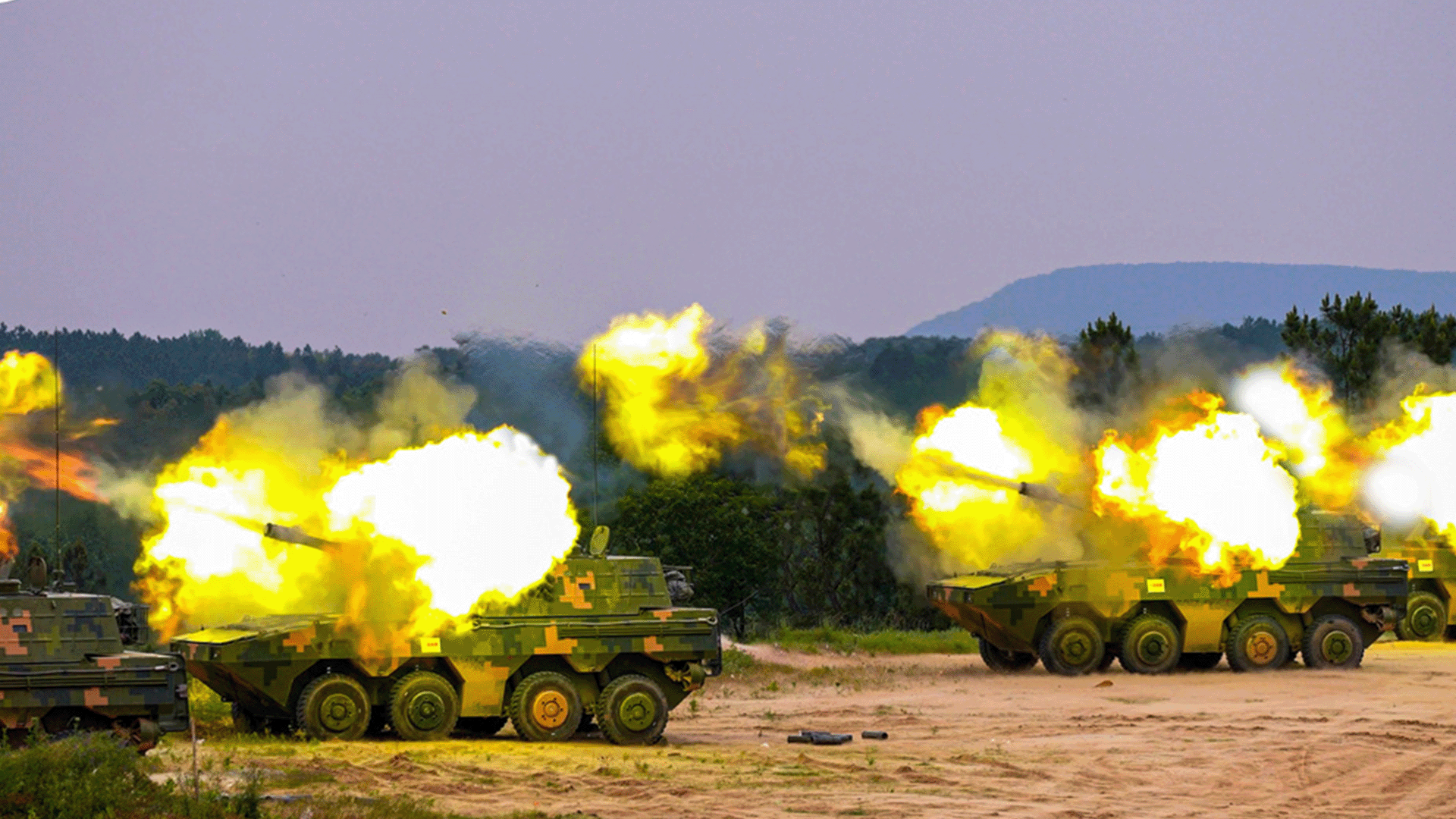
It goes on to point out that in the initial stages and during a conflict, these cyber capabilities “would seek to create disruptive and destructive effects” through denial of service attacks and physical disruptions of critical infrastructure such as electric and water utilities. Other targets could include military command and control infrastructure as well as logistics nodes. They theorize that these cyber operations would aim to “deter U.S. involvement by demonstrating China’s capability and resolve to threaten U.S. strategic interests and weaken U.S. public support for involvement.”
Friction
The Pentagon does not present this “national total war” strategy as effortless. It highlights organizational challenges and the difficulty of adapting doctrine quickly, warning that rigid structures can slow the ability to adapt on the fly and incorporate lessons learned.
The report points out that China’s military doctrine is issued in generations, the most recent update coming in 2020, and before that 1999. This makes incorporating lessons learned from Russia in Ukraine, or technological advancements, very difficult.
This report is dense, but the main takeaway is pretty simple: China is preparing for a conflict where ships and missiles are only part of the story. They’re setting the stage for a reality where industry, tech access, and infrastructure resilience matter just as much.
We walk through the key passages and what they mean in plain English on our YouTube channel, so go watch that here.