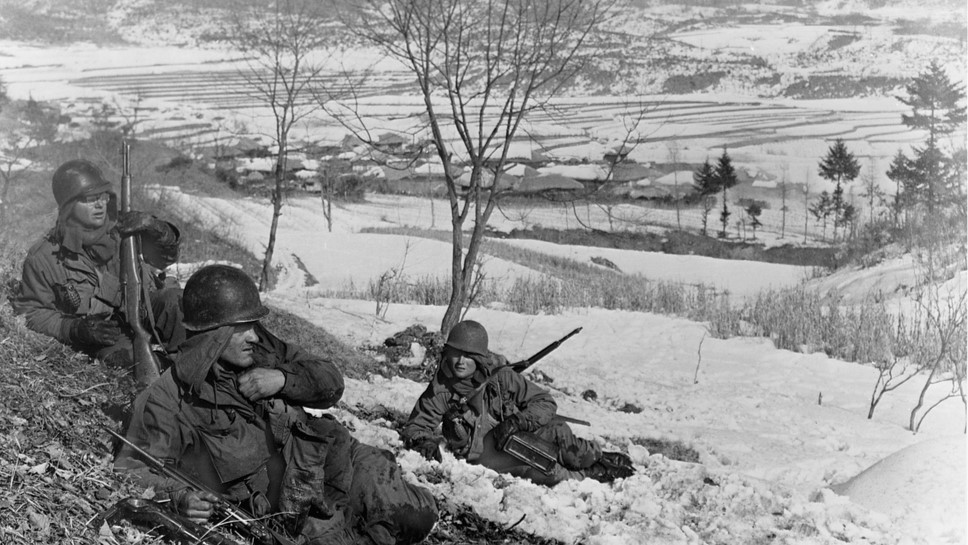
Seven decades ago, members of the United Nations force in Korea were under heavy fire as Chinese forces pushed to retake Kowang-San, a strategically important mountain. Artillery and mortar fire pounded United Nations positions as enemy forces surged forward. There, Pfc. Noah Knight found himself staging what would become a last stand, taking out a larger enemy advance aiming to overwhelm his unit.
The Second Battle of Kowang-San is better known among Canadian military history, but a large American contingent took part. Pfc. Knight, a 21-year-old U.S. Army soldier from South Carolina, was serving with Company F, 7th Infantry Regiment, 3rd Infantry Division. He joined the Army in 1948, according to the Department of Defense, and was sent to Korea in 1951, eventually ending up at Kowang-San.
Top Stories This Week
In October, a force of British, Canadian and Australian troops captured the mountain in two days of fighting. Additional U.N. forces arrived, including a large number of Americans with the 3rd Infantry Division, who set up near the peak. The Western troops took to calling Kowang-San “Little Gibraltar” due to its height, size and the defensive positions they had set up along it, predicting a Chinese counterattack. The mountain, also known as Hill 355, gave whoever commanded it a clear view of nearby positions, making it a strategic asset.
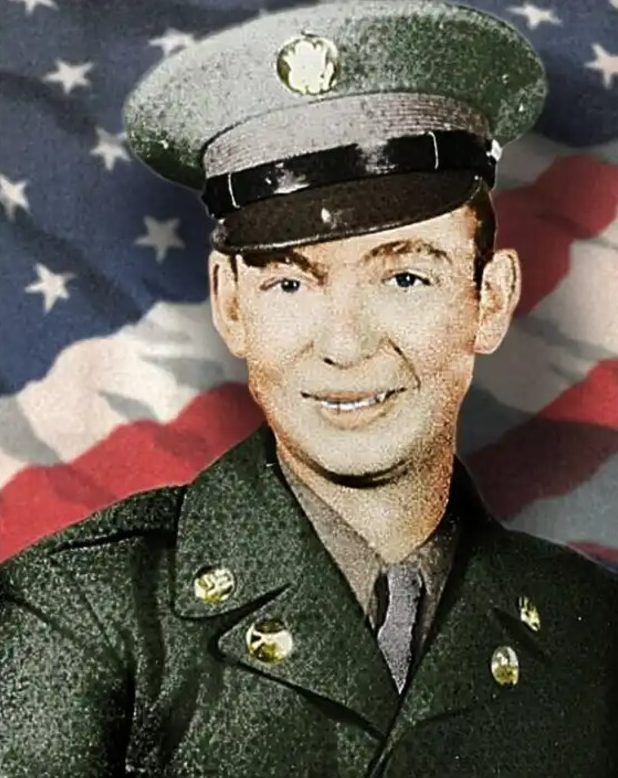
That counterattack came the following month. On Nov. 22 roughly 40,000 troops from the Chinese 64th Army began their offensive. Company F, Knight among the soldiers, was along the perimeter. The Chinese attack began pushing the U.N. forces back from the hill. On Nov. 23 the attack hit Knight’s area hard. Artillery smashed into their line, with two direct shots hitting his bunker. He was wounded with shrapnel but able to fight. However he needed a better angle, so he ran out from behind cover, exposed and firing into the oncoming infantry. According to the military, he “inflicted numerous casualties, momentarily stemming the attack.”
Knight wasn’t done. When the offensive resumed on Nov. 24, another squad went towards the American lines. Knight opened fire, taking out almost all of them and using the last of his ammunition. It was then that he saw three Chinese soldiers approaching to plant explosive charges that could put a hole through U.N. positions. He charged at them, using his rifle as a melee weapon to subdue two of them. The third soldier detonated his charge, killing the three assailants and Knight.
“Pfc. Knight’s supreme sacrifice and consummate devotion to duty reflect lasting glory on himself and uphold the noble traditions of the military service,” his Medal of Honor citation reads.
The American and Canadian forces were able to reclaim Hill 355 and repelled the assault. Knight would posthumously be awarded the Medal of Honor 14 months later, in January 1953. Chinese forces made one more attempt to capture Kowang-San in October 1952, but Canadian forces successfully defended the position.