
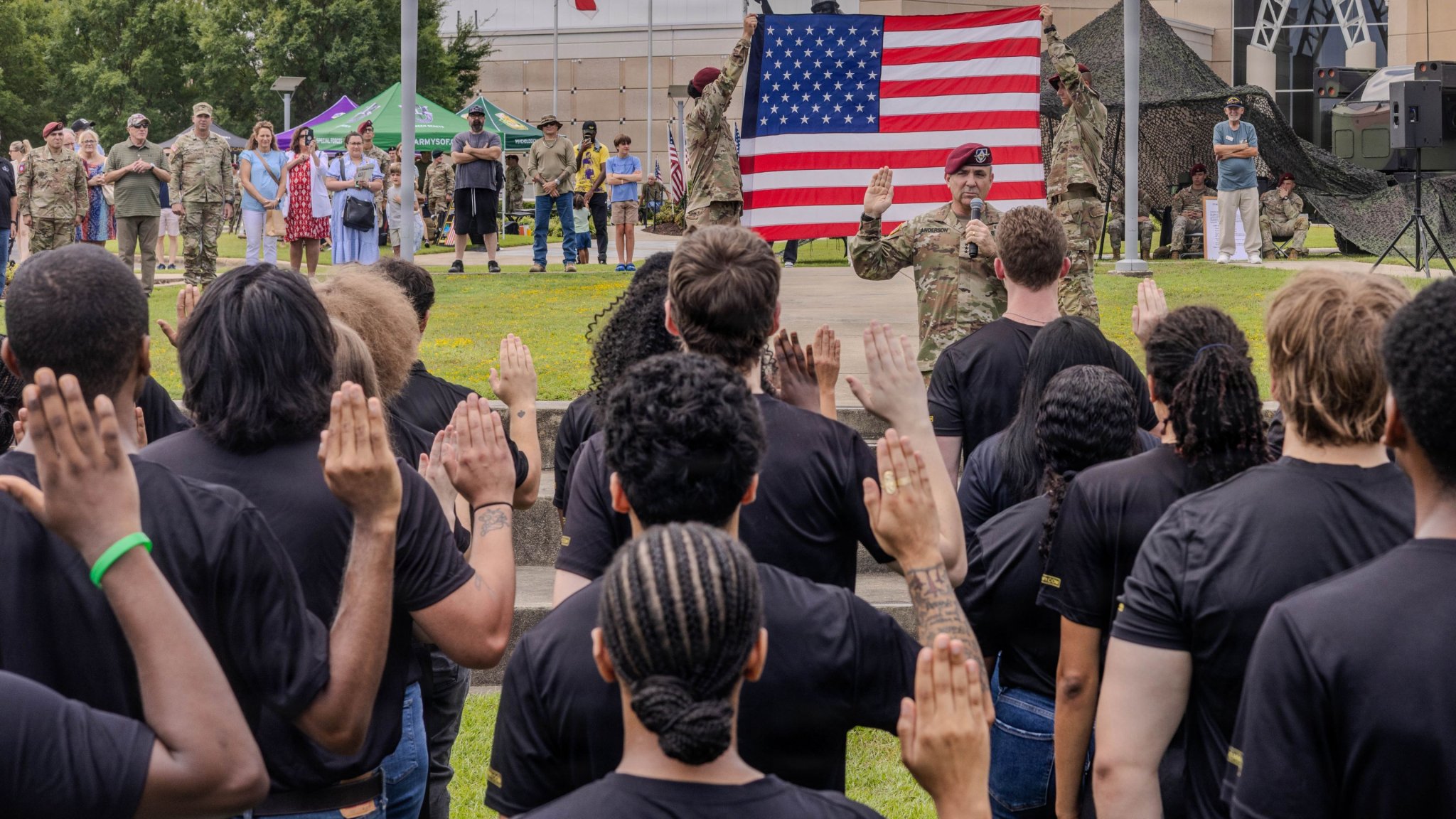
The Army successfully hit its recruiting goal for the 2026 fiscal year, more than four months ahead of its deadline.
The Army announced on Saturday that it reached its goal of signing 61,500 people for active-duty contracts. It’s the third year in a row that the Army met its recruitment goal, after falling short in 2022 and 2023. It also is the second year in a row that it beat the deadline by roughly four months; in 2025 the Army hit the milestone in the first week of June. The fiscal year closes at the end of September.
According to the Army’s release on meeting its recruitment goal, the service credited “innovative outreach, enhanced career incentives, and a focus on critical technical skills” with helping bring in the new soldiers, although the announcement was vague on what those moves were. However, the service has continued several programs created over the past few years that have helped to bring in more recruits and assist them in meeting standards for military service.
Top Stories This Week
The Army’s Future Soldier Preparatory Course, started as a pilot program in 2022 before becoming permanent, has helped tens of thousands of people train and study in order to meet the Army’s academic and physical requirements. The 90-day course was created to help overcome recent enlistment shortfalls by helping those who want to serve. Last year, when the Army met its goal of 61,000 new recruits, Secretary of the Army Daniel Driscoll specifically credited the preparatory program for helping with that success, noting it helped those who were “right on the edge” of being able to join.
The Army has also offered increased enlistment bonuses, while revamping its outreach to the public with new ad blitzes, including bringing back the “Be All You Can Be” campaign. Last year the Army celebrated its 250th birthday with several high-profile events.
Alongside greater incentives and support programs, the Army has also expanded its pool of recruits. That included raising the maximum enlistment age to 42 — lining up more with the age limits of other service branches — and changed some policies tied to drug-related convictions. The Army did away with a regulation that required a waiver for recruits who had a single conviction for possessing drug paraphernalia or marijuana; the waiver also required a two-year wait before being granted.
The Army isn’t alone in hitting its goals early this fiscal year. Both the Air Force and Space Force met their enlistment goals in April, five months ahead of schedule, although the two branches had smaller targets.
The Department of Defense has invested heavily in outreach and programs to boost enlistment. Between 2022-2024, the military spent more than $6 billion on programs and campaigns to recruit and retain service members.
Loading comments…
Comments couldn’t be loaded. Please refresh the page.