
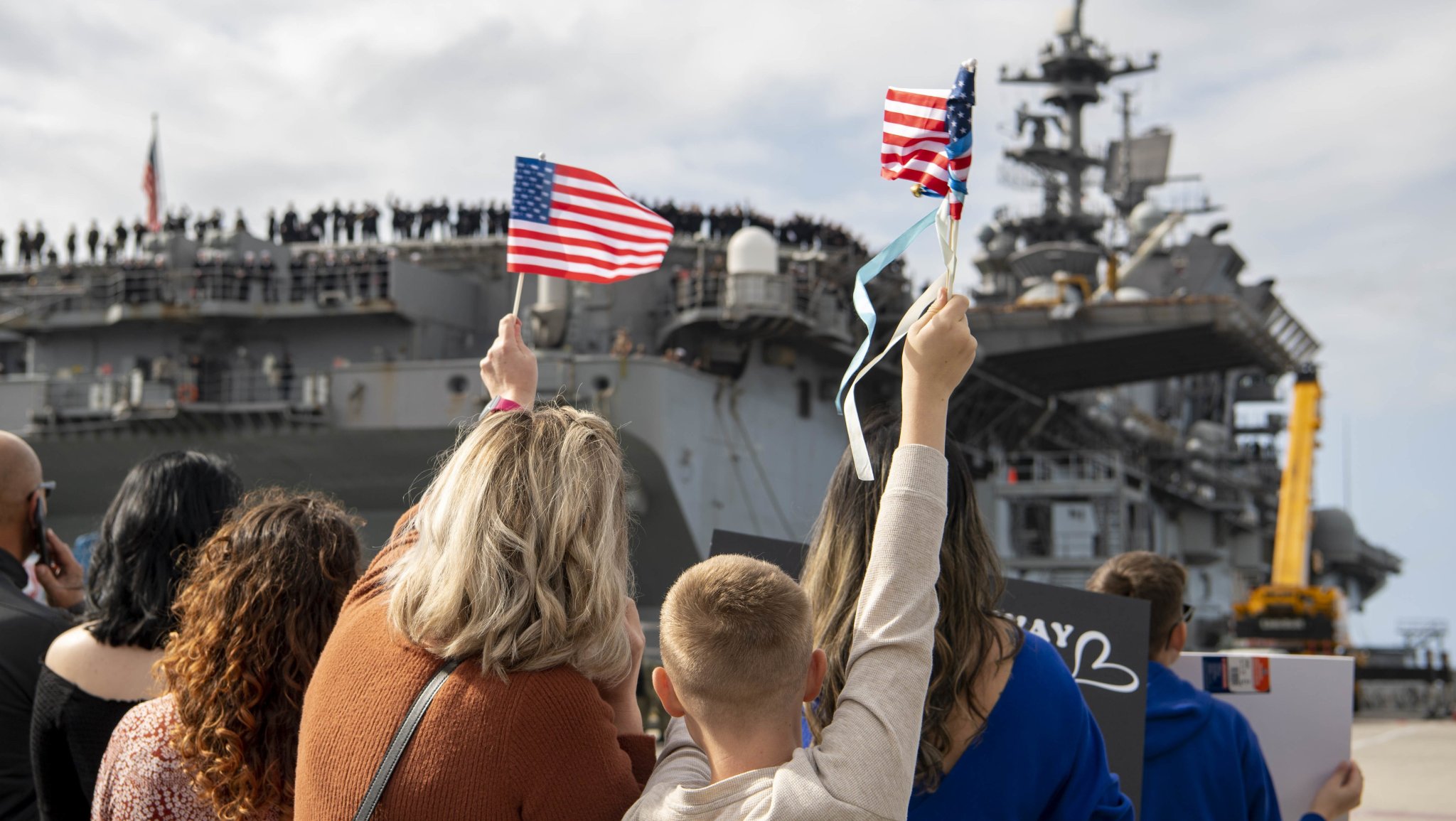
The flood of misinformation, fake content, and dubious news sources online is causing uncertainty for military families waiting at home, according to multiple advocates who’ve seen the stress rise in the last two weeks.
“We’re in a totally different environment with AI and the reality around social media,” said Shannon Razsadin, CEO of the Military Family Advisory Network. “We’re seeing a lot of anxiety among military families, and the misinformation certainly does not help with that. Right now, people are really looking for information that they can count on.”
Since the U.S. began operations against Iran on Feb. 28, triggering missile and drone attacks in retaliation, military families have faced a flood of misinformation, fake reports and online rumors. There have been videos claiming to show a fighter jet shot down over Basra, Iraq; reports by Russian and Iranian media of a U.S. missile hitting a neighborhood in Bahrain; and claims by an Iranian official of captured American troops. All those were false, but their debunking came hours or even days after the claims spread.
On Sunday, U.S. Central Command posted a “fact check” video montage of other claims from unofficial accounts, stating that the posts were evidence of the Iranian regime “constantly peddling lies.”
Corie Weathers, an Army spouse, said families are getting emotional whiplash from the official and unofficial messages. On one hand, real news clips and “cinematic” AI-generated videos both show the horrors of ongoing combat, while social media posts from the military depict “the excellence of the community,” she said. “It can just be very, very confusing,” she added.
Top Stories This Week
All families really want, she said, is to know whether their service member is safe or going to deploy.
“Where do we get that information in order to feel secure, in order to feel informed, and also to feel like we can give that buy-in from that family readiness perspective that says I can support my service member because I have the accurate information and I know where to go for resources,” Weathers said.
Daniella Horne is the digital organizer for the Secure Families Initiative and an Army veteran who deployed twice to Afghanistan. She said the bombardment of social media content and news, paired with uncertainty from U.S. officials about where the war is heading, is causing a whole lot of uncertainty and stress for military families.
“People are trying to stay informed and at the same time, support their service members, support the military,” she said. “Then you’re watching the news and trying to understand what the next weeks are gonna look like, what the next months are gonna look like, and if this is gonna drag on. … Is this going to be another forever war?”
AI-generated videos have been all over the map. One common strain depicts crying soldiers in front of miscellaneous rubble or coffins. In at least one, a service member holds up a wallet-sized photo of a “dead” friend.
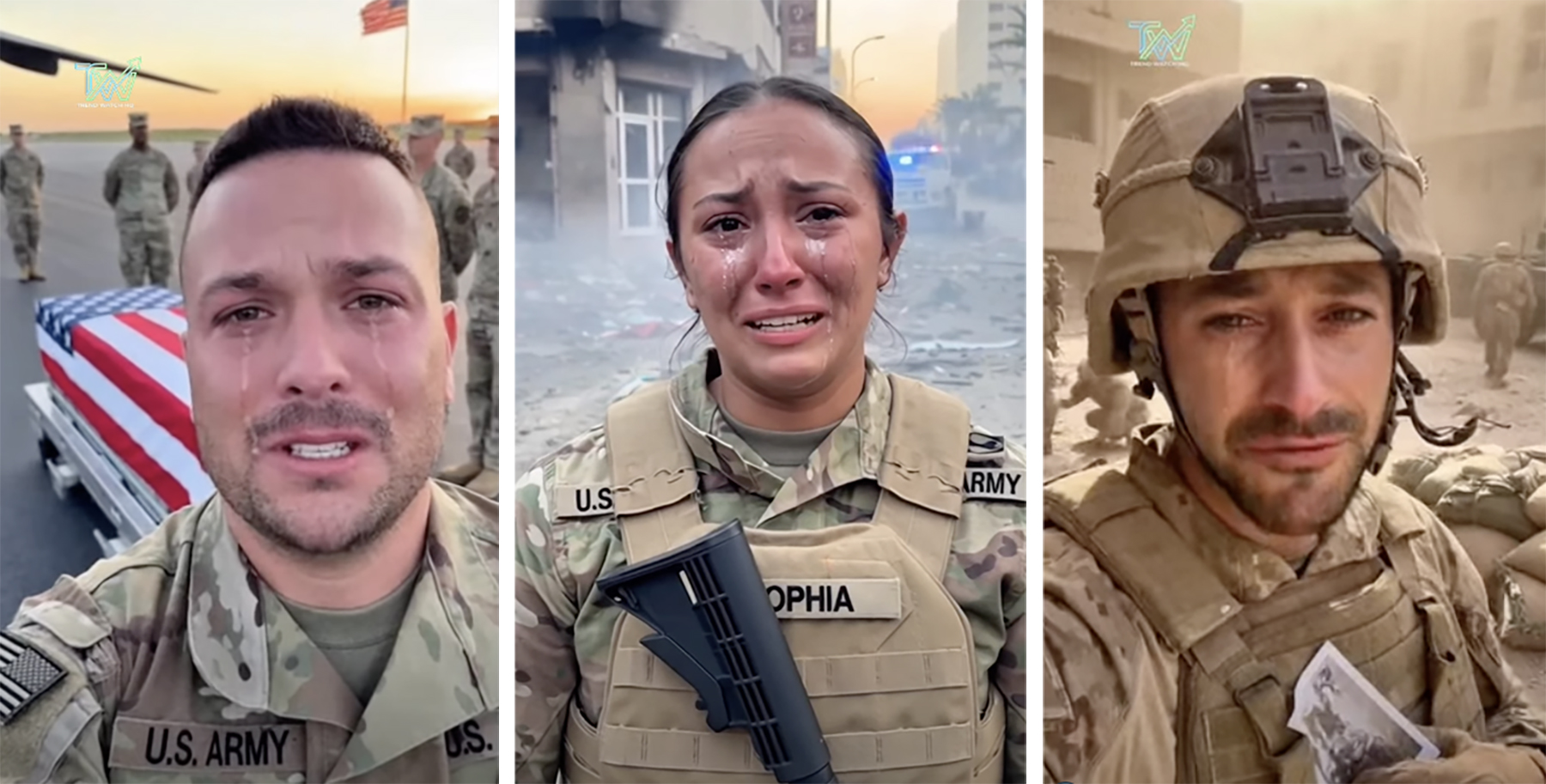
Some of the most worrisome content, said Ellen Gustafson, executive director of We the Veterans & Military Families, includes AI-generated content trying to sow division. Some posts focus on the U.S.-Israel relationship or domestic politics with themes she described as: “[Benjamin] Netanyahu’s son is off basking in the sunshine, and your son is in a coffin with an American flag draped over it,” or “Have you seen Trump’s new White House ballroom?”
Gustafson founded The Homefront Sentinel to raise awareness of foreign entities and online scams deliberately targeting veterans and military families “because we’re such a trusted community.”
Gustafson said she’s tracking instances where images of soldiers who have died are being repurposed “because that’s a known public death that people can take advantage of.” She said she’s seen fake GoFundMe accounts and even AI “photos” that appear to show statues of the dead Americans erected in Tehran.
“Who knows whose agenda that is?” she said.
A lot of AI-generated content is created to tug at heartstrings by “using the fact that Americans do get emotional about our military,” Gustafson said. “Making people more emotional about the conflict that they’re currently serving in is incredibly damaging to troop morale or divisions within units.”
New AI, old PSYOP tactics
Ken Ramos, a retired psychological operations soldier, said the ability to evoke intense emotional reactions is the “bread and butter” of psychological operations.
“We want to make sure that anything that’s susceptible to your vulnerability and how we are accessible to you, is what we’re going to use,” he said. “‘I don’t want my freaking two mates to get killed.’ ‘Look, you’re going to go die for these bullshit wars.’ ‘I don’t want to go die for these bullshit wars. This is not what I signed up for.’ A lot of it is foreign-related.”
The FBI and Department of Homeland Security have previously tracked tactics used by foreign actors, like Iran, to influence U.S. politics, including AI-made content, fake online personas, and inauthentic news sites. A 2024 estimate found that 71% of images shared across social media were AI-generated and a Europol report predicted that nearly 90% of all online content would be AI-generated by 2026.
