
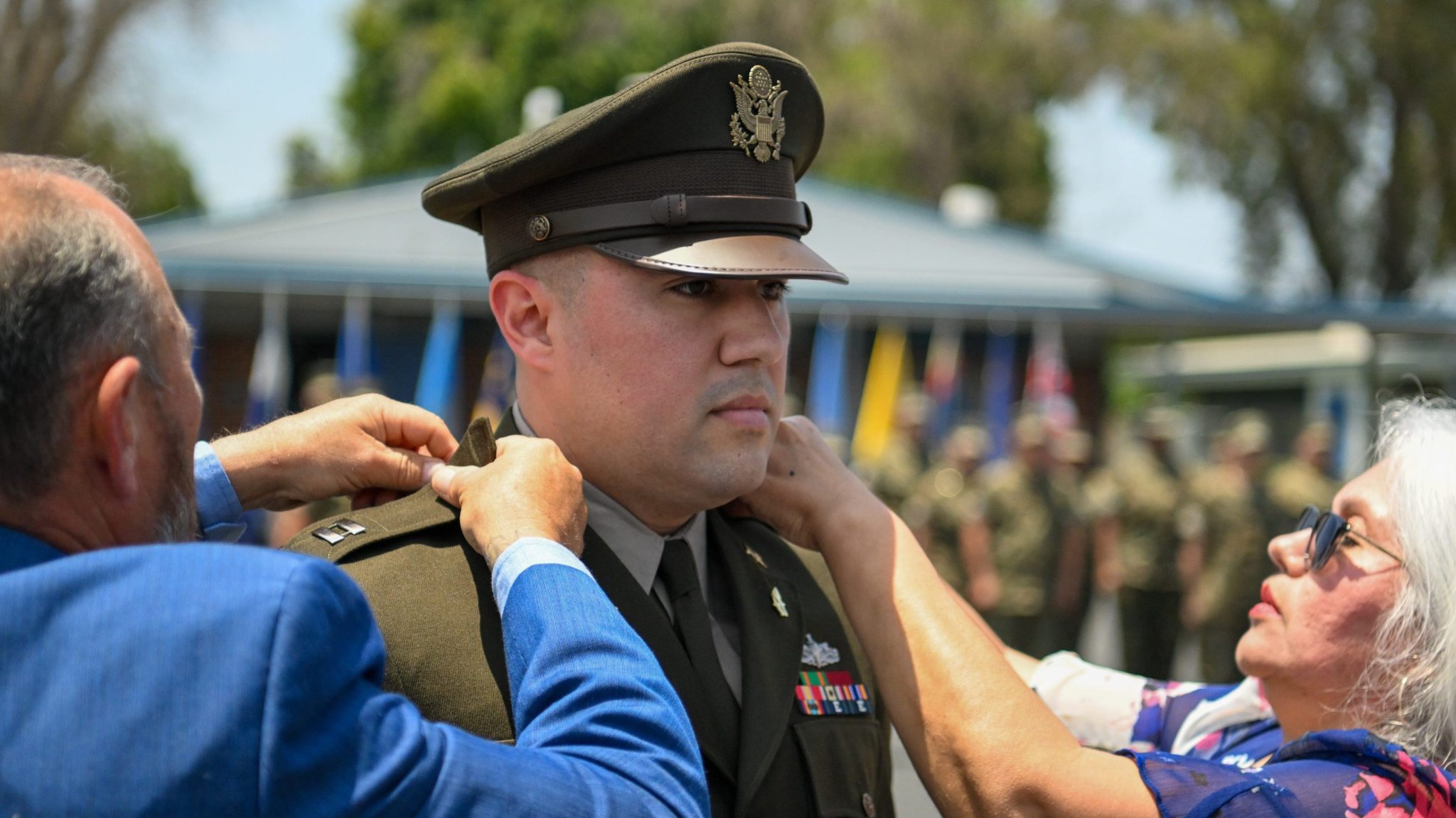
The Army is granting more direct commissions to civilians in high-tech fields like cyber, artificial intelligence, and space. The majority will come in as company grade officers and will be assigned to operational units, officials said.
The plan to put these new soldiers in uniform is an expansion of a program that directly commissioned four Silicon Valley executives into the Army Reserve as lieutenant colonels last June. Those four joined a program the Army called “Detachment 201: The Army’s Executive Innovation Corps.” The multi-millionaire executives came from leadership positions — which they continue to hold — at tech powerhouses like Meta, Palantir, OpenAI, and Thinking Machines Lab.
The soldiers entering under the Army’s new direct commissions will be much earlier in tech careers than those four.
“The [Detachment 201] folks are tech CEOs. They’re high-level individuals with a lot of experience,” said Brig. Gen. Gregory Johnson, director of military personnel management. “In this case, the direct commissioning program, we’re really focused on folks coming in at the lieutenant and the captain level to help us in the technical areas in our operational units.”
Johnson said they are eager to bring in officers who have had practical experience so they can help build the Army’s technical expertise in areas like AI, robotics, and networks. Army officials said the commissioned officers may serve in operational formations, units focused on modernization and sustainment, or on command staffs.
“If someone has been working in the tech space for three to five years, has a great degree from a great university, has technical skills, certifications, practical experience, we want to utilize that in the Army,” Johnson said on an embargoed call with reporters in late February. “We acknowledge that that’s a different accessioning pipeline, but we find the value in that experience that that person brings and then we want to marry that up in our operational units with officers that have been through the other pipelines.”
Typically, fewer than 50 officers enter the Army on direct commissions each year, usually in fields like medical, legal, and the chaplain corps. Direct commissioning programs allow professionals in highly technical or specialized fields to enter as officers at a higher rank, rather than having them join as lieutenants.
As the Army ramps up direct commissions in high-demand tech backgrounds, the service will hold quarterly boards to assess new candidates, officials told Task & Purpose.
Top Stories This Week
“Expansion remains deliberate and requirements-driven and could see growth increase significantly in future years,” officials said.
The rank the officers will commission into will depend on their experience level in terms of their degree, type of schooling, or professional certifications, Johnson said.
The direct commissioned officers will attend the Army’s Direct Commission Course, a slimmed-down initial ascension course that includes training in basic soldier skills like land navigation and marksmanship. The officers will then attend the full training pipeline for their specific military occupational specialty, MOS, which includes the Basic Officer Leader Course or an equivalent branch certification, before they’re assigned to an Army unit.
Under the program, Johnson said, “If you commission as a lieutenant, you’re going to your normal lieutenant training course in the branch that you came in, and so that’s very similar to what the traditional commissioning sources do.”
Lt. Col. William Lincoln, Chief Officer of the Army’s Accessions Policy Branch, said candidates are older and further into a career than a typical recruit, but had long-term interest in the Army. “Maybe at 18, 19, 20 years old [they] were not ready to serve,” said Lincoln. “We’re screening a little older population.”
Lincoln said many candidates needed medical waivers or had “some legal challenges as folks later in life tend to address.”
In light of the Detachment 201 pilot, the Army also learned that commissioning was taking too long for talented candidates.
“It was taking, pre-Det. 201 sessions, probably about 18 months to bring an officer direct commission into the Army,” Johnson said. “There is a large amount of folks in the United States that want to serve, and they want to serve now … but the 18-month process to go through medical screens, security screens, and training, etc., was just really too long for most of those folks interested to stick through the process.”
Officials said they’ve sped up the process to get directly commissioned officers into the force within six months by putting U.S. Army Recruiting Command in charge of applicant screening, waivers, and tracking applications throughout the process. Johnson added that candidates still have to meet “stringent requirements for medical and security.”
“If you wanna serve, we’re gonna screen you first to see if you’re eligible to serve and then bring you on,” Williams said. “Once we’ve identified you’re eligible with these unique talents, we can quickly waive, train, and bring you in around the six-month mark.”
Loading comments…
Comments couldn’t be loaded. Please refresh the page.