
Combat soldiers will soon take a new fitness test that will determine whether they can stay in their jobs.
The Army’s new Combat Field Test, CFT, is a pass-fail assessment for soldiers in “designated close-combat” jobs like infantry and artillery. Beginning in Spring 2027, soldiers who cannot pass the test will have to reclassify into new jobs or separate from the Army.
“This initiative is not just about meeting metrics, but about ensuring our soldiers are prepared for the challenges of modern combat,” said Command Sgt. Maj. Alexander Kupratty, the Pentagon-level leader in charge of Army operations, training, and planning. “The CFT will be sex neutral and age-neutral, ensuring all soldiers can perform under realistic combat-relevant conditions.”
Kupratty said the CFT is an “adaptation” of the Expert Physical Fitness Assessment, which has been the standard field fitness requirement for the Expert Infantryman Badge, Expert Soldier Badge, and Expert Field Medical Badge since 2023. Soldiers will take the CFT wearing their Arm Combat Uniform, though, unlike in the expert badge test, soldiers will not wear helmets and body armor.
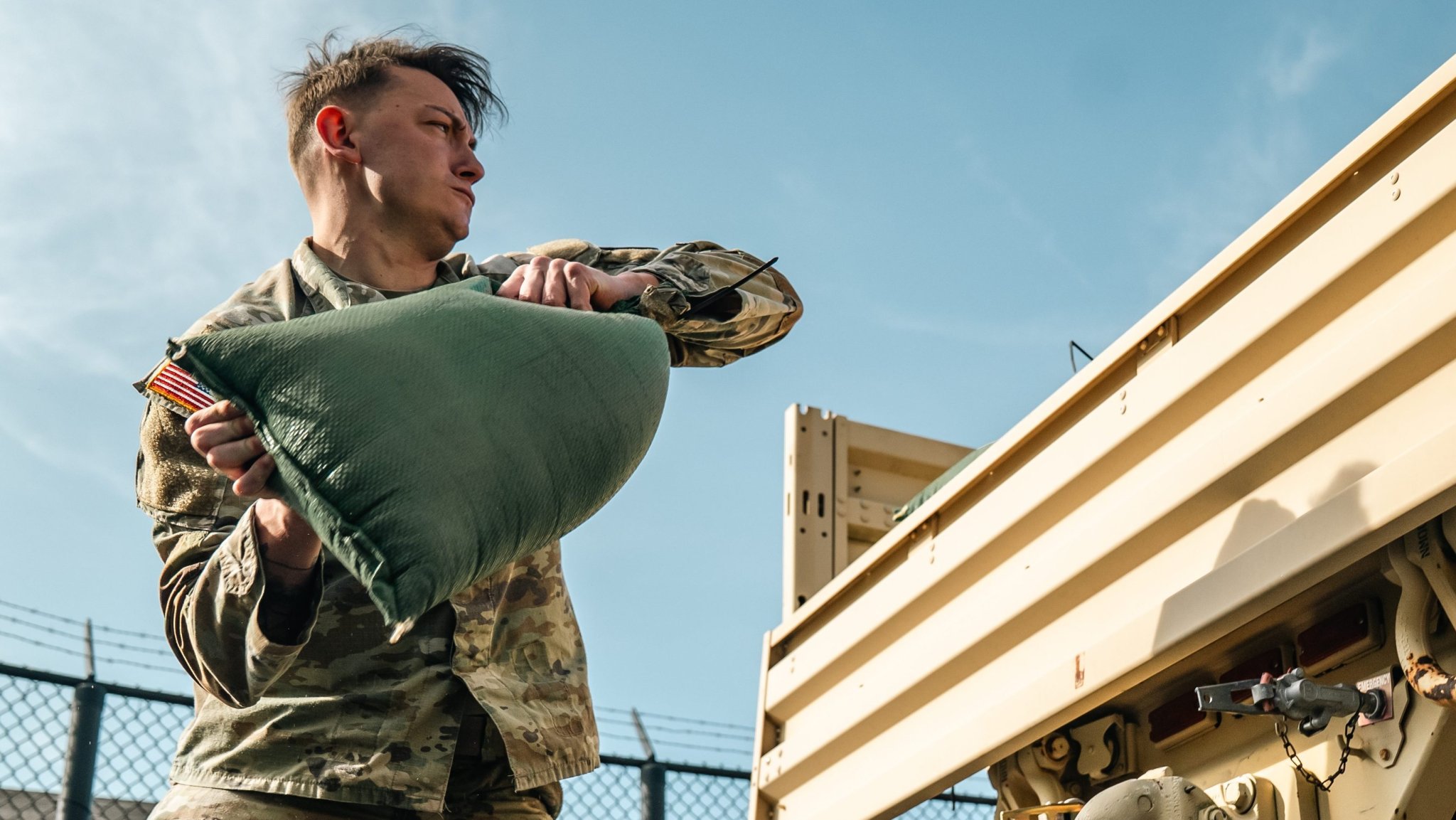
The CFT is graded as a continuous timed event, completed in the following order: 1-mile run, 30 dead-stop pushups, 100-meter sprint, 16 forty-pound sandbag lifts onto a 65-inch platform, 50-meter carry of two 40-pound water cans, a movement drill with a 25-meter high crawl and 25-meter 3-to-5 second rush, and a second 1-mile run.
To pass, a soldier must complete all the events in succession within 30 minutes.
Most soldiers who have faced the test as part of earning an expert badge have passed it, according to data the Army sent to Task & Purpose. Soldiers competing for the infantry badge — which has a cutoff of 26 minutes, 30 seconds, rather than the new CFT’s 30 minutes — passed the test 81% of the time. Soldiers aiming for one of the other two badges passed 90% of the time against a 30-minute limit.
Top Stories This Week
The CFT will be required for all soldiers in 24 combat specialties, which include officers, warrant officers, and enlisted specialties in infantry, artillery, armor, combat engineers, and Special Forces, as well as divers and explosive ordnance disposal techs.
“Leadership will have to take this test as well,” said Command Sgt. Maj. Nicholas Paske, who works on Army training standards. “The Army is going to hold senior leaders accountable for the same CFT standards we’re asking our soldiers to achieve.”
The new fitness requirement was created “to align with Secretary of War intent,” according to an Army memo signed by Secretary Dan Driscoll. In 2025, Secretary of Defense Pete Hegseth directed all military services to develop “sex neutral” physical standards for combat jobs. Hegseth has long alleged that fitness standards have been lowered as women have been allowed into combat roles since 2015. Women who served in combat roles have said they routinely expected to meet the same physical standards as the men in their units.
Paske said “many females in combat arms” have earned expert badges, passing the test the CFT is modeled on.
A year to get in shape
During the test’s first year, soldiers will not face administrative actions if they fail.
“There’s going to be a one-year transition, so 365 days from the actual implementation of the CFT, that’s when we’re actually going to enact administrative actions,” said Command Sgt. Major John Grant, from the Army personnel office. “Before then, this will really just be a period for senior leaders and units to just get soldiers ready to ensure that they’re good to go.”
Beginning in April 2027, soldiers who fail the CFT will be flagged, enrolled in “reconditioning training” and possibly reclassified, according to the memo. Enlisted soldiers and officers in combat jobs who fail two consecutive tests may be involuntarily separated if they refuse or are ineligible to change jobs.
A soldier on a “permanent profile” with a long-term medical condition may be considered “ineligible” to complete the CFT. In those cases, soldiers may be evaluated and reclassified or can apply for a waiver based on their overall job performance and recommendations, according to the memo.
Rules for combat soldiers who are pregnant will mirror those for the annual fitness test, which give them a year postpartum before they have to take a recorded test.
The Army Combat Test will not replace the service-wide annual requirement for the Army Fitness Test, which all soldiers take, including those in combat roles. Last year, that test was also updated with “sex neutral” standards that men and women in combat jobs have to meet.
Loading comments…
Comments couldn’t be loaded. Please refresh the page.