
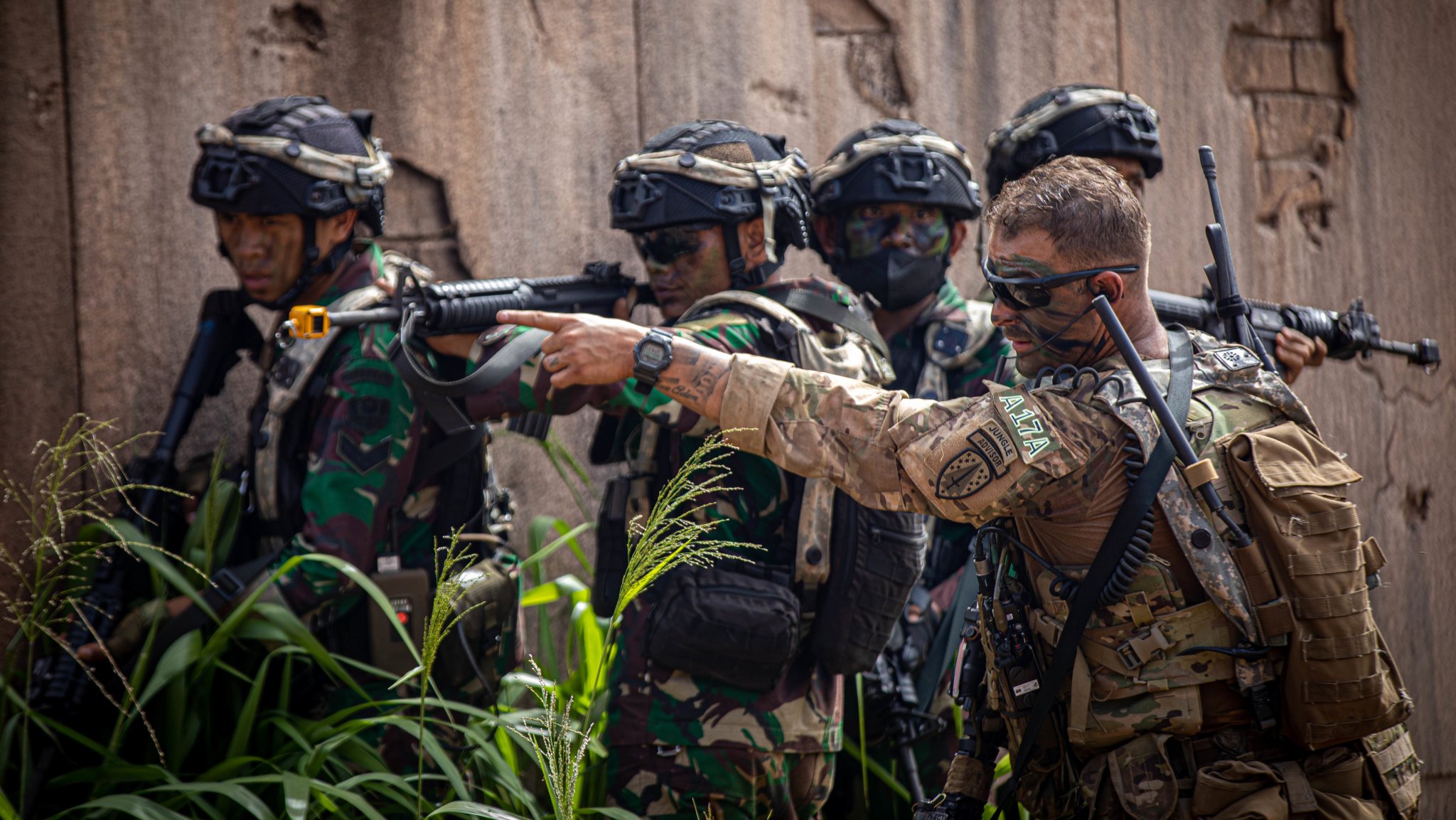
Over the last year the Army has shuttered most of its specialized units that train and advise foreign militaries around the world, but one is left standing. The 5th Security Force Assistance Brigade has been able to “find work” working with allies in the region, as part of the Army’s broader strategy to build alliances to counter Chinese influence, the commander said.
The 5th SFAB, for short, is based out of Joint Base Lewis-McChord, Washington, and is the last of six original SFAB units that were stood up in 2018 as part of the Army’s advise and assist mission. They were inspired by U.S. partnerships with Afghan allies during the Global War on Terror.
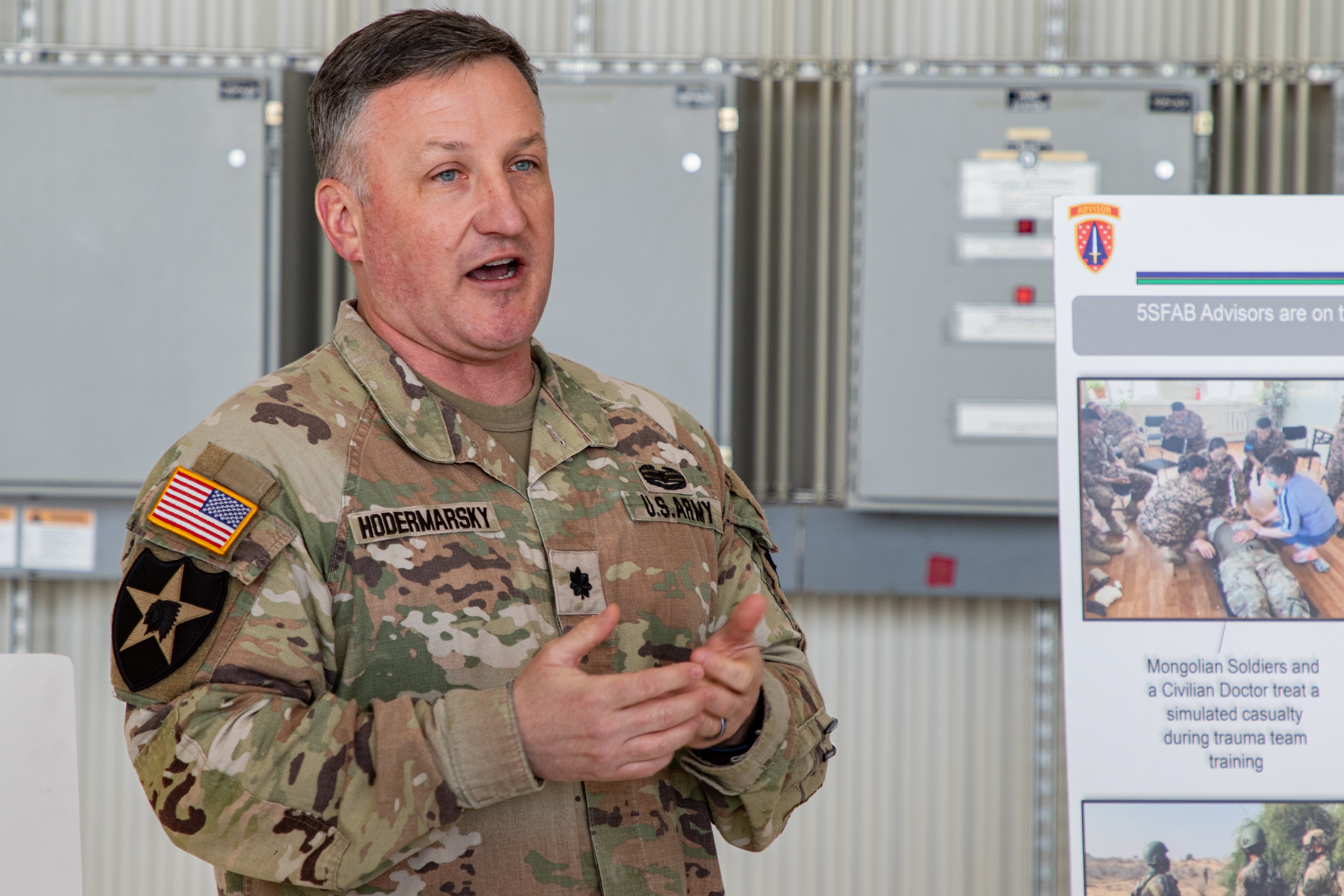
“The environment, the geography sort of naturally lent itself to an SFAB-type mission set,” Col. Daniel Hodermarsky, the 5th SFAB commander, told Task & Purpose in an interview at the Association of the United States Army’s annual conference in Washington, D.C., earlier this month.
The Army originally stood up six Security Force Assistance Brigades to train and advise U.S. allied militaries in Africa, Europe, the Middle East and Latin America. Last year, the Army began shuttering the advisor units in a service-wide restructuring effort. In January, the Army’s 1st SFAB, which focused on Latin American partners, became the Army Security Cooperation Group – South with an emphasis on the U.S. partnership with Panama.
Almost from the outset, the establishment of Security Force Assistance Brigades was off to a rocky start. Their initial launch in 2017 began with backlash over the suggestion they be sport berets and a mission that crossed into the Special Forces’ territory. Once the brigades were off the ground, other controversies followed, from allegations of misconduct downrange during their advisory mission to high-profile firings at home.
However, the elimination of SFAB units has been met with scrutiny from some within the ranks who argue that the loss of units designed to build military alliances could have devastating consequences ahead of potential wars against large competitors like China or Russia.
As for the 5th SFAB, Hodermarsky said they have been able to stay relevant because they’ve been incorporated into the U.S. Army Pacific strategy.
“We had excellent support from U.S. Army Pacific as far as their G-3 [operations division] giving us direct priorities over the years of where we fit into the forward edge of their campaign to set conditions for the out years,” he said. “I think it was just sort of a good blend of geography and attention from the theater Army putting us to work that fit the profile of the formation.”
One of the 5th SFAB’s most recent collaborations that was highlighted by leaders in the unit was its work with the Mongolian army as they standardized their noncommissioned officer academy. Hodermarsky insists that their initial project has helped the U.S. become their “partner of choice” in the region. Now the Mongolian military is planning exercises with American soldiers in Alaska.
Top Stories This Week
“We completed our work building that NCO corps, starting from helping them build the [program of instruction] and build the instructors so they can actually train their own and to have — I would say — an enduring NCO professional military education course,” Command Sgt. Maj. Mark Millare said. “We transitioned that to exercises with the 11th Airborne. Now [the] 11th Airborne Division is the one helping Mongolia execute some of those missions if they need some more extra help. So we were there to help stand it, get it running, pilot and test it, and once it’s good to go, then we transitioned to 11th Airborne.”
Before SFAB units take on a new project, they’ll take input from embassy officials, local military leaders or Army leadership in the region to discuss what the partner is looking for. Hodermarsky said that these days, partners in the Pacific are regularly asking for advice on things like how the U.S. is employing new tactics from the Russia-Ukraine war, or how to build deployable brigades and move them hundreds of miles across countries.
As some Pacific militaries like the Philippines and Thailand field U.S. air defense systems, their governments are also looking for chances to train with units that have years of experience using that equipment.
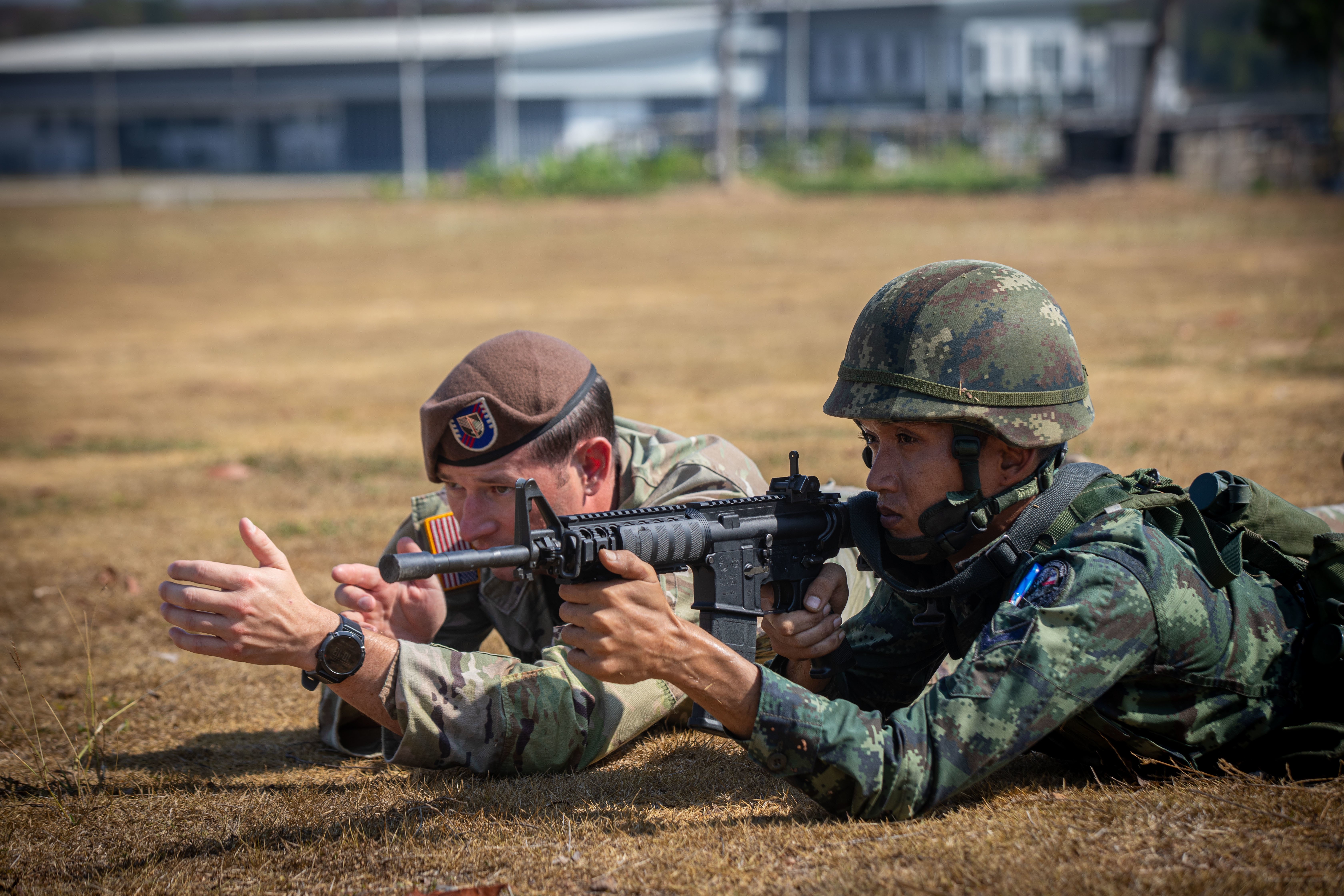
“We call them subject matter exchanges where they want to have people that operate in that type of unit in 7th [Infantry Division] or 4th [Infantry Division] come and talk to them in exchange and do training together,” he added.
Hodermarsky said Pacific allies overall are trying to figure out how their militaries can fight alongside others in a region with more loosely tied alliances compared to Europe.
“You don’t have a 70-year old alliance dating back to World War II, where there’s standard NATO doctrine, standard NATO practices, coordination measures between allies. You have a lot of bilateral, some trilateral partnerships across both island chains,” Hodermarsky said. “What they’re really asking is, how do we work better together? How do we tie in interoperable systems that can talk to U.S. forces, that can communicate with U.S. forces? How do we train and exchange knowledge?”
Loading comments…
Comments couldn’t be loaded. Please refresh the page.