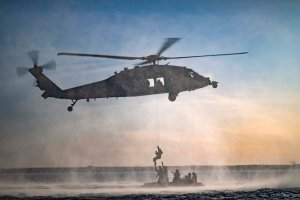
When Air Force E-3 Sentry aircraft arrived in the Middle East this week, it marked the latest chapter in a nearly 50-year flying history for the venerable jets.
Better known as AWACS, for Airborne Warning and Control System, the E-3s play a crucial role as eyes in the sky and command and control platforms for U.S. and allied aircrews in combat zones around the world.
But the AWACS is aging fast. The Air Force is down to 16 of the planes with an average age of 45. They are increasingly difficult to keep flying, even as the need for their capabilities keeps rising
So why did the Pentagon try to kill the E-3’s replacement, the E-7 Wedgetail, last summer?
For context, the AWACS mission dates back to World War II, when radars on the ground, at sea, and in the air detected incoming enemy aircraft and gave friendly troops time to prepare. During the air war over Southeast Asia in the 1960s and 1970s, Air Force EC-121s served as both airborne radars and airborne control towers, quarterbacking search and rescue, fighter patrols, aerial refueling, and other missions.
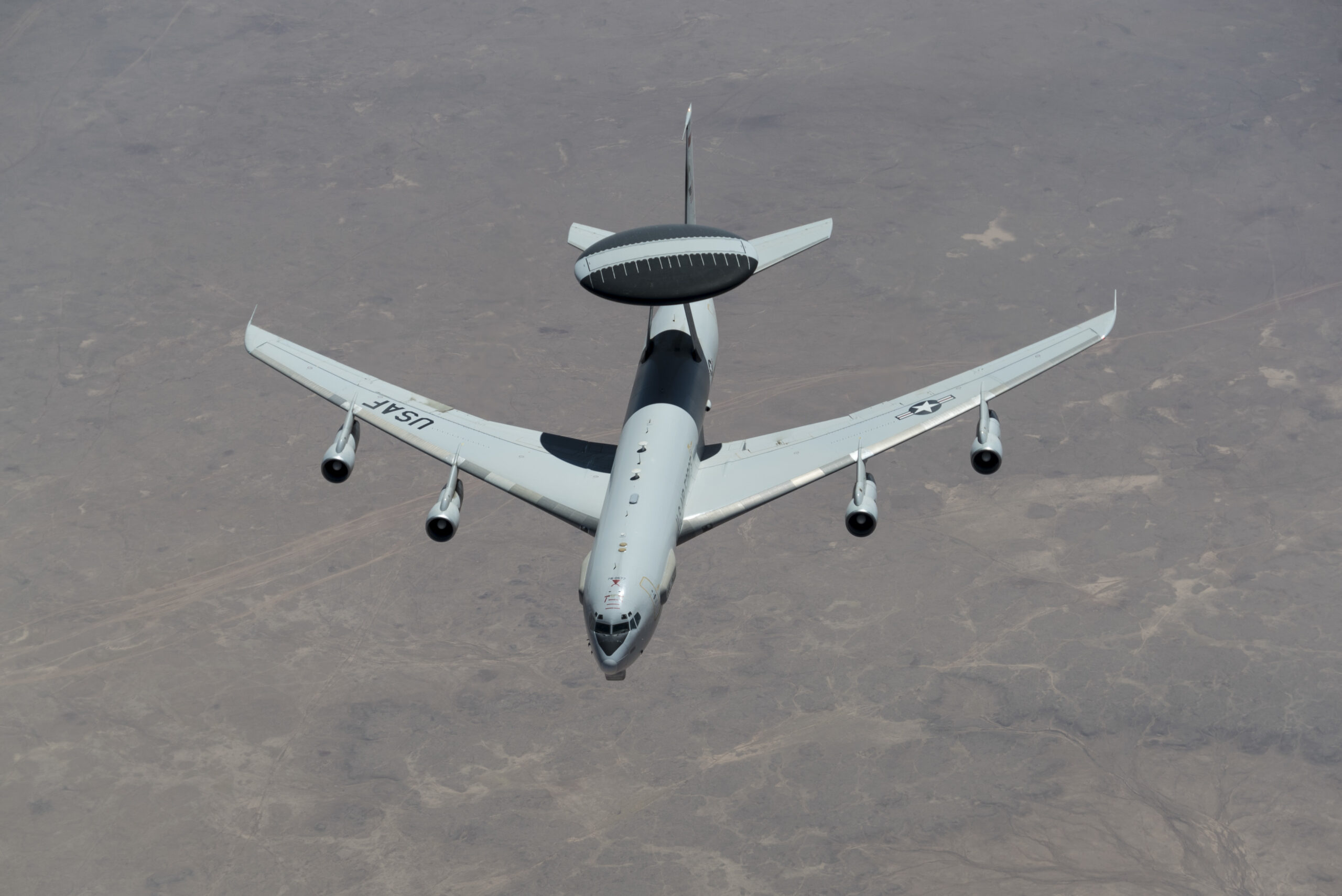
When the E-3 Sentry arrived in the late 1970s, it was both a technological marvel and an iconic sight to behold, with a 30-foot-wide, six-foot-thick rotating radar disc mounted atop the airframe of a 707 jetliner. Updated numerous times over the years, the radar system can track targets 250 miles away and pick out low-flying drones and missiles from the ground clutter.
Though fighter jets and stealth bombers often get the most attention, the E-3s tell them where to go and warn them of incoming threats.
During operations around Desert Storm in 1991, E-3s flew more than 7,000 hours, controlled more than 30,000 air strike sorties, and assisted in 39 of the war’s 41 Allied air-to-air kills, according to the Air Force. In the three decades since, the E-3s have basically never stopped flying. Its crews intercept Russian spy planes near Alaska, control the skies of exercises with allies over the Pacific, and are the nerve center for nearly every air strike in the Middle East.
But nobody makes spare parts for the E-3’s TF33 engines anymore, which takes a toll on maintenance. In 2022, Gen. Mark Kelly, then the head of Air Combat Command, told reporters:
“We basically have 31 airplanes in hospice care, the most expensive care there is. And we need to get into the maternity business and out of hospices.”
Wonderful Wedgetail
One aircraft could be well-positioned to take over. Flown by four allied air forces, the E-7 Wedgetail can track more targets more accurately at longer ranges than the E-3. The E-7 is based on the Boeing 737NG, which, unlike the E-3’s 707 frame, is still flown by many airlines and militaries around the world, with global spare parts supply chains.
After entering Australian service in 2010, the Wedgetail proved itself in the mid-2010s while controlling friendly aircraft over Iraq in the fight against ISIS. The Royal Australian Air Force said the Wedgetail was so reliable that whenever American F-22 fighters were in-theater, the U.S. Air Force asked the Aussies to support the U.S. jets.
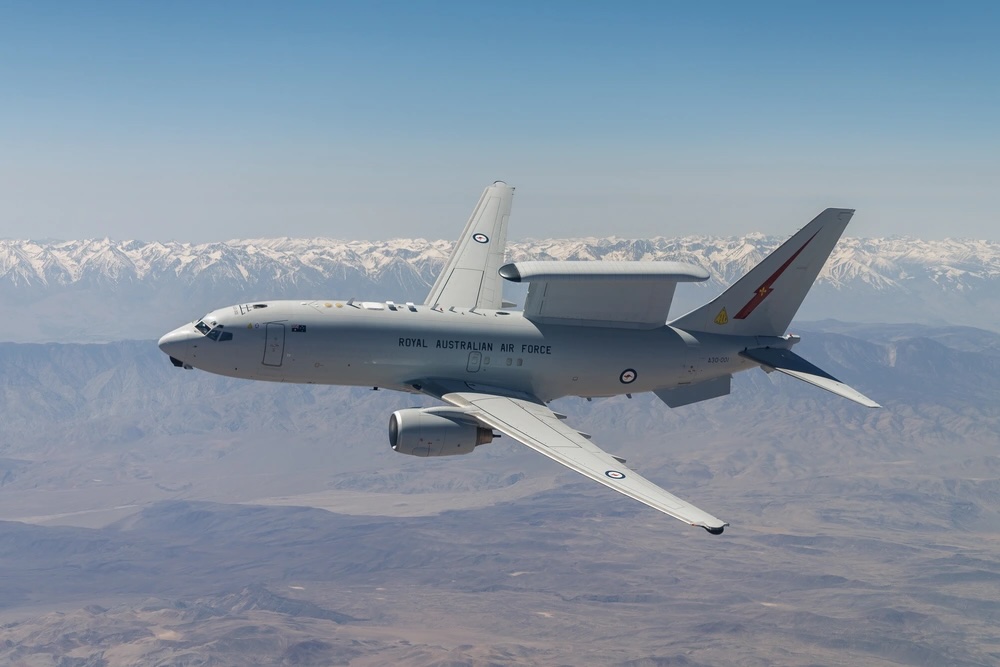
In 2022, the U.S. Air Force said it planned to replace the E-3 with the E-7, with the first of 26 Wedgetails arriving in 2027. Painstaking negotiation with Boeing followed, but the project was still on track until the Air Force pulled the plug in the summer of 2025.
Defense Secretary Pete Hegseth told Congress at the time that the E-7 “was sort of late, more expensive, and ‘gold-plated’” and he doubted it could survive a war with China, which has plenty of fighter jets and long-range surface-to-air missiles.
Instead, Hegseth said the military would soon use satellites for all its airborne target tracking. In the meantime, the Pentagon would buy five more Navy E-2D Hawkeyes to make up for the retiring AWACS fleet.
In an unusual move, 16 retired Air Force four-stars wrote a letter urging Congress to reverse the decision. The generals argued that satellites, while great at tracking surface targets, are not ready to track airborne targets, as top Space Force generals have said.
While the Hawkeye is an excellent airborne warning platform for the Navy, the retired four-stars said it is too small for Air Force requirements, and it has fewer crew members to do the complicated work of air battle management.
Congress seemed to agree when they undid the cancellation in December. But the E-7 is not out of the woods yet. Buying the Wedgetail has been an ordeal for other countries flying it, with deliveries to Turkey arriving seven years late.
With the E-7 facing an uncertain future, airmen will have to make do with the E-3 for the time being. Learn more about the Wedgetail story by watching our YouTube coverage here.