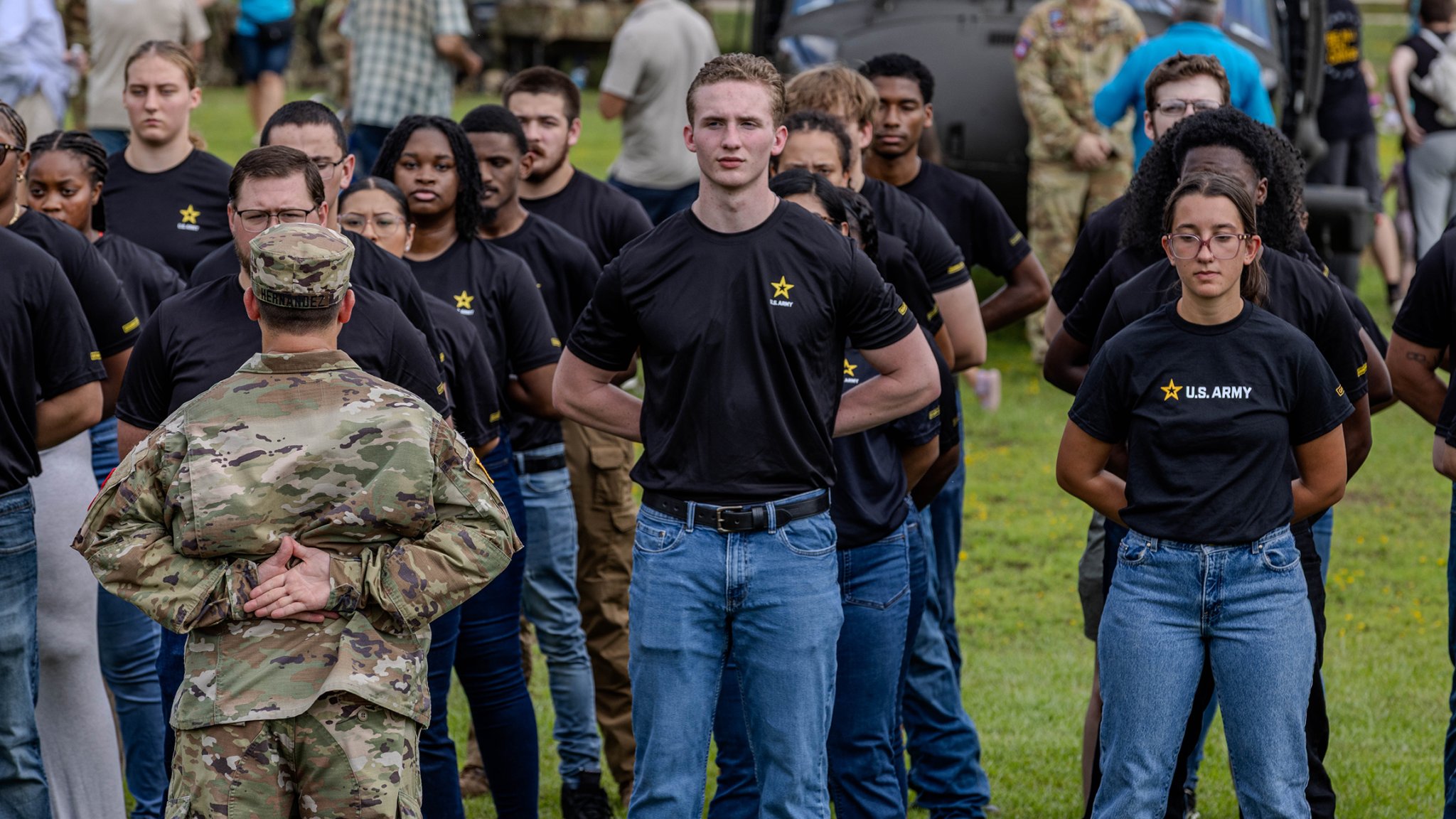
The Army is loosening its grip on recruiting waivers for mental health and misconduct, putting those decisions in the hands of the commanders who oversee street-level recruiting.
On Jan. 22, Army Secretary Dan Driscoll rescinded a 2020 directive that gave his office the authority to approve and deny waivers for recruits with mental health conditions or misconduct that would bar them from enlisting.
Potential soldiers who have medical conditions or a criminal record that would otherwise disqualify them from joining the Army can submit waiver packets, which are reviewed on a case-by-case basis. While many of those cases needed review by Pentagon-level officials under those 2020 rules, Driscoll’s move is meant to push those final decisions to commanders at Army Recruiting Command or Army Recruiting Division, which oversees the six brigades of recruiters around the country.
The change “permanently returns the approval authority for mental health and major misconduct waivers to the appropriate 3-star or 2-star levels within their respective recruiting and commissioning organizations,” Army officials told Task & Purpose in a statement.
Officials said the move “provides a more streamlined waiver process” for potential recruits and “allows quicker decisions on waiver requests to expedite accessions.”
The decision comes as the Army has hit its recruiting goals for two straight years. That success reversed a two-year slump and came after a major revamp of the Army’s billion-dollar recruiting enterprise. There has been no shortage of claims on the credit for the upswing, from Secretary of Defense Pete Hegseth citing President Donald Trump’s election, to Army initiatives launched in previous years, like more enticing benefits and a prep school designed to help recruits meet the standards.
Waiver approvals have bounced up and down
Driscoll’s push to drop waivers down the chain of command is not the first time that waiver authority has been shuffled around. A decade ago, headlines around a similar change caught the eye of Congress, causing Army leaders to scramble.
In 2017, the Army instituted waiver rules similar to those Driscoll approved last month, putting officials at Army Recruiting Command, or USAREC, in charge of considering mental health recruiting waivers. A USA Today reporter got their hands on the memo, queried the service, and published an article with the headline: “Army lifts ban on waivers for recruits with history of some mental health issues.” At a Senate hearing soon after, Sen. John McCain told an Army official, “If you took a poll of this committee right now, I doubt if you’d find a single one who would be approving of this practice, which we now find out about reading the daily newspaper.”
Top Stories This Week
The outcry caused then-Army Chief of Staff Gen. Mark Milley to address the change, admitting that the service did a “terrible” job explaining the policy, which was merely giving a lower-level command the authority to approve or deny waivers.
The authority was yet again kicked back to the Army headquarters level in 2018 when then-Army Secretary Mark Esper took back control of the waiver authority.
The latest policy change under Driscoll mirrors the policy from 2017, putting the authority into the hands of USAREC.
Balancing ‘quality and quantity’
In a statement to Task & Purpose, Driscoll noted that between fiscal years 2019 and 2024, thousands of appointment and enlistment waivers were reviewed by the Army Deputy Chief of Staff, G-1, for approval. Over 95% of those approved waivers were “based directly on the recommendations by the lower general officer levels of authority, who were more hands-on during the enlistment process,” he said.
Katherine Kuzminski, a director at the Center for a New American Security who recently co-edited a book on the history and challenges of the U.S. military’s all-volunteer force, said that recruiting is a “balance between quantity and quality.”
The waiver change, she said, is not intended to change the mental health requirements for soldiers who join — those are still set by Department of Defense standards — but could lead to an assumption that standards are being loosened.
“There’s a perception that by delegating this further down the chain of command, that somehow more unqualified people are being let in,” she said. “There are incentives for recruiting command to meet numbers, and there are trade-offs in the experience of a unit-level or an installation-level commander of bringing in a higher percentage of individuals with mental health concerns.”
Americans are experiencing more mental health crises and, in turn, receiving a formal diagnosis, meaning the number of potential recruits who are disqualified from military service with those conditions is “significant,” Kuzminski noted.
A 2022 Walter Reed Army Institute of Research report found that between 2016 and 2020, more than 31,000 potential service recruits had been diagnosed with a learning disability, psychiatric condition, or mental health concern that disqualified them from military service. More than one-third of Army applicants requested a waiver for a learning, psychiatric, or behavioral disorder, and 46% of those were approved.
“My hypothesis would be in the ones to tens that there might be some individuals who end up being granted a waiver at the USAREC level because there is more of the interpersonal engagement between the recruiter and and that chain of command — that perhaps if it got kicked all the way up to the Secretary’s desk they might not have that personal interaction and might decline that waiver,” she said. “But I fundamentally don’t see this as something where all of a sudden USAREC’s gonna be letting in hundreds or thousands of people that the Secretary of the Army would not.”
Army officials said waivers will continue to be “thoroughly” reviewed and the service will “uphold appropriate standards.”