
The Army wants leaders and on-base law enforcement to act with more urgency when a soldier goes missing. The service released rules last week that set immediate deadlines for informing family members and for bringing in local police when a soldier cannot be located.
Family members will now have to be notified within eight hours, and local police within three.
Army Secretary Dan Driscoll issued the rules in a policy directive last week. Under the new rules, commanders must change an absent soldier’s duty status to “absent-unknown” within three hours of a report of a missing soldier, a status that differs from Absent Without Leave, or AWOL, which indicates a soldier has intentionally fled.
With the changed duty status, officials will generate a “Be-On-The-Lookout,” or BOLO alert, to local law enforcement.
“During the time that a soldier is listed as absent-unknown, unit leaders and Army law enforcement officials will make every effort to locate the soldier,” the policy states.
Under the new policy, Army law enforcement officials will enter the soldier into the National Crime Information Center’s missing persons database, which notifies civilian law enforcement of the case. Army officials will also request “Attempt-To-Locate” assistance from local police.
Rules inspired by Vanessa Guillén’s murder
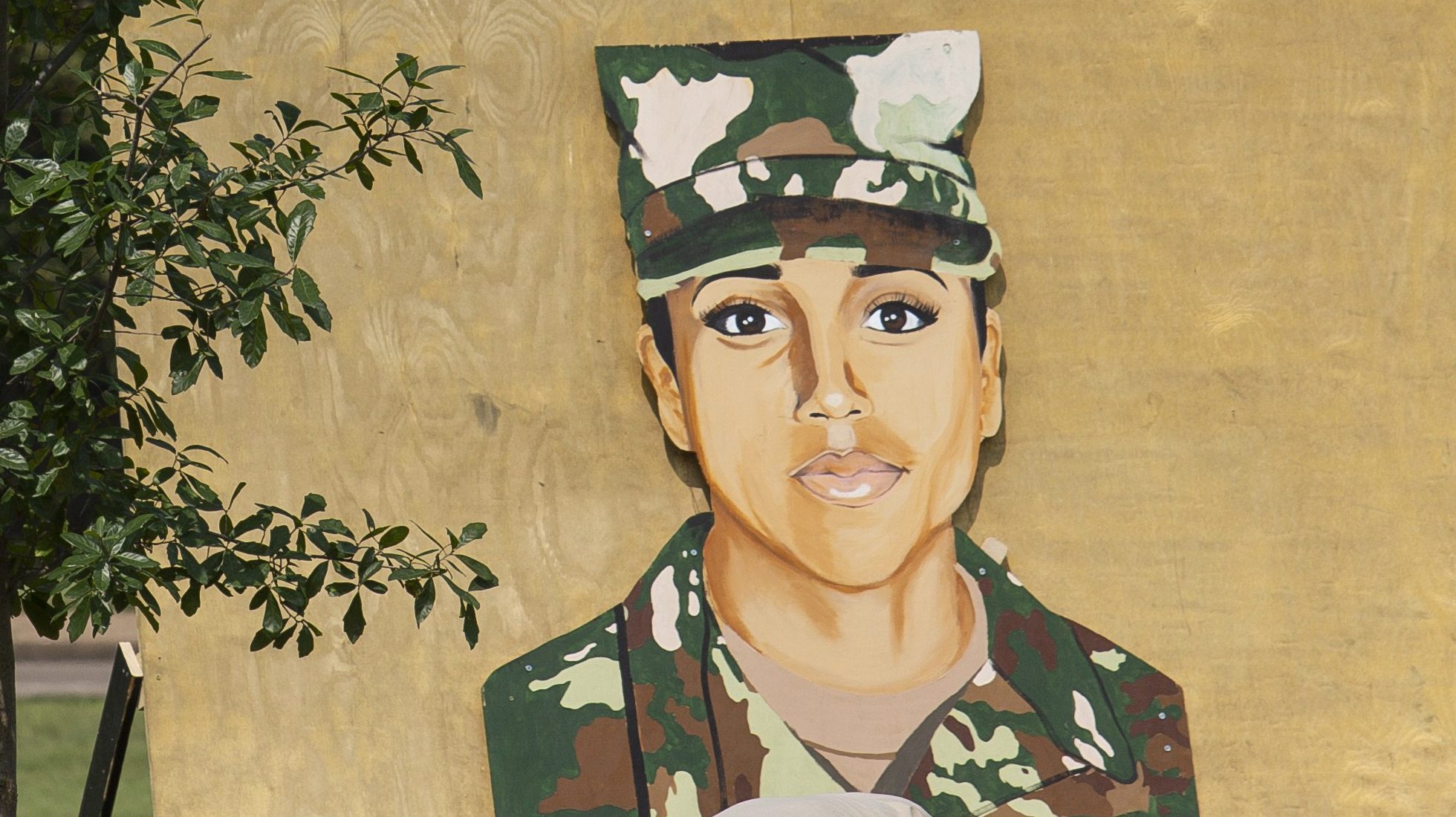
The move is the latest by Army officials that changes the rules around missing soldiers in the wake of the murder of Vanessa Guillén in 2020. Guillén was stationed at Fort Hood, Texas, when she was murdered off-post in 2020 by a fellow soldier and his girlfriend. Army police on Fort Hood waited almost 54 hours to change her duty status and notify law enforcement.
Natalie Khawam Case, the lawyer who represented the Guillén family, commended the new procedures for missing soldiers— especially rules mandating the involvement of civil law enforcement when the Army doesn’t have “the ability to investigate properly.”
The Fort Hood commission found that the case “exposed the inexperience” of the Army Criminal Investigation Division, CID, at the base. According to the report, 92% of CID agents at Fort Hood were apprentices who were “fresh out” of their accreditation course and at their first unit for less than a year.
When reviewing Army policies, the commission found that the service “did not have an appropriate classification of duty status,” and that “Guillén’s disappearance highlighted gaps and ambiguities in U.S. Army policies regarding the characterization of soldiers who are missing.”
Previously, Army policy had classified soldiers who did not “report” during formation as AWOL after 24 hours, unless evidence showed that the absence was involuntary. The commission concluded her classification of AWOL status “sent the wrong message and created an inaccurate perception that she had voluntarily abandoned her unit.”
Now, if a soldier is not found after 48 hours, commanders will determine whether their absence is voluntary or involuntary based on available evidence. If commanders believe a soldier has willingly disappeared, they will be reported as AWOL, while those whose absence is unexplained or might be involuntary will be classified as “missing.”
Khawam Case described protocols when Guillén disappeared from Fort Hood as “unorganized at every level.” Guillén’s family believed a search for the soldier should have begun as soon as she didn’t show up to her unit’s mandatory formation.
“That’s the second part of this: what is the sanction if it’s not being followed through? Where’s the teeth in this?” Kwaham Case said. “There needs to be, I believe with all of this, some kind of oversight, enforcement holding the commanders accountable if they don’t comply.”
Risk of self-harm
The directive also requires commanders to classify as “missing” any soldier who “indicates the potential for self-harm and is not located during the initial 48 hours.”
Kwaham Case said that policy would’ve been helpful in another Fort Hood case, that of Elder Fernandes, who died by suicide in 2020. Fernandes was sexually assaulted and then “bullied” for reporting the attack, Khawam Case said, and was hospitalized for mental health. Fernandes was found off base more than a week after he went missing.
“This policy, it’s so reasonable, it makes so much sense,” Khawam Case said. “Finally, we’re seeing a lot of modifications and changes due to policies they’ve seen were unsuccessful and protocols that didn’t work.”
Loading comments…
Comments couldn’t be loaded. Please refresh the page.