
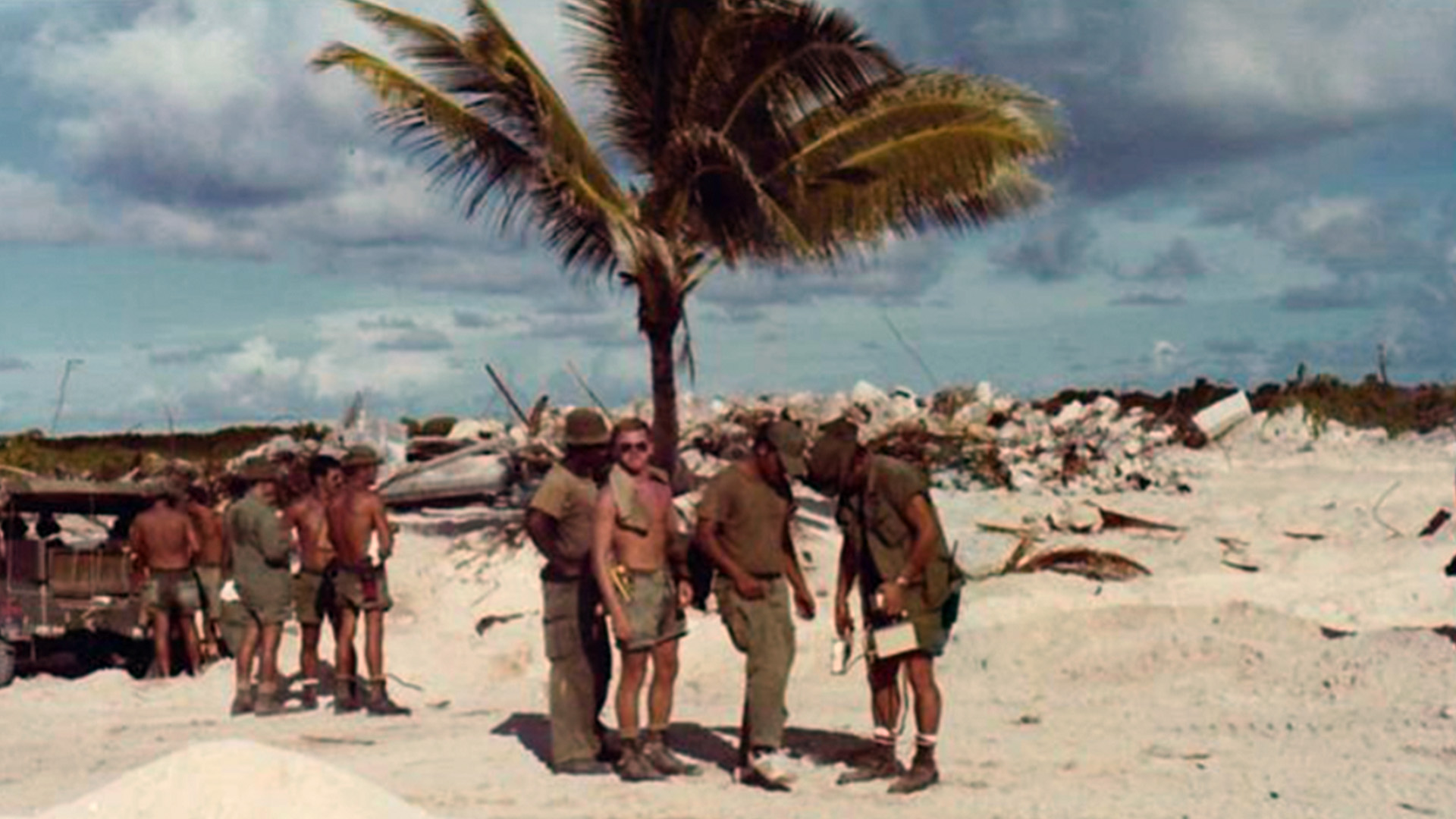
Between 1948 and 1958, Enewetak Atoll in the Marshall Islands was the site of 43 nuclear bomb tests, including the U.S. military’s first hydrogen bomb detonation. In 1977, the Army sent Robert Celestial, a heavy equipment operator, to the islands to help clean up the nuclear waste.
“My job was to transfer radiated debris from one island to the dome that is there now, Runit Dome,” Celestial said. “I have photographs where we’re inside the crater inside the pond, and all the way up their waist, up their chests, and we didn’t realize that we were in a nuclear detonation [zone].”
Celestial, 69, was a sergeant in the Army during the clean-up and the soldiers on his crew didn’t understand the dangers of their work, he told Task & Purpose. Now, decades later, many of his peers have developed chronic medical conditions including, bone and heart diseases, and several types of cancer.
“I have multiple issues too. By the grace of God, I’m still alive,” he said.
This week, a bill is expected to be introduced that will build on previous efforts to get compensation to nuclear clean-up crews like Celestial’s. The Radiation Exposure Reauthorization Act of 2026 would add eligibility to veterans three atomic cleanup sites. The bill would cover veterans like Celestial from Enewetak Atoll, crews that worked in Palomares, Spain, after a hydrogen bomb fell on the town in an accident, and others who worked near Thule, Greenland after a 1968 crash of a nuclear-armed B-52 bomber (the bombs didn’t detonate in the latter two incidents).
The new bill would build on a previous law, the Radiation Exposure Compensation Act, or RECA, passed in 1990 to compensate tens of thousands who were diagnosed with specific cancers or chronic diseases that may have resulted from exposure to the nuclear tests and related activities.
The law currently includes veterans who participated in nuclear tests, residents who lived near weapon test sites like the Nevada Test Site and uranium workers. Because many RECA recipients are civilians, payments are approved through the Justice Department, rather than the Department of Veterans Affairs.
Advocates say that there are groups left out of the current RECA law, recently reauthorized in the Big Beautiful Bill, including veterans from past radiological cleanup operations.
Rep. James Moylan, a Republican from Guam and one of the bill sponsors, said the proposal updates RECA eligibility to “reflect the realities of U.S. atomic weapons testing” by adding atomic cleanup veterans, as well as residents near U.S. sites of other nuclear tests. Officials from Moylan’s office said he plans to introduce the bill “in the coming days and is working to build a strong, bipartisan coalition behind the bill.”
In 2022, the Promise to Address Comprehensive Toxics Act, also known as the PACT Act, expanded disability benefit coverage for veterans exposed to burn pits, agent orange and other toxins. As part of the PACT Act, veterans from the three nuclear clean-up sites were granted presumptive exposure to radiation for disability claims with the Department of Veterans Affairs.
“We’re trying to do kind of the same thing that we did with the PACT Act, and that is get those three groups added to RECA and the Justice Department to recognize them as qualified individuals for that program,” said Keith Keifer, national commander for the National Association of Atomic Veterans.
Keifer said the group estimates that less than 6,000 veterans were part of the three clean up sites, of which several hundred may still be alive. Among Enewetak Atoll crews, Keifer said, “we can find less than 400 alive.”. There is not a good head count for Thule, Greenland, “but imagine that it’s relatively small, and that most of those individuals passed on,” he added.
Atomic veterans who were part of nuclear weapons tests are covered by both RECA and PACT Act claims but Keifer said they can only qualify for one type of compensation because of “double dipping” rules. The majority have found more success with RECA coverage over VA disability claims, he said, noting that it has taken some veterans over a decade.
“There are some exceptions, but on average, we’re finding it’s about 14 years, and that over 86% of the claims put in are denied,” Keifer said. “RECA, they’re much more straightforward. If you fill out the paperwork correctly and you meet the qualifications, generally in six months you’ll have a notice back as to whether you qualify or not. And within six months to a year, generally you’ll have a one-time check in hand.”
Veterans who participated in nuclear atmospheric tests can currently receive $75,000 from RECA. According to a 2024 Congressional Research Service report, more than $2.6 billion in benefits have been paid to more than 41,000 claimants.
The bill expands RECA eligibility to residents in Guam and other zip codes in Nevada, Colorado, Missouri, Washington, Ohio, and Arizona that were exposed to Manhattan Project waste, according to a bill fact sheet. The proposal increases one-time RECA payments to $150,000, adds more eligible cancers and diseases, and extends the deadline to file RECA claims through Dec. 31, 2042.
Loading comments…
Comments couldn’t be loaded. Please refresh the page.