
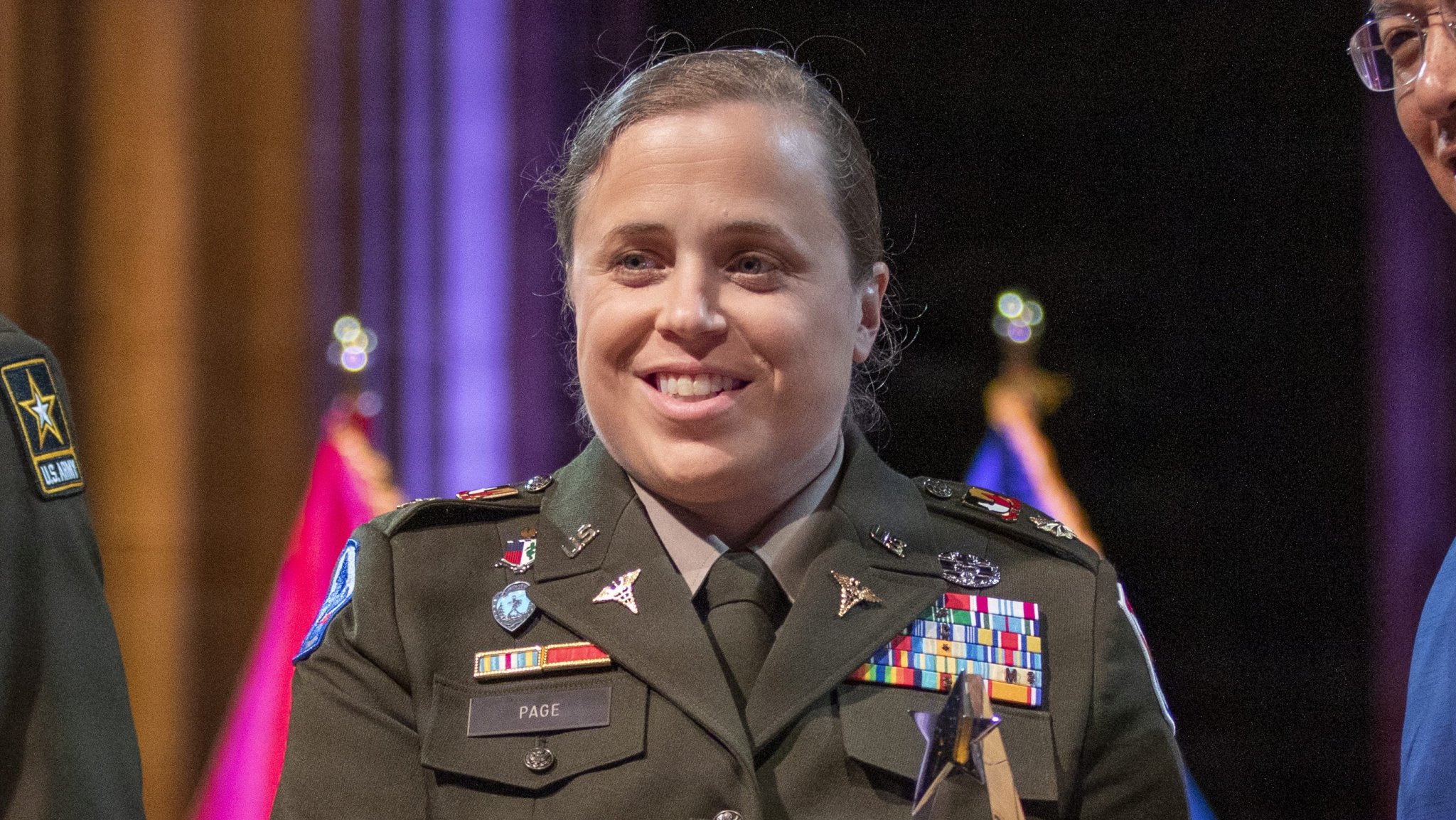
After a drone attack injured dozens inside the Tower 22 outpost in Jordan, Army National Guard doctor Maj. Erika Page suddenly found herself in charge of a small team of doctors and medics treating dozens of injured soldiers. For hours, she and her team diagnosed traumatic brain injuries in the field and made calls on which troops would be evacuated for serious medical care and who could stay in the camp and help.
Three soldiers died in the attack, the most Americans killed in a single strike in the region prior to the start of the Iran War. Pentagon counts of the total number of those injured in the blast — many with traumatic brain injuries — have varied, but two years later, it’s now clear that Page and her medical teams were among the first American medics to face a new drone-filled battlefield.
Page, who as a civilian works as an emergency medicine doctor at a Native American hospital in Arizona, was in her room when the Jan. 28, 2024 attack happened. She recalled hearing the sound of a blast and ran to nearby bunkers.
“You’re on autopilot. The call for the mass casualty happened, and I went to the MASCAL site where we had practiced. No one else showed up, which was unusual, because in practice, everybody had always come,” Page said. “I found out later that my 68 Whiskeys [enlisted combat medics] all also had traumatic brain injuries.”
Page was the lead medical officer at Tower 22 when the drone hit a containerized unit where troops were fast asleep. Three Army reservists from Georgia were killed in the attack, and dozens more were wounded.
Though the Pentagon is planning for U.S. forces to face massive numbers of troop casualties, Page said medical mass casualty exercises often “overlooked” how many troops would suffer isolated TBIs. Treating a high rate of them in the field at Tower 22, she said, was “overwhelming.”
Page began treating soldiers and airmen at an impromptu field hospital hastily set up in a base chapel. As she treated dozens of troops with TBIs, Page said, she had to determine who needed to be transported immediately for more serious care, and who could stay.
“I couldn’t transfer all these people out without the base collapsing. We’re not in a safe situation. We could not just say, ‘Alright, all 100 people need to get out of here, get CT scanned,’” she said. “We’re going to make sure that the documentation is there, we’re going to get you care, but we’re not going to have diagnostic certainty. As a modern-day physician who works in an ER with a lower threshold to [order a] CT scan, that was hard.”
Over 70 injured at Tower 22
Page was recognized as the Army Honoree for the 2026 Hero of Military Medicine Award at the National Cathedral in Washington, D.C., earlier this month.
“Major Page displayed unwavering courage, medical expertise, and superior leadership under direct enemy fire,” Brig. Gen. Matthew Brown, commander of Combined Joint Task Force-Horn of Africa, wrote in Page’s nomination packet for the award.
According to a release from the Georgia National Guard and Page’s Bronze Star citation, she triaged and treated dozens of casualties in those first few days.
“Despite the extreme circumstances, she remained calm and composed, immediately establishing casualty collection points and providing lifesaving medical procedures to over 70 wounded in action, including three killed in action,” Page’s Bronze Star citation reads.
The attack on Tower 22 revealed gaps in how U.S. bases track and respond to impending threats, and officials told Task & Purpose that it prompted a review of force protection measures at small bases scattered throughout the region. Vulnerabilities of U.S. force protection for troops deployed to the Middle East have remained top of mind amid the latest war with Iran, with members of Congress asking similar questions years later to the highest levels of the Pentagon.
Changing culture around Purple Hearts
Page said a majority of troops met the definition for Purple Heart eligibility. However, she’s unclear how many troops have received them because of the delays between the paperwork and actual awards, as well as the evolving culture around recognizing TBIs as a combat injury.
“I felt like I received some pushback,” she said. “There were a couple retroactive Purple Hearts that I helped people start getting set up for. The standards changed. We recognize that this is a unique injury process that we didn’t recognize at the beginning of the global war on terrorism.”
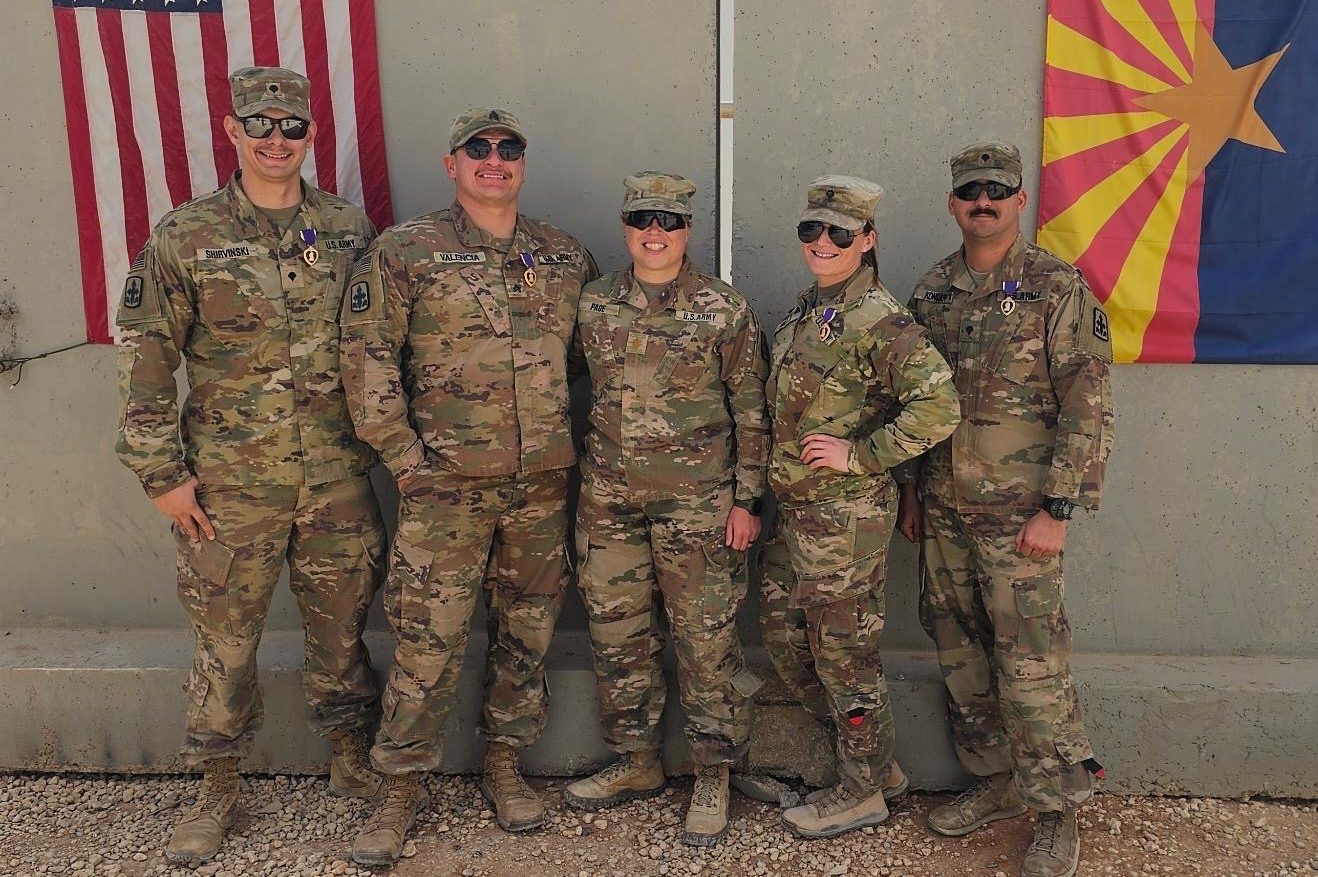
Since 2024, Purple Heart awards related to Tower 22 have been announced for 10 New York National Guardsmen, two soldiers from the Kentucky National Guard, three airmen from the 129th Rescue Wing, and another Arizona Guardsman who helped her peers climb out of the rubble. An Army Reserve chaplain also received a Purple Heart, along with other honors, for his response in the immediate aftermath.
U.S. service members are eligible to receive Purple Hearts if they are wounded from hostile attacks or combat and receive formal medical treatment that is documented in their official service records. Page said that as she evaluated troops right after the attack, she made sure that their medical documentation was thorough.
“I knew Purple Hearts [were] going to have ramifications for generations,” she said. “People can get free college, people will get decreased taxation. The entitlements for life can really change, and change like an entire family, and rightfully so. I just knew I had to get it right.”
Loading comments…
Comments couldn’t be loaded. Please refresh the page.