
In the Fall of 2023, a brigade of the 10th Mountain Division became the first large unit of U.S. soldiers to face waves of long-distance one-way attack drones. The “Commandos” of the 2nd Brigade Combat Team were the primary defense force for coalition bases across Iraq and Syria, during a time when troops in the region faced 170 attacks from one-way attack drones, rockets, mortars, and ballistic missiles fired by Iranian-backed militias.
The unit’s top leaders had seen years of combat in Iraq and Afghanistan. But they were unprepared for the waves of drones and their tactics, developed and deployed by Iranian-backed militias in just the few years since major combat ended in those larger wars.
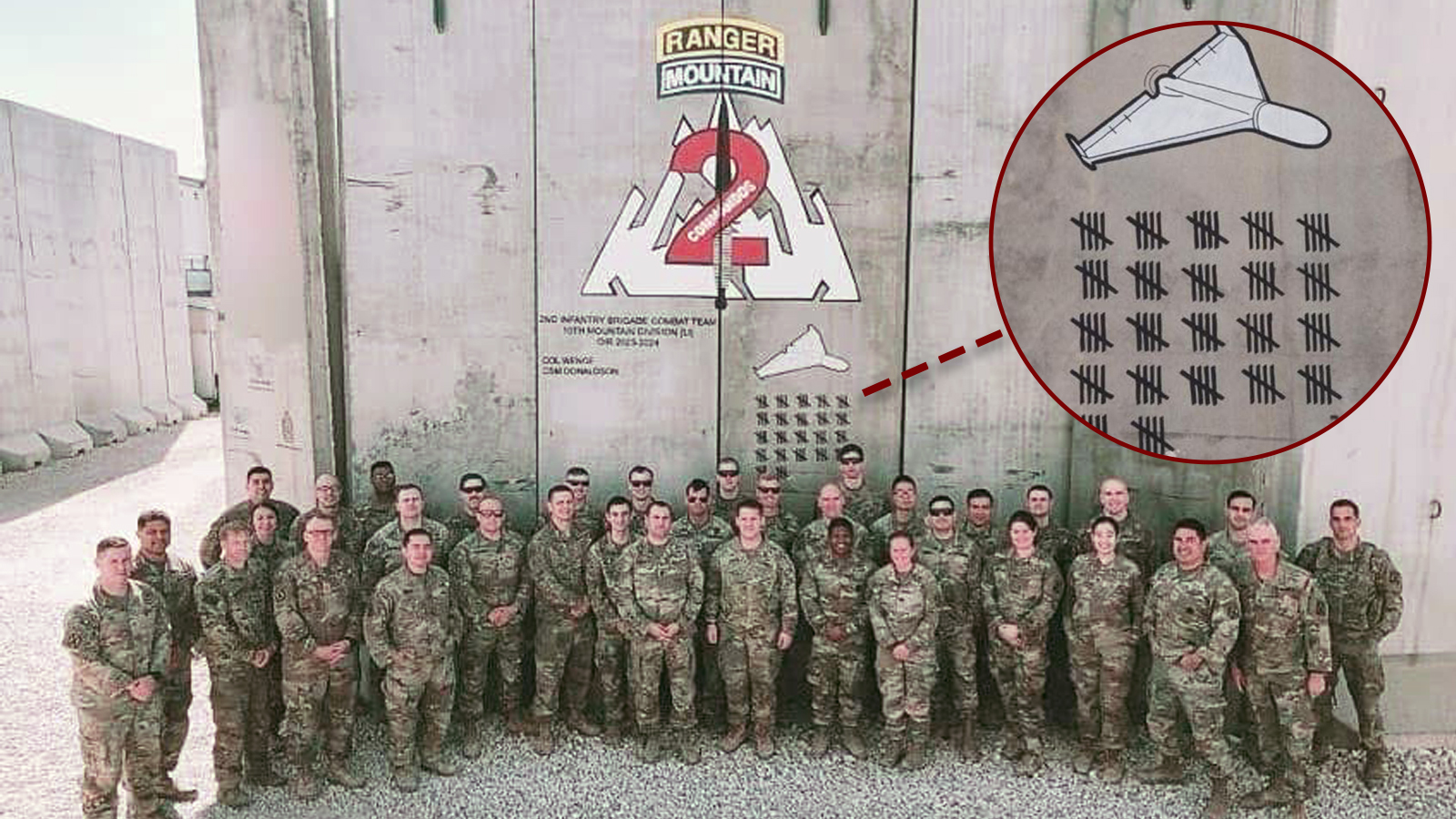
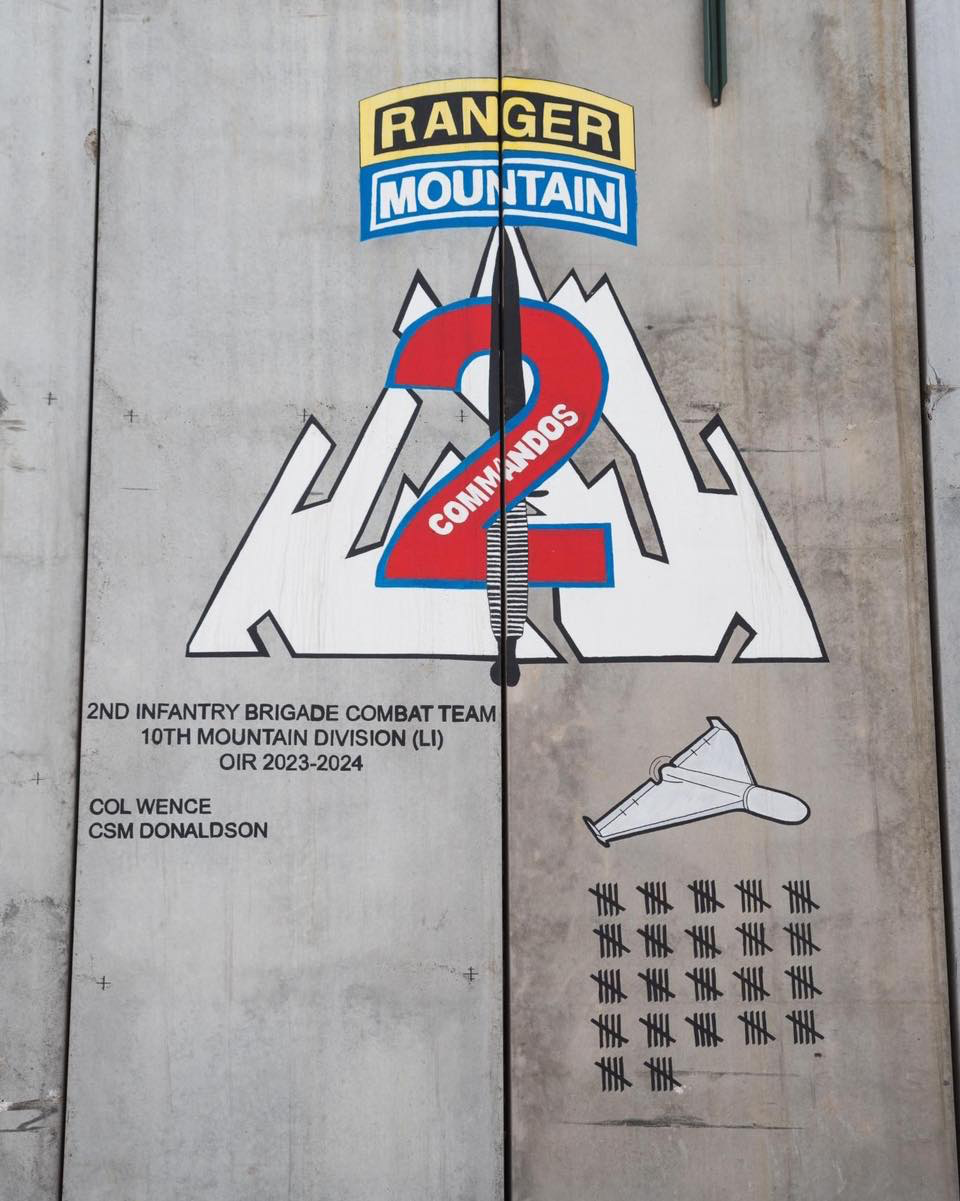
Soldiers in the unit shot down close to 100 drones after limited pre-deployment drone training and using tactics they developed on the fly. The Commandos tracked their kills on a 6-foot-tall ‘tick counter’ on a T-Wall in Al-Harir Air Base in Erbil, Iraq, the hub of their deployment. For the drones that made it through their defenses, they rebuilt base shelters to absorb or deflect the new weapons.
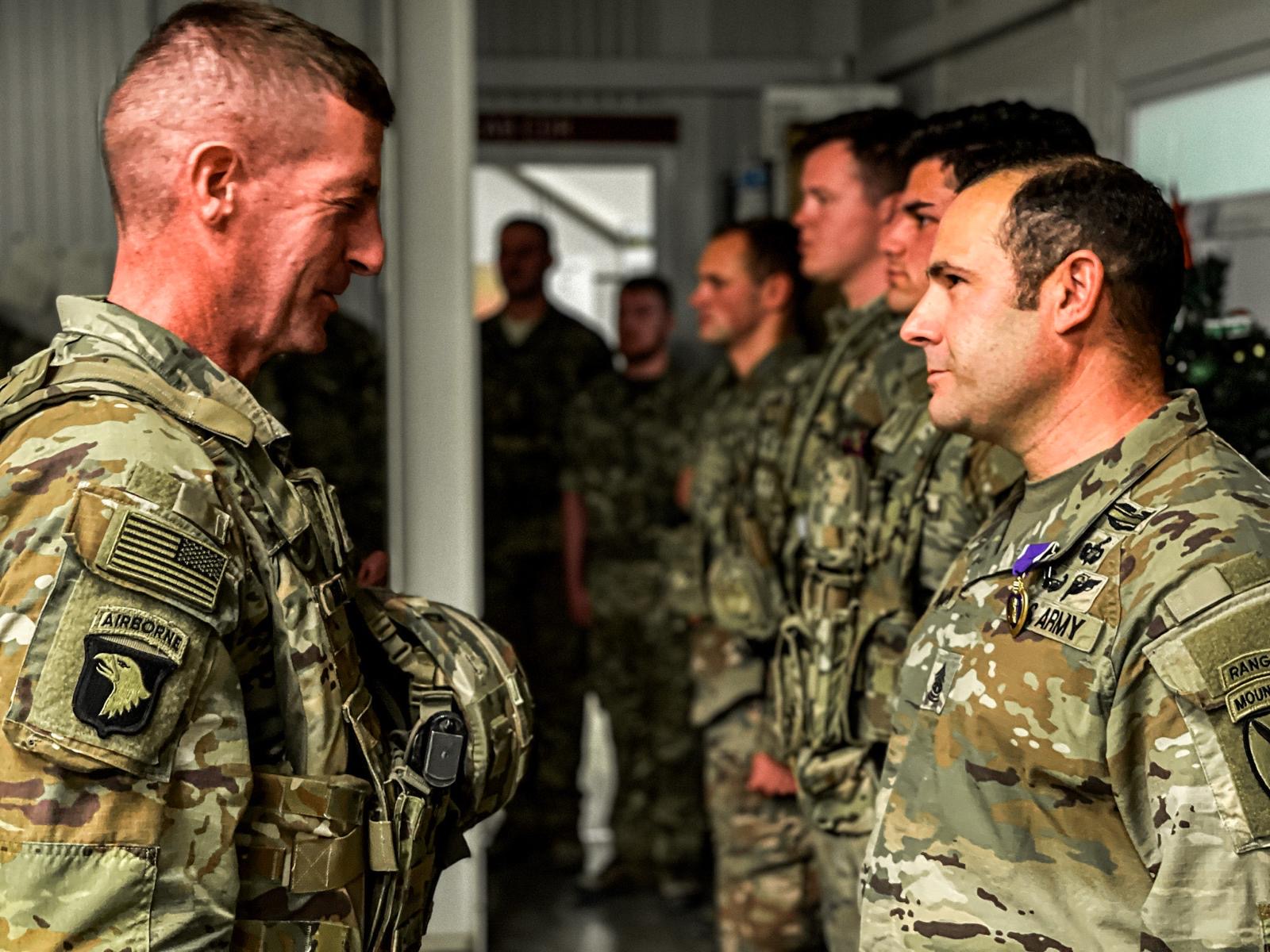
At least 30 soldiers from the 2nd Brigade came home with Purple Hearts from drone-attack injuries, including the unit’s command sergeant major.
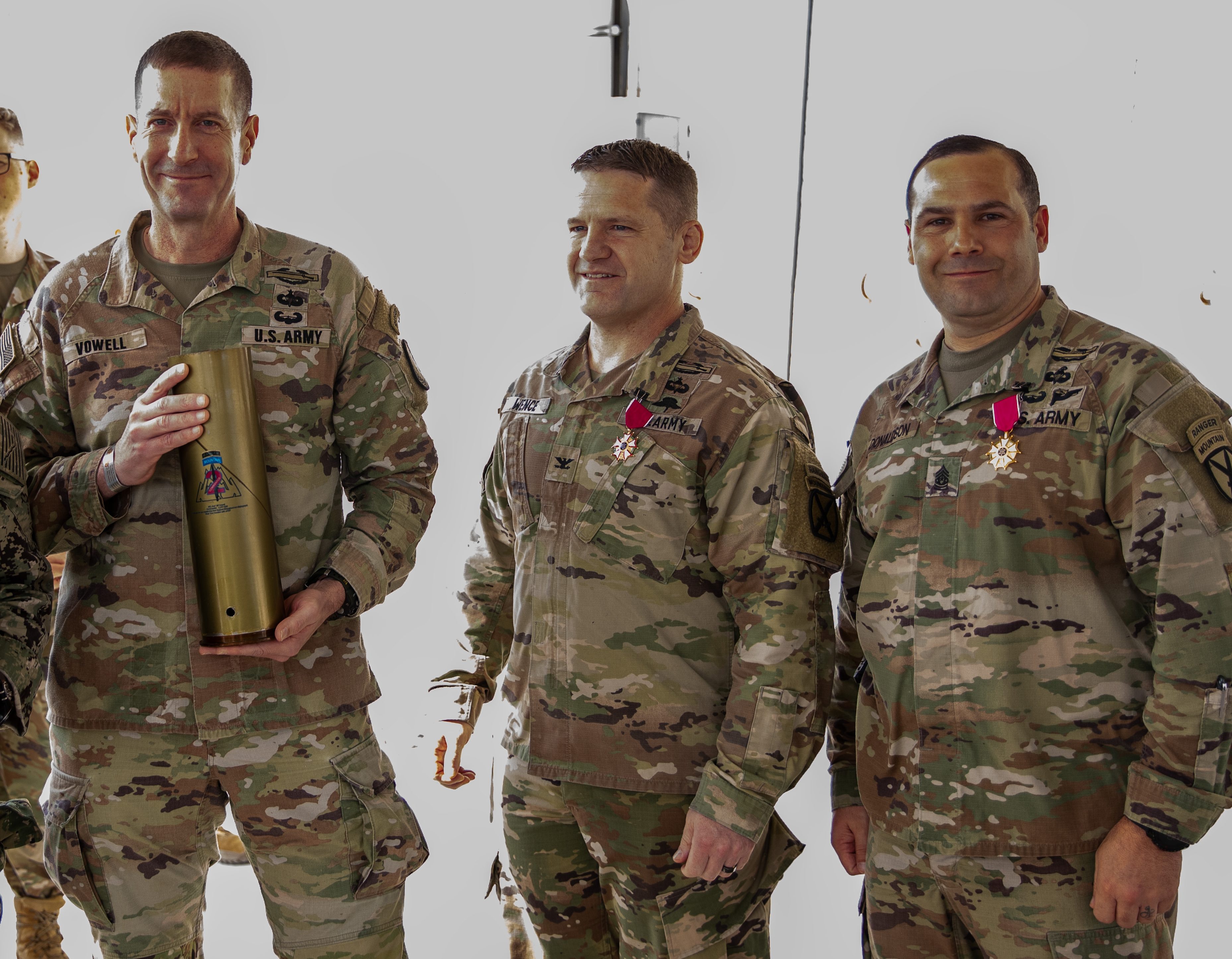
“It felt like you were being hunted versus hunting,” said Col. Scott Wence, the brigade commander. Wence is no stranger to combat, with more than ten deployments to Iraq and Afghanistan as a platoon leader in the 75th Ranger Regiment soon after 9/11 and later as a special mission unit troop commander in Joint Special Operations Command.
The deployment was also a shock for the unit’s top enlisted leader, Command Sgt. Maj. Christopher Donaldson. A career infantryman, Donaldson was from an era where soldiers fought in firefights, faced ambushes of improvised explosive devices, and weathered mortars and rockets. But leading troops in a drone war was different.
“I didn’t have any experience talking through how you defeat this,” Donaldson said. “None of us did.”
Larger attacks and some details of the fighting were made public during the 2023 deployment, but the full scale and intensity of the violence the nearly 2,500 10th Mountain soldiers faced has not been widely reported. The unit’s commander and senior enlisted leader, both long-time combat vets, spoke with Task & Purpose about the deployment.
Iranian-backed militia groups began directing attacks towards U.S. troops almost immediately after the Oct. 7 Hamas attacks in Gaza. The soldiers at Erbil were suddenly on the frontlines of that proxy war.
In the months that followed, the 10th Mountain soldiers took down close to 100 one-way attack drones using anti-drone weapons they had rarely trained with, and contrived tactics like using huge nets. For those they couldn’t shoot down, they redesigned base defenses and shelters to keep safe.
The unit kept a tally of its drone kills on a massive T-Wall art featuring the 2nd Brigade’s emblem that totals 110 kills (Wence said he recalls a final count of over 90 kills in 115 engagements). Three 2nd Brigade soldiers shot down five drones each, earning “ace” status, taken from the title awarded to fighter pilots who shoot down five enemy planes.
“If you walk around Erbil, it’s kind of some tradition,” Wence said of the T-wall art. “Every unit does that. Not every unit’s got those tick marks next to it.”
A new kind of threat
Drones were not unknown to soldiers in 2023, over a year after Ukraine had become a drone-heavy battlefield. The 2nd Brigade soldiers put on a “drone academy” weeks before their deployment. But they still had limited formal training on countering unmanned aerial systems, or UAS, and the Army had virtually no formal guidance on the threat. And, Donaldson guessed, 80 to 90% of the unit’s soldiers were on their first deployment.
Donaldson acutely remembers the first attack: Oct. 26, 2023. It was nearly his last.
“We didn’t pick it up on the radar,” Donaldson said. “I remember most of it, but not all of it.”
Before the deployment, the brigade expected that their largest threat would be ballistic missiles — massive rockets the size of a truck that fly hundreds of miles. It was ballistic missiles that hit Al Asad in January 2020, causing dozens of severe injuries, including many traumatic brain injuries, or TBIs. But because of their size, ballistic missiles are easily tracked and U.S forces have grown adept at shooting them down with Terminal High Altitude Area Defense (THAAD) or Patriot missiles, which were being sent to Al-Harir.
One of the Patriot systems was set to arrive that morning, so Donaldson woke up early to check on the delivery. He then headed to the gym around 6:30 a.m. The sun hadn’t come out yet.
“I briefly heard something, but it sounded almost like the sound of a generator buzzing, and then next thing I knew, I was on the ground and just saw smoke and everything right where it hit. It landed probably about 50 meters away from [where] I was,” he said. “All that overpressure and everything is what pushed me and threw me down.”
The drone went through the roof and hit the bathroom on the second floor of the barracks trailer, where Donaldson and other senior leaders slept. Had he slept in, the outcome might have been different.
The trailer was located next to the base’s Joint Operations Center, or JOC, where leaders plan and make tactical decisions.
“We think it was actually aimed towards the JOC, and it just flew over it and missed it and hit my barracks and building right where my room was at,” Donaldson said. “I was the only one that was hurt that day, so definitely extremely lucky.”
Donaldson said he remembered getting up, checking to make sure no one else was hurt, and keeping the area clear in case of a second attack. After that, “things were a little fuzzy.” He felt lightheaded and dizzy, his speech started to slur, and he vomited multiple times. He was eventually medically evacuated for more intensive care and was diagnosed with a traumatic brain injury, TBI.
It would be over a week before he returned to duty.
“I pretty much had to always stay in the dark — the constant headaches, the ringing, my hand would go numb from holding something, which it still does,” Donaldson said during a phone interview, adding, “I actually just had to switch the way I was holding my phone because my left hand still goes numb.”
Slow days, then a barrage
Some of the combat of the deployment made the news back home. A missile attack on al-Assad in November wounded several, and a Christmas Day drone attack badly injured a helicopter pilot with the 82nd Airborne. In late January, the drones hit a small outpost known as Tower 22, killing three National Guard soldiers and leaving dozens of others with TBIs.
But the majority of troop injuries during the fall and winter of 2023 were never formally announced by the Pentagon. The toll that the attacks took has been quietly recorded in subsequent Purple Heart announcements, such as last May, when 10 New York National Guard soldiers received Purple Hearts for injuries in the Tower 22 attack.
For the 2nd Brigade, some days were slower than others. Some days might bring just two or three attacks by large unmanned aerial systems. Others were more chaotic, with 10 or 15 strikes across eight sites in Iraq and Syria. The attacks tended to follow a pattern: one drone would fly in, followed by another 10 to 20 minutes later, Donaldson recalled.

About a week after Oct. 7, officials mandated that troops wear full combat gear, with a helmet and body armor, when outside of the “hardstand” buildings (those made out of aluminum, metal, or brick). When they were about to downgrade the precautions, the attacks ramped up, Donaldson said.
“One of the bases, within an hour, took five [one-way drones] and we shot down four of the five,” Donaldson said. “They were also at their limit of how many rockets they had left, so if we would have taken a couple more at that base, they would have been pretty much defenseless.”
Rethinking bunkers
One of the biggest lessons from the deployment was base defense and survivability, the two leaders said.
“The bunkers, they weren’t good [when we arrived]. There’s science that goes into blast overpressure and hardening stuff and we spent a ton of time there and some of those absolutely saved lives,” Wence said. “Some of our bunkers that we redid took a direct hit and I’m not saying it didn’t hurt the people outside [of hardened buildings], but they’re alive.”
The base started using more sandbags and adjusting their position to mitigate the risks, Wence said, adding that when “40 to 80 pounds of explosives is hitting it, it stops that, so the people on the other side of it don’t receive any shrapnel or hopefully overpressure.”
They erected more concrete T-walls around tents and reconfigured radar systems to pick up low-flying drones. Nets were placed on top of buildings to catch drones so they would either not detonate or do so before impact.
“You can almost think, like, Top Golf and the nets. They’re like a driving range,” Donaldson said.
Wence compared their efforts to those of Ukrainians using nets around their tanks, and how the U.S. used cage-like nets on vehicles in Iraq and Afghanistan to protect against rocket-propelled grenades, or RPGs.
Intelligence units combed over drones that failed to detonate, hacking their GPS to pinpoint where they were launched from or how far they traveled, and examining the explosives for clues on their origin, Donaldson said. But while rockets or missiles have obvious launch points, small drones could be launched from anywhere.
“They can program [drones] around radars and it could come from Baghdad and hit northern Syria. Finding those people gets extremely hard,” Wence said.
During the height of the Iraq War, Wence said, intelligence would lead to a target his teams could raid. But those days were long gone in 2023. “Getting ‘left of the boom’ is totally possible, but there’s no extra forces and authorities to just go anywhere.”
Top Stories This Week
As the attacks continued, both the militias and the 10th Mountain troops altered their tactics. Intel experts noticed that captured GPS systems were suddenly harder to hack, Donaldson said.
“The way they were programming was, once it was launched, it would hit a waypoint, and then that waypoint would delete,” Donaldson said. “We couldn’t pick up on that ground control station from where they were mostly being launched at.”
Troops unprepared
All of the chaos was compounded by the “very minimal” experience that soldiers had with drones, Donaldson said.
Wence remembered the fear he felt from his young soldiers, including the face of a specialist who was headed into a bunker ahead of an attack.
“She looked at me and she said, ‘Sir. Are we gonna be OK?’” Wence recalled. “It hit me like a rock.”
Just this past August, Army officials candidly stated that the U.S. is “behind globally” with drone proficiency. Service officials announced the first drone-specific proficiency course developed by training doctrine experts, as an “aggressive attempt to close that gap.”
The course will include the hard-won lessons of the Commandos.
“For that four-and-a-half, five-month period, there wasn’t a lot of sleep for most senior leaders, specifically me and the brigade commander. We lived in our office. We slept on our couch, just because it was five feet away from the JOC and where we could control everything,” Donaldson said.
When the attacks came to a halt, Donaldson said, “We felt like we could breathe again.”
Loading comments…
Comments couldn’t be loaded. Please refresh the page.