The Saturday attack on Venezuela to capture President Nicolás Maduro was carried out by U.S. Army special operations units, who inserted via helicopter into Caracas and grabbed Maduro and his wife after a firefight with Venezuelan forces. While they were carrying out the raid, roughly 150 aircraft covered them in the skies and carried out airstrikes on Caracas and other parts of Venezuela.
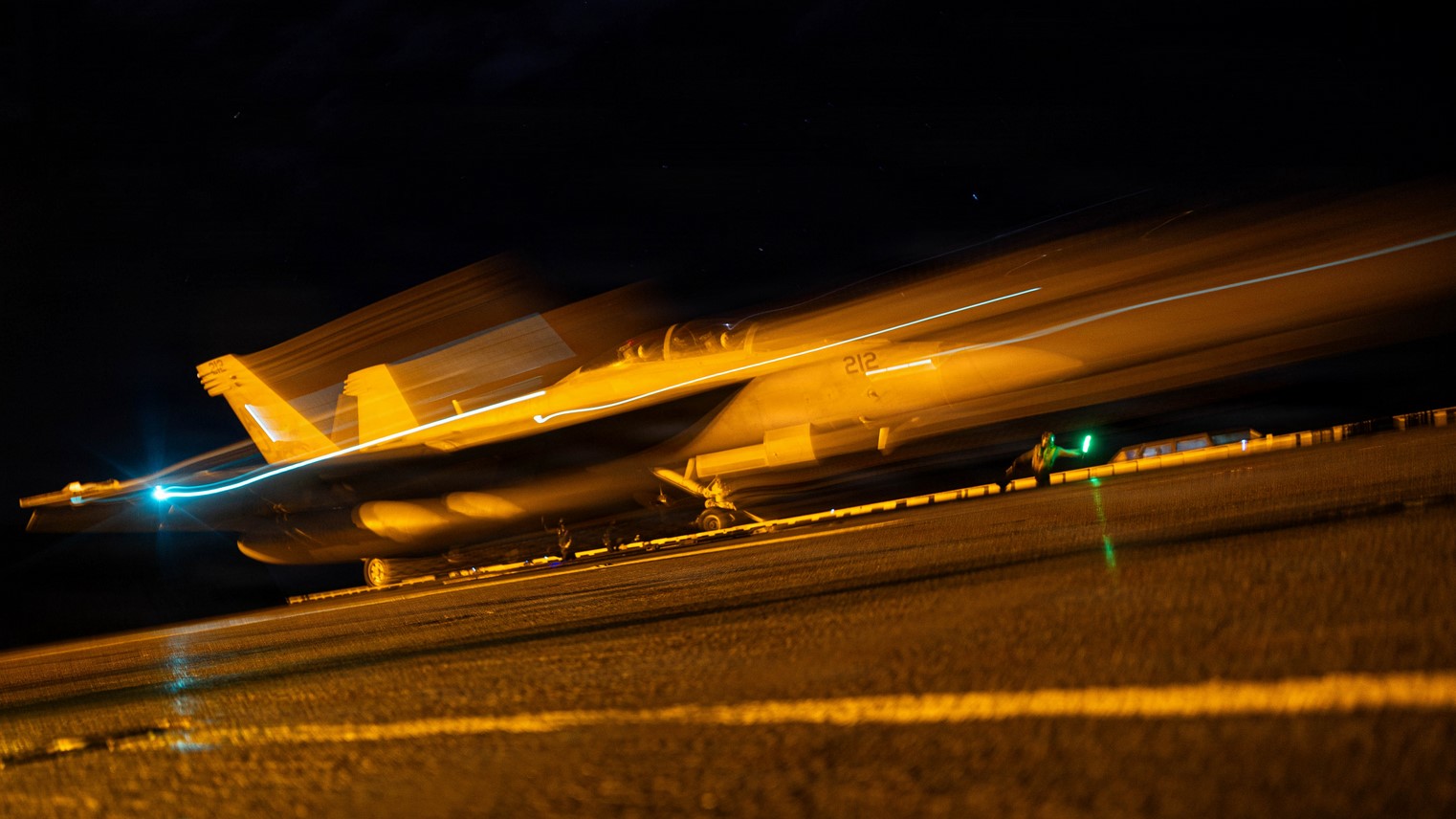
The force included a mix of Air Force, Navy and Marine Corps bombers, fighter jets and electronic attack planes, Chairman of the Joint Chiefs of Staff Gen. Dan Caine said on Saturday. Speaking at a press conference with President Donald Trump and Defense Secretary Pete Hegseth, Caine said that the force used included “F-22s, F, 35s, F-18s, EA18s, E-2s B-1, bombers and other support aircraft, as well as numerous remotely piloted drones.” The various aircraft hit several targets in Venezuela, including the La Guaira port, the military headquarters complex at Fort Tiuna in Caracas and multiple airports.
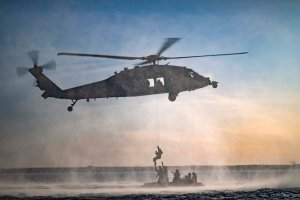
While the jets and bombers flew overhead and prepared for any aerial response, helicopters flown by the Army’s 160th Special Operations Aviation Regiment entered, carrying members of Delta Force. They flew over a largely blacked out Caracas, which Trump implied was as a result of operations by American forces. Caine noted that U.S. Cyber Command and Space Command carried out actions in support of the air assault.
No American personnel were killed in the mission, dubbed Operation Absolute Resolve. Initial counts from Venezuela report at least 40 people were killed, including civilians.
Top Stories This Week
Caine did not specify the specific units involved in the operation, only saying they launched from 20 bases. However several fighter squadrons operating those planes have been deployed to the waters and bases around Venezuela. The USS Gerald R. Ford, in the area with its carrier strike group, is home to Carrier Air Wing 8. That wing includes four squadrons of F/A-18 fighters, both the single and two-seat variants; they are the strike fighter squadrons VFA 31, VFA 37. VFA 87, and VFA 213. It also includes squadrons operating EA-18G and E-2D aircraft.
Although the United States has used several air bases around Central America and the Caribbean Sea, much of the air power has been based out of Puerto Rico. In December F-35As with the Vermont Air National Guard’s 158th Fighter Wing deployed to bases there. 12 Air Force F-22 fighter jets have been spotted in public satellite imagery at the recently restored Roosevelt Roads Naval Station. The Marine Fighter Attack Squadron (VMFA) 225, flying F-35Bs, also is forward deployed to the island. It’s unclear what drones were involved, however MQ-9 Reaper drones have also been spotted at American bases in Puerto Rico.
Since September American special operations forces have carried out nearly three dozen airstrikes on ships and semi-submersible vessels accused of smuggling drugs in the Caribbean Sea and eastern Pacific Ocean. Those strikes have, according to reporting from several outlets, been carried out using gunships and drones. As of Jan. 4, the U.S. has announced 35 airstrikes, with at least 115 dead. The exact toll is unknown; an unspecified number of survivors jumped off their ships before they were destroyed in a series of Dec. 30 airstrikes and after four days of searching this past week the Coast Guard announced it suspended its rescue operation.
It is unclear if naval forces in the region launched their own munitions, or if the strikes on Venezuela were done solely by aerial forces.
Caine’s comments on the operation are also notable for the aircraft not identified as being a part of the operation. Caine did not mention AC-130 gunships, which have been spotted in El Salvador and by flight tracking pages. Additionally none of the Marine Corps AV-8B Harrier IIs onboard the Iwo Jima Amphibious Ready Group with the 22nd Marine Expeditionary Unit appear to have been involved. The Iwo Jima ARG did play during the operation, as Maduro and his wife were taken there. They were later flown to New York on Saturday.
Starting in mid-December the military moved additional aircraft into the region, including MC-130J Commando II as well as several AFSOC CV-22B Ospreys.
The United States military currently does not have any troops on the ground inside Venezuela, the Department of Defense confirmed to Task & Purpose this afternoon. Secretary of State Marco Rubio made similar comments earlier in the day. However the large naval force remains in waters north of the country, as well as several aircraft based around the Caribbean. In addition to the Ford Carrier Strike Group, there is the Iwo Jima Amphibious Ready Group, as well as multiple destroyers and guided-missile cruisers, according to USNI News’ fleet tracker.