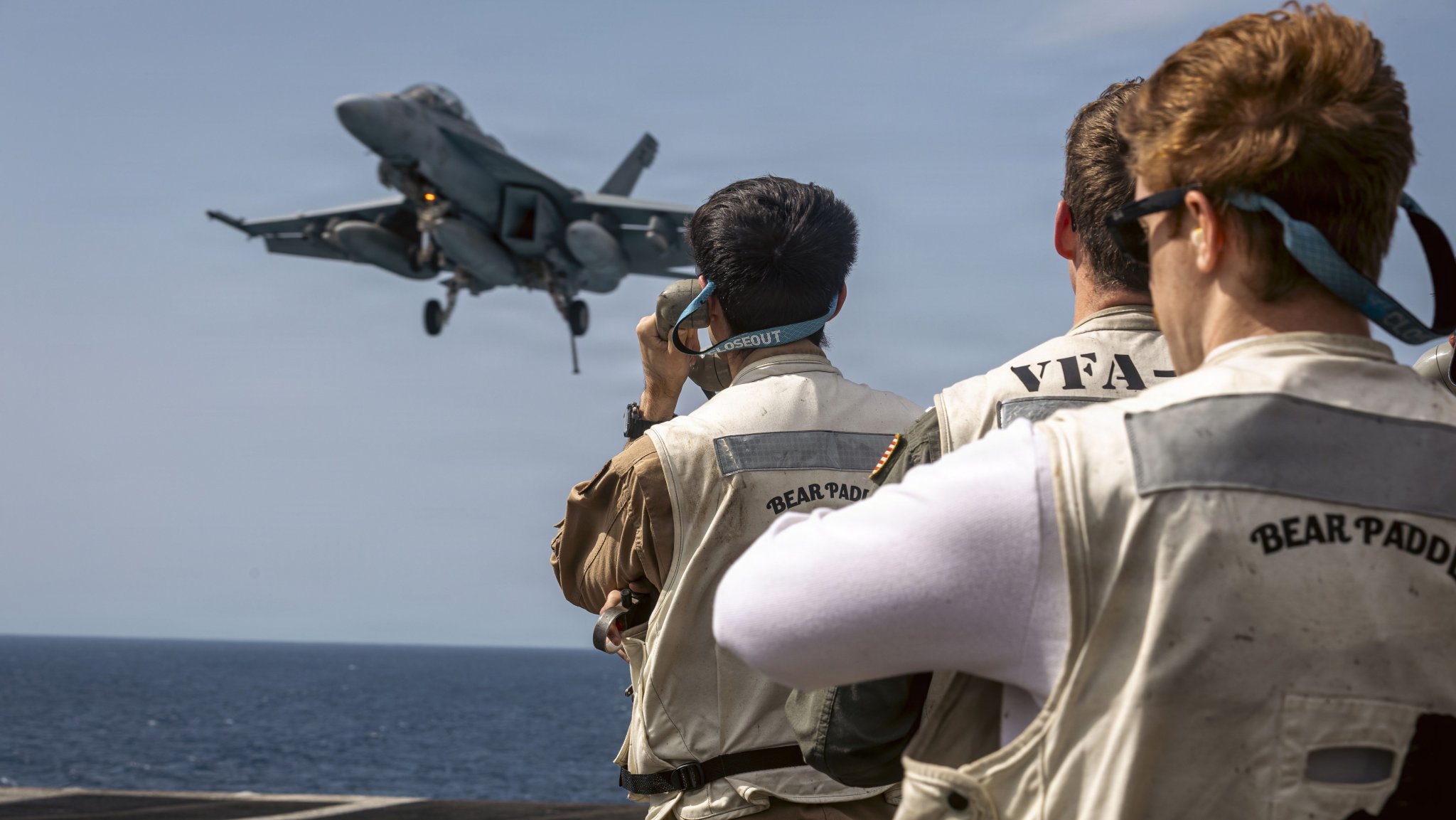
Troops deployed for Operation Epic Fury can receive combat pay of up to $225 each month, a number that varies on their location and proximity to direct hostile fire, defense officials confirmed to Task & Purpose.
The Pentagon recently updated its list of countries and bodies of water across the Middle East where U.S. troops are engaged in combat operations against Iran. The list expands where troops can receive either Imminent Danger Pay or Hostile Fire Pay, depending on their location or exposure to a hostile event.
Imminent Danger Pay is based on where a service member is deployed and computed as $7.50 per day that the troop is on duty in a location where they are “subject to the threat of physical harm or imminent danger based on civil insurrection, civil war, terrorism, or wartime conditions in a designated foreign area.”
A service member switches to Hostile Fire Pay if their unit engages in hostile action, their base is attacked or if the service member is killed, injured, or wounded by hostile fire or an explosion. Those eligible for Hostile Fire Pay see a blanket payment of $225 per month, regardless of how many days they were in combat.
According to DoD policy, service members can only receive one of those forms of payment and up to a maximum of $225 each month.
On March 10, the Defense Finance and Accounting Service website updated its list of eligible imminent danger pay locations to include several associated with Epic Fury, including the waters of the Arabian Gulf, Arabian Sea, Gulf of Oman, bases in Jordan, Kuwait, Oman, Qatar, Saudi Arabia, and the United Arab Emirates. The list was also updated to include the airspace over Iran.
Top Stories This Week
The “imminent danger area” designation went into effect Feb. 28, the date that combat operations were launched. The pay would expire three months after Operation Epic Fury comes to an end, or after a designated follow-on operation, according to a note on the DFAS website.
The imminent danger pay locations, which include Iran, are updated by Pentagon policy and include over 60 locations that go as far back as 1979. For instance, as of April 24, 2022, a handful of U.S. service members deployed to Ukraine were authorized to receive extra money for being exposed to imminent danger. In 2024, officials retroactively applied imminent danger pay to troops in the Bab-al-Mandeb Strait, Gulf of Aden and Red Sea as of Oct. 19, 2023, which was the height of Iranian-backed militia attacks on U.S. troops.
The New York Times reported that there are nearly 50,000 U.S. troops currently in the Middle East, which included units already in the region, as well as nearly 2,000 82nd Airborne Division soldiers and more than 3,500 Marines and sailors aboard the USS Tripoli that arrived last week.