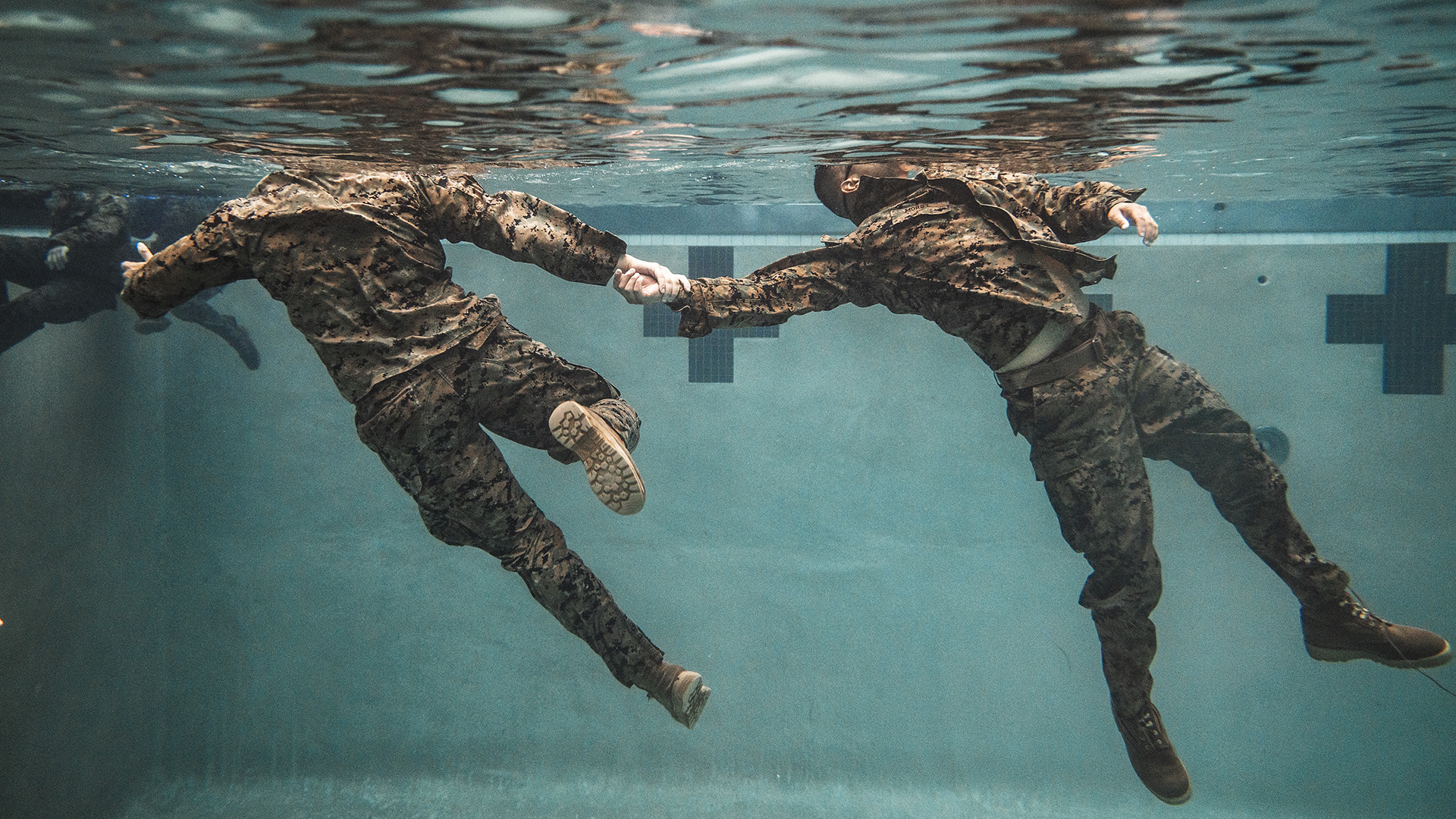
Marines will have to tread water for longer and learn more swimming strokes under new, tougher rules for the service’s water survival program.
All Marines must already pass a basic water survival test to graduate from basic training, which covers a series of floatation and swimming skills designed for water emergencies. Many Marines must also requalify each year, often with tougher tests. The new rules further expand those requirements.
“While basic water survival skills are introduced during recruit training, the new order places a strong emphasis on continuous training and qualification opportunities for Marines throughout their careers,” said Capt. Colton Martin, a spokesman for Training and Education Command. “The goal is for every Marine to consistently improve their aquatic skills whenever possible.”
Top Stories This Week
Tests for the current water survival requirements, which are performed in full cammies, include: a platform jump and self-recovery which can include a swim of up to 500 meters; a ‘rescue’ event in which Marines retrieve a swimmer from the water; and a swim using various survival strokes.
The changes apply to the total force, according to a recent Marine Administrative Message, or MARADMIN. The new rules create five levels of qualifications: a Basic level for new recruits, then Novice, Competent, Proficient, and Advanced. Marines assigned to Fleet Marine Force will have to qualify for a specific level, based on their Military Occupational Specialties..
The changes to water survival training at boot camp are “minimal,” the message says, but “each qualification level above Basic has increased requirements.”
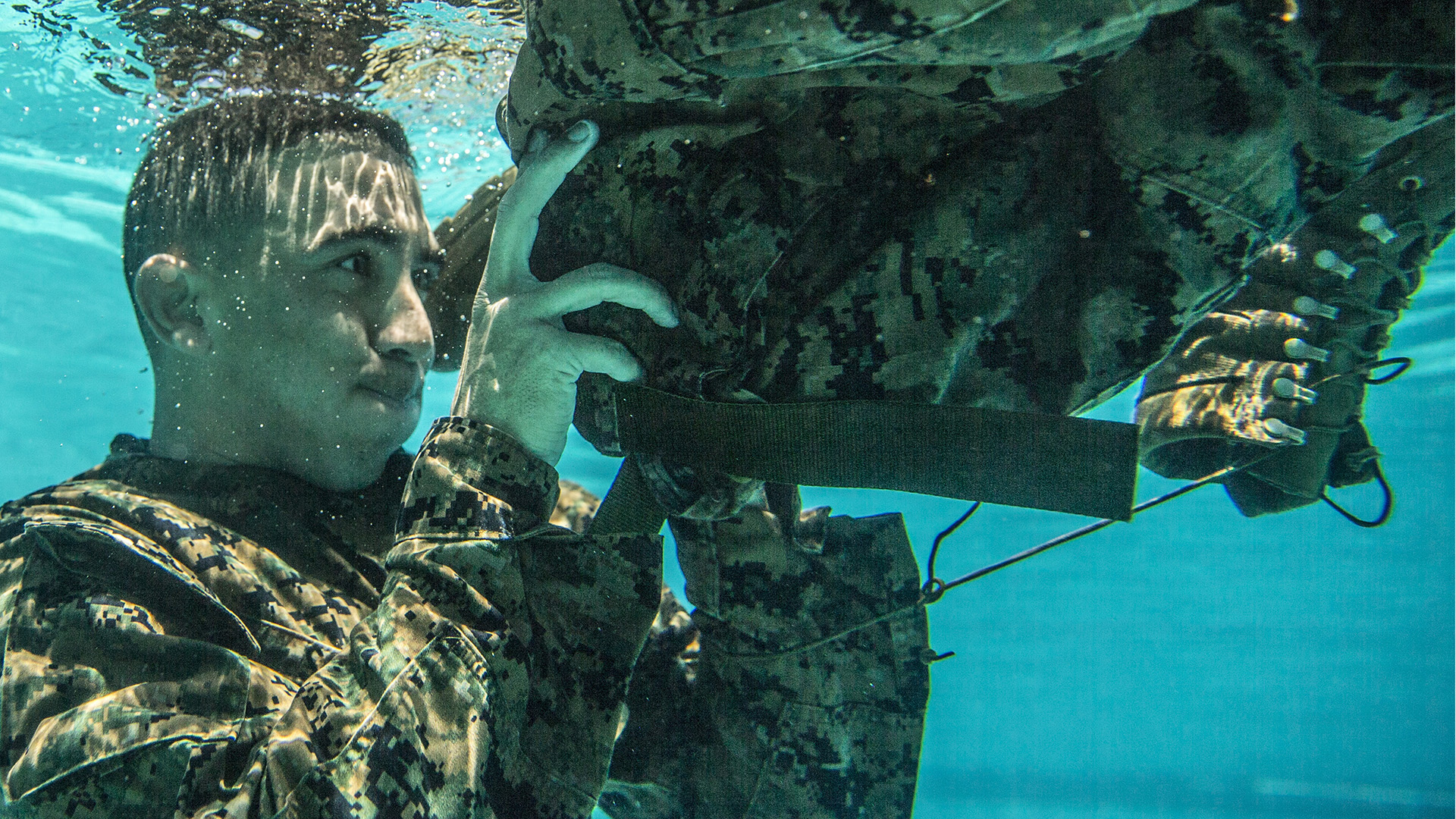
The five new qualifications expand the three currently in use: Water Survival Basic, Water Survival Intermediate, and Water Survival Advanced.
“The changes are designed to be progressive, requiring an increase in both swimming proficiency and the ability to tread water for longer durations at each level,” Martin told Task & Purpose “For example, the requirements for the ‘stay at the surface’ technique (treading water) become progressively longer. Additionally, higher qualification levels require proficiency in more swimming strokes. Basic and Novice levels require demonstrating one stroke, Competent requires two, Proficient requires three, and Advanced requires proficiency in all four (front crawl, breaststroke, sidestroke, and backstroke).”
No information was immediately available about the specific requirements for other phases of the test.
As part of the changes, Marines must have a current, unexpired water survival qualification to undergo Underwater Egress Training, Martin said. That training is designed to teach Marines and sailors how to get out of a submerged vehicle or aircraft.
New recruits who can’t reach the Novice qualification during boot camp will now need a waiver from the commanding general of their recruiting depot to graduate, the MARADMIN says.
The new standards kick in Oct. 1, according to the MARADMIN. Marines who hold only the current Water Survival Basic qualification will have to upgrade to one of the new ratings by Oct. 1, 2027. Higher qualifications will remain current until their expiration dates.
Active-duty and Reserve Marines who are rated as UN???qualified for 180 and 365 days respectively will receive administrative counseling unless they have a valid waiver or exemption.