
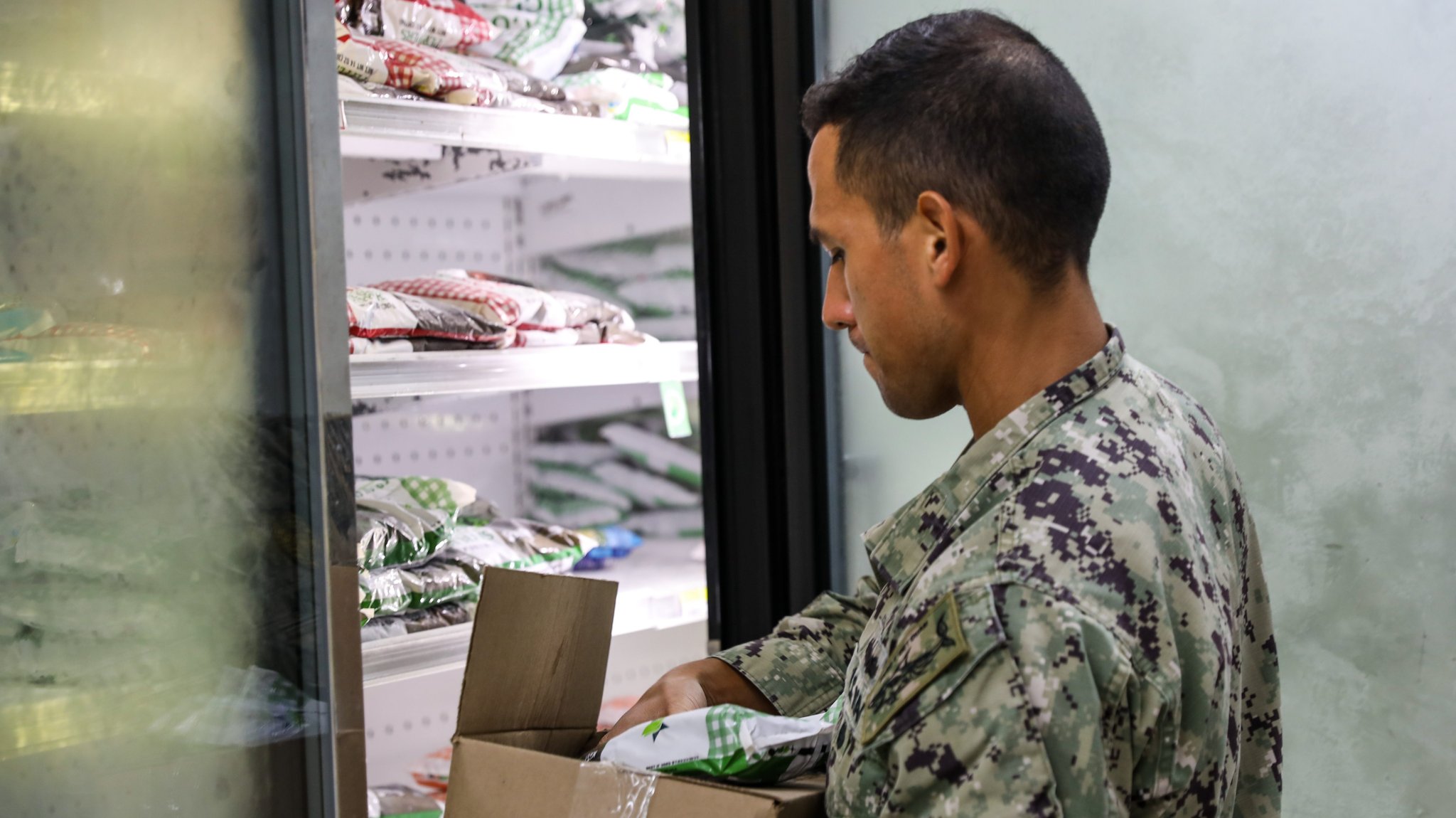
The Pentagon’s criminal investigative service is leading a joint investigation into mysterious refrigeration failures at military commissaries across the country amid concerns that the incidents may have been caused by cyberattacks, a Defense Department official confirmed Thursday.
“We are aware of speculation regarding a potential cyber incident,” the official said. “The Defense Criminal Investigative Service (DCIS), the criminal investigative arm of the [Department of Defense] Office of Inspector General, is leading a joint investigation. For security reasons, we do not comment on ongoing law enforcement investigations.”
The failures affected at least six military commissaries in August, with some installations temporarily unable to sell refrigerated or frozen food. Military Times previously documented outages at seven Army, Navy and Air Force installations across the country.
The investigation comes after a confirmed cyberattack disrupted refrigeration systems at hundreds of supermarkets across France earlier this month. CNN reported that hackers remotely activated defrost cycles, spoiling food and, in some cases, causing fires.
The disruption resembles the incident at Fort Huachuca, where every commissary freezer entered defrost mode overnight, according to the installation’s Facebook page.
Army Criminal Investigation Division spokesman Thomas Hamilton confirmed to Task & Purpose that Army CID is working with the Defense Commissary Agency and DCIS to determine what happened at the U.S. commissaries.
“Army CID is also working with DCIS and French law enforcement in understanding the refrigeration outages in Europe,” Hamilton said.
The department separately confirmed that Defense Cyber Defense Command is coordinating with law enforcement and other federal agencies. Reuters reported Thursday, citing four officials familiar with the matter, that investigators are treating the incidents as suspected cyberattacks, although the Pentagon has not publicly confirmed that hackers were responsible.
Wes Bryant, a former Air Force special operations member who previously served as chief of civilian harm assessments at the Pentagon’s Civilian Protection Center of Excellence, said service members and their families depend on commissaries for affordable groceries, and disruptions could force them to shop elsewhere at higher prices.
Bryant said the military’s dependence on fresh food extends beyond domestic installations. Even overseas, he said, service members rely on regular food supplies rather than routinely eating Meals, Ready-to-Eat, or MREs.
“If you take away service members’ ability to eat in the U.S., that effectively ends or deeply impacts our operations, full stop,” Bryant said. “This is our Achilles’ heel in some regards. A lot of troops won’t work with no access to food.”
Loading comments…
Comments couldn’t be loaded. Please refresh the page.