F-15 crews with the 494th Expeditionary Fighter Squadron played a major role in shooting down Iranian drones launched against Israel nearly two years ago in what the Air Force has described as “the largest air-to-air enemy engagement in over 50 years.”
Now, F-15s from the squadron are back in the Middle East as President Donald Trump reportedly weighs military options for possible strikes against Iran for cracking down on anti-regime protests.
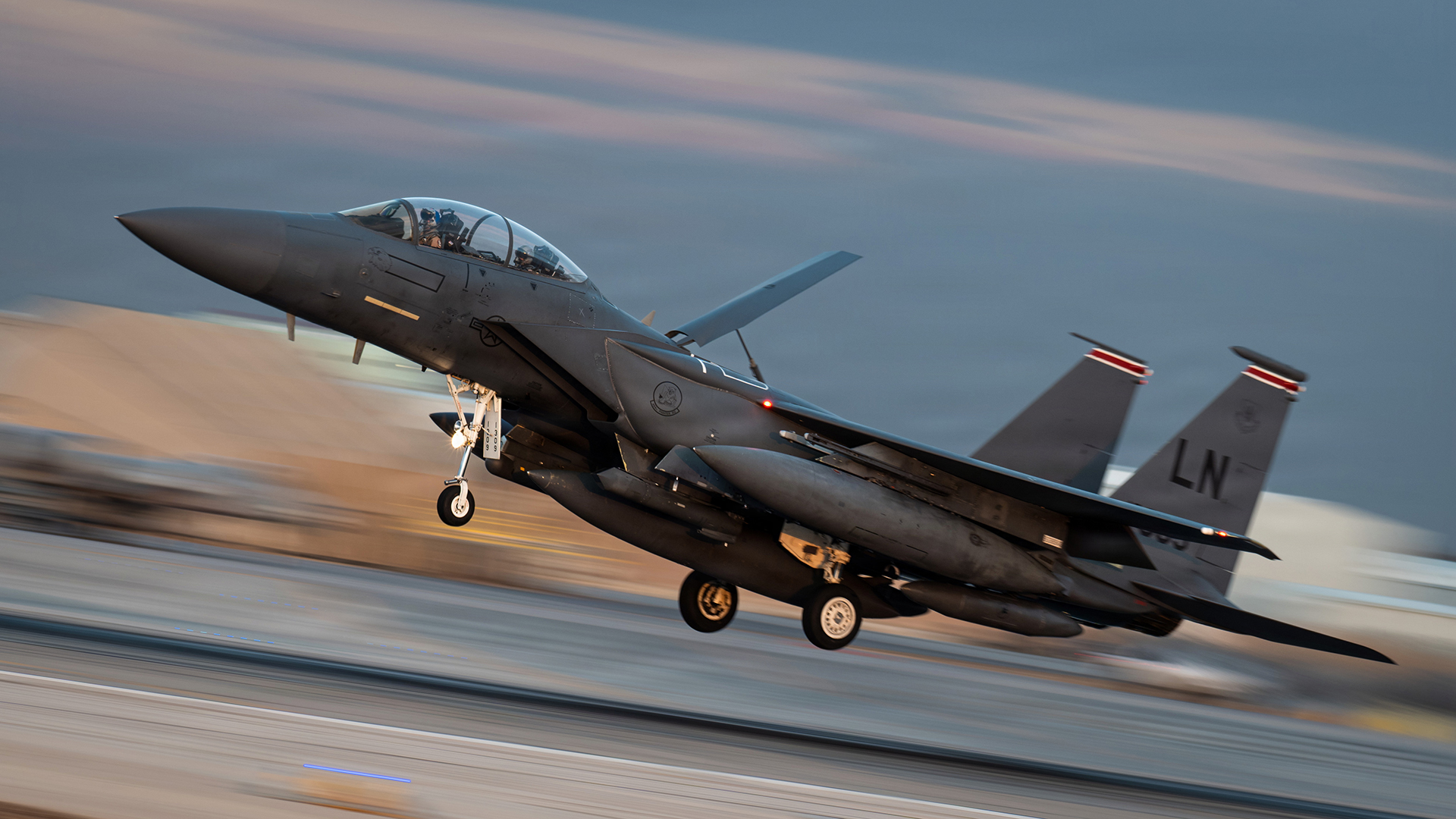
U.S. Central Command, or CENTCOM, recently shared a picture on social media showing an F-15 from the squadron landing at an unnamed base in the Middle East on Jan. 18.
Open source flight trackers posted on social media that 12 F-15s flew from RAF Lakenheath in the United Kingdom, where the squadron was based, to the CENTCOM theater on Jan. 18.
Top Stories This Week
A defense official declined to say how many F-15s had been sent to the region or what their mission is.
“To protect operational security and to ensure the safety of our service members, we do not discuss force posture,” the defense official said.
In mid-April 2024, U.S. forces helped shoot down drones and missiles that Iran and Houthi-backed rebels launched against Israel. In total, the attack involved 170 drones, more than 120 ballistic missiles, and more than 30 cruise missiles.
U.S. aircraft and ships ultimately destroyed more than 80 one-way attack drones and at least six ballistic missiles, CENTCOM announced at the time. In May 2024, F-15s from the 494th Expeditionary Fighter Squadron returned to Lakeneath with several bomb and missile markings tallying their kills from the operation.
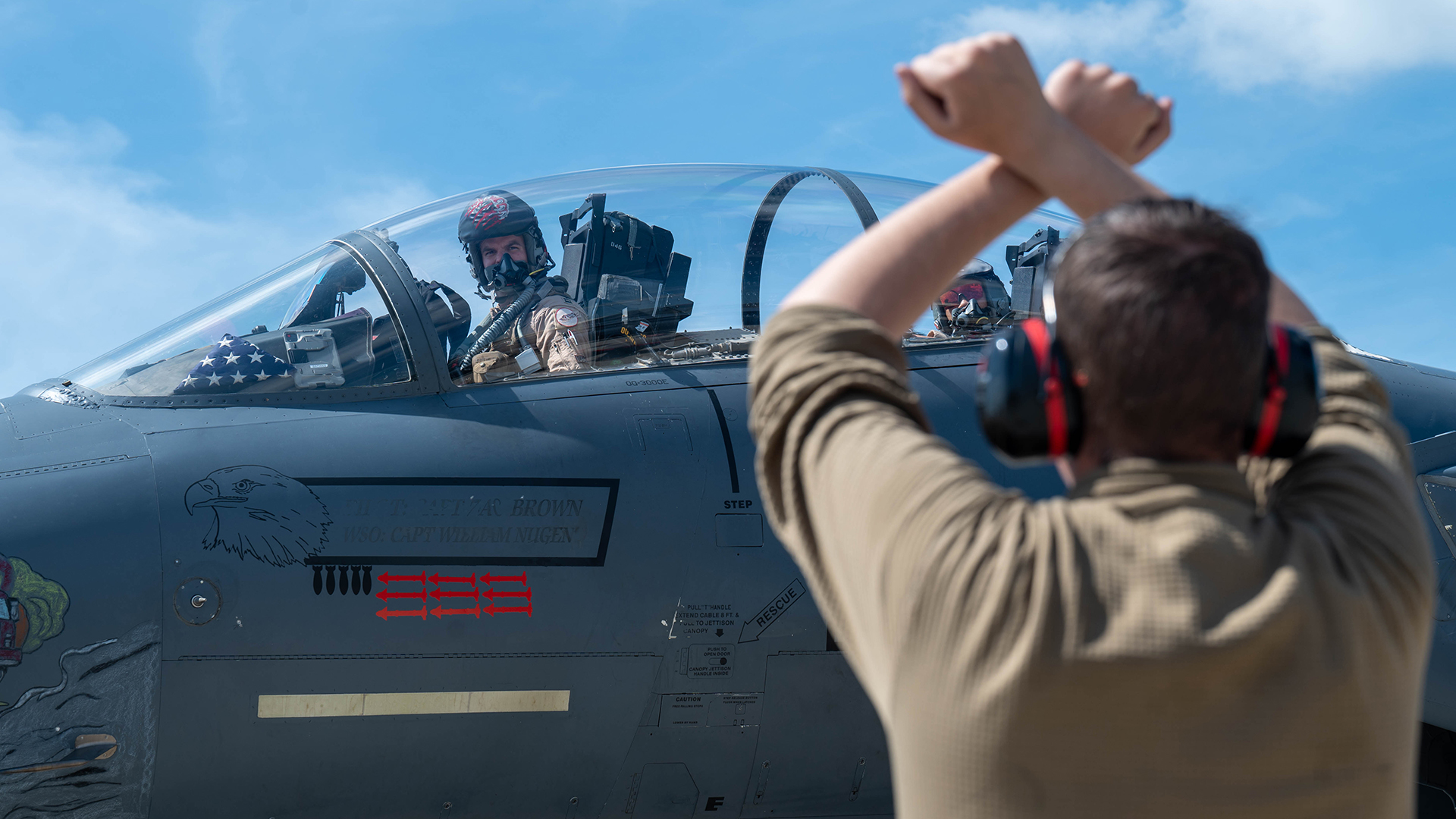
Two officers from the squadron, Lt. Col. Curtis “Voodoo” Culver and Lt. Col. Timothy “Diesel” Causey, were both awarded the Distinguished Flying Cross for their actions in helping to thwart the Iranian drone attack.
At one point during the mission, Culver and Causey tried to use a laser-guided bomb to destroy an Iranian drone after their F-15 ran out of missiles, Lt. Gen. Derek France, head of Air Forces Central, recounted to reporters in September.
“All it had left was a GBU-54, so a laser-guided JDAM [Joint Direct Attack Munition], which isn’t really designed against an aerial target,” France said. “But the crew was on the way back. They were going to get gas and reload, and they went: ‘We found one, let’s see if this will work.’”
The bomb “just barely missed” the drone, said France, who added, “So, it didn’t work, but that’s like innovation on the fly.”
Since then, the Air Force has fitted F-15s with laser-guided rockets, which can shoot down drones at less than 10% the price of an AIM-9X Sidewinder missile. Each aircraft can carry up to 42 rockets.
It is unclear if the most recent deployment of F-15s from the 494th Expeditionary Fighter Squadron could be the start of a military buildup in the Middle East, similar to the concentration of ships, aircraft, and troops in the Caribbean in the run-up to the mission earlier this month to capture Venezuelan President Nicolás Maduro and his wife.
The U.S. military is expected to move air defenses, including Patriot Missile batteries and Terminal High Altitude Aerial Defense systems, into the region, the Wall Street Journal reported.
The aircraft carrier USS Abraham Lincoln was recently spotted entering the Strait of Malacca headed to the Indian Ocean, according to USNI News. U.S. government officials have not said publicly whether the ship is heading to the Middle East.
Iran’s parliament speaker has warned that the Iranians would respond to any U.S. military action against the regime by attacking American military bases and ships in the Middle East.
Reuters reported on Jan. 14 that some personnel at Al Udeid Air Base in Qatar had been advised to leave. A U.S. official subsequently told Task & Purpose that all operations at the installation were continuing.
In June, Iran fired ballistic missiles at the base in retaliation for U.S. air and missile strikes against three Iranian nuclear facilities. The attack damaged the installation but caused no injuries. Many of the Iranian missiles were destroyed by U.S. and Qatari air defenses.