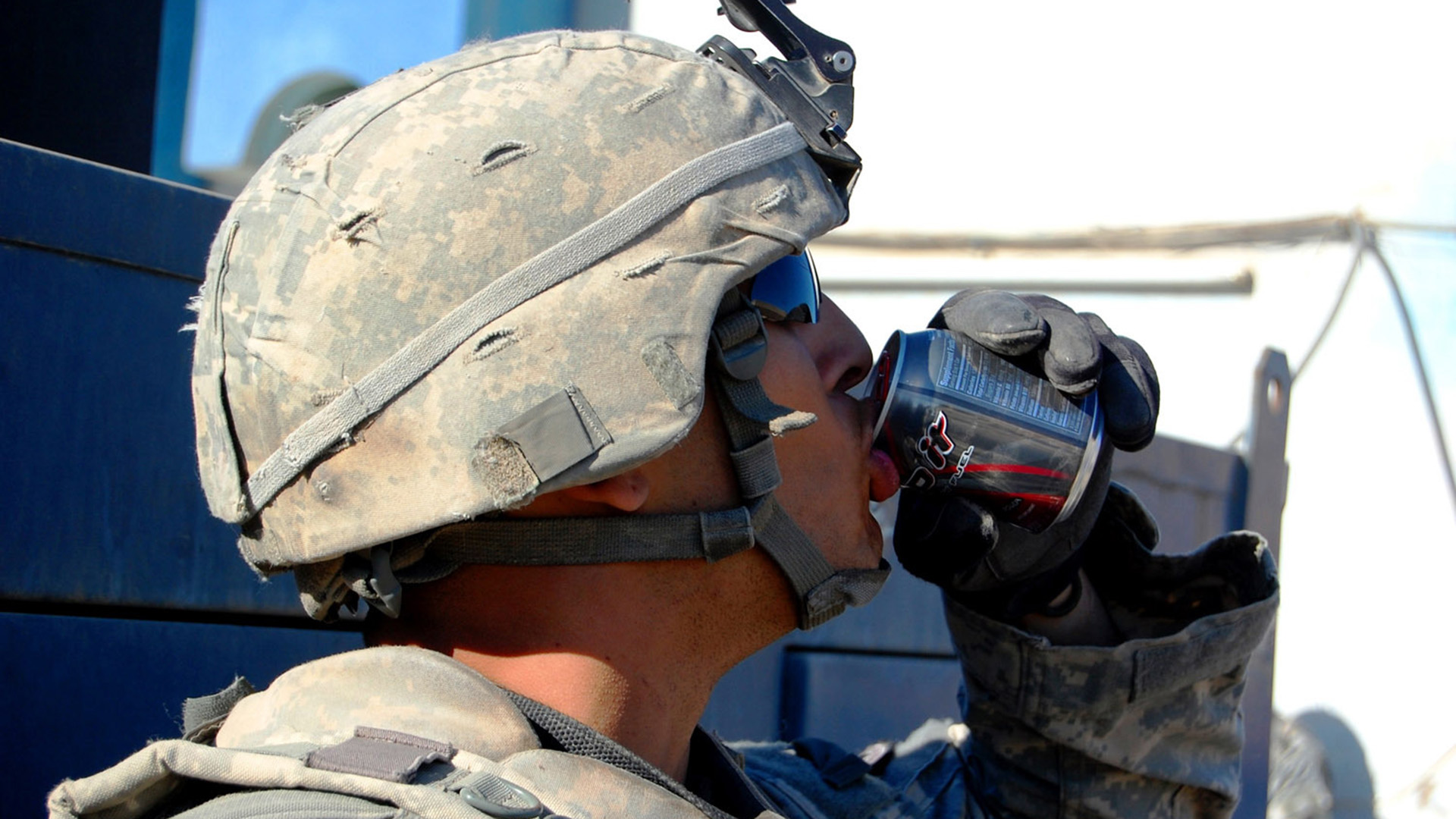
U.S. troops carried on one of the Global War on Terror’s most enduring battlefield traditions by downing millions of energy drinks during the Iran war.
The topic came up during Wednesday’s Pentagon news briefing as Air Force Gen. Dan Caine, Chairman of the Joint Chiefs of Staff, provided reporters with a string of final tallies for U.S. military operations against Iran following President Donald Trump’s Tuesday announcement of a two-week ceasefire. Among statistics on battlefield targets struck, Caine addressed what troops had been chugging.
“Along the way, we consumed more than 6 million meals and, by my estimate, more than 950,000 gallons of coffee, 2 million energy drinks, and a lot of nicotine – but I am not saying that we have a problem,” Caine said.
Top Stories This Week
Energy drinks became just as synonymous with the Iraq and Afghanistan wars as Humvees, Mine-Resistant Ambush Protected Vehicles, and spitting bottles for chewing or dipping tobacco.
So it should come as no surprise to veterans of post 9/11 wars that troops in the Iran conflict once again turned to sugar, caffeine, and tobacco to fuel wartime operations.
In addition to metrics on troops’ energy drink consumption, Caine also said that the U.S. military had struck more than 13,000 targets since combat operations against Iran began on Feb. 28, including more than 1,500 air defense targets, over 450 ballistic missile storage facilities, 800 storage facilities for one-way attack drones, and more than 2,000 command and control nodes.
As of Wednesday morning, it was unclear whether the 38-day conflict was over or just on hold.
“Let us be clear: A ceasefire is a pause,” Caine said. “The joint force remains ready if ordered or called upon to resume combat operations with the same speed and precision as we’ve demonstrated over the last 38 days. We hope that that is not the case.”