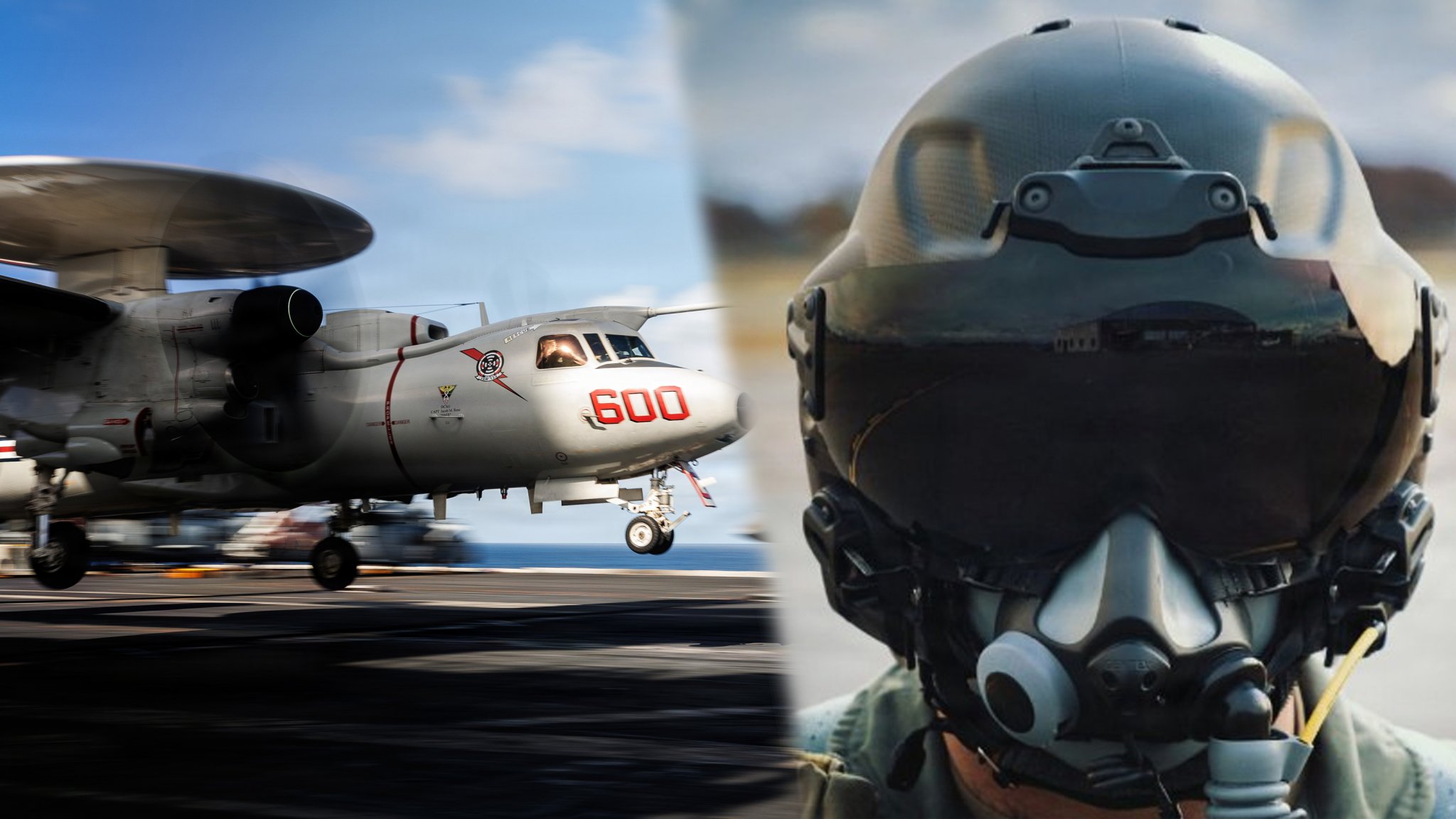
The Navy is buying 5,000 helmets that are designed to fit more comfortably on aviators’ heads and reduce the strain on their necks and backs, service officials said.
The Next Generation Fixed Wing Helmet is expected to eventually replace headgear that Navy and Marine Corps aviators have worn for years, according to Naval Air Systems Command, or NAVAIR.
Currently, the heaviest version of the helmet weighs 2.78 pounds when worn along with an oxygen mask and hose, said Capt. Joseph Kamara, aircrew systems program manager for NAVAIR. That is about half a pound lighter than the helmet is expected to replace, the HGU-68/P, which weighs 3.24 pounds with its oxygen hose.
“The helmet is designed with an advanced, lighter, more balanced carbon-fiber shell that’s constructed to significantly reduce head-borne weight, while an optimized center of gravity mitigates the chronic neck and back strain often caused by long-duration missions and heavy flight gear,” Kamara said in a statement to Task & Purpose.
In addition to the ergonomic improvements, the new helmet is also designed to make it easier for aircrew to see flight information, Kamara said.
Top Stories This Week
The Navy recently awarded a $22.6 million contract to Gentex Corporation for the helmets, according to NAVAIR.
Kamara said the Navy expects to receive the helmets starting between July and September, and the first helmets will be issued to E-2D Hawkeye crews.
The Next Generation Fixed Wing Helmet is not only lightweight, but it is also designed to better balance the weight of tactical gear that aviators wear at the front of their helmets, a Gentex spokesperson told Task & Purpose.
That unbalanced weight is the biggest issue causing neck and back pain for naval aviators, said retired Navy Cmdr. Guy Snodgrass, a former Navy pilot and instructor at the United States Navy Strike Fighter Tactics Instructor program, also known as TOPGUN.
While the weight of the helmet itself is mostly balanced on aviators’ spines, the additional off-center weight of equipment, such as night vision goggles, can lead to injuries, Snodgrass told Task & Purpose.
“Spines aren’t designed to handle consistent forward weight like that,” Snodgrass said. “Then, for tactical aviators, you compound that by pulling 6-9Gs during periods of dynamic flight, which turns a 2-pound weight into something closer to 10-pounds-plus.”
Snodgrass said he suffered a herniated disc from wearing his helmet on missions that caused severe pain for years. He added that he has spoken with other aviators who have dealt with similar injuries, some of whom have required surgery.
“So, a new helmet that reduces weight will be beneficial,” Snodgrass said. “But the real challenge is to bring as much of the off-centerline weight in closer to the helmet — this is what causes the injuries.”
UPDATE: 02/11/2026; This story has been updated with a statement from a Gentex spokesperson.