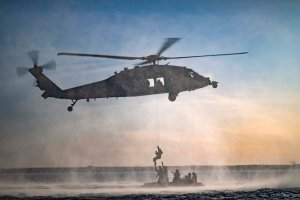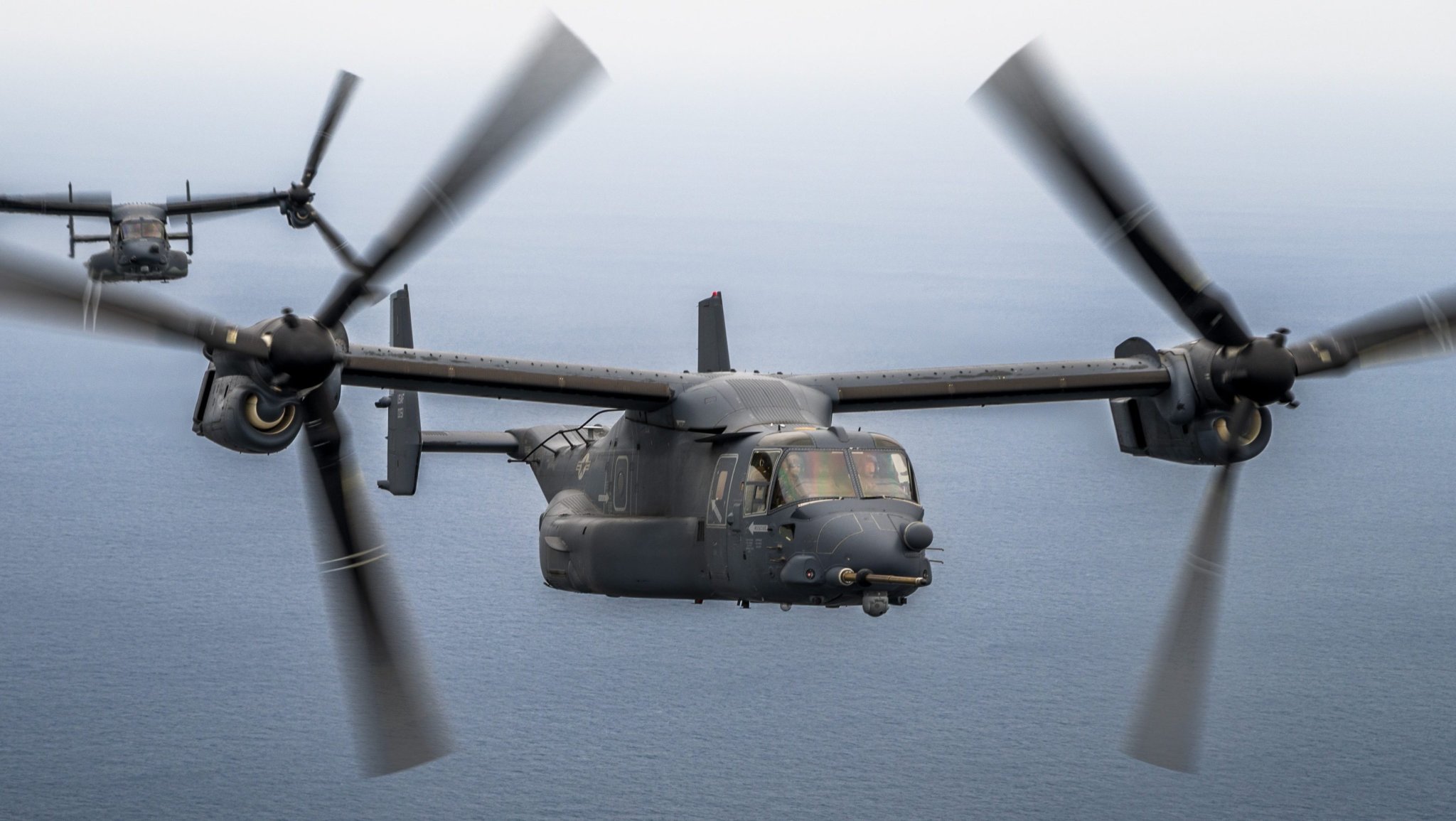
The crew of an Air Force special operations CV-22 Osprey survived a hard landing in New Mexico because of quick thinking by the pilots and crew when the plane suffered a major mechanical failure that cut power to one of the plane’s engines. A board investigating the mishap noted that the crew had just completed a safety stand down focused on the exact type of failure in the plane’s transmission that the crew suddenly faced during the flight.
The failure, the board found, was caused when a steel gear inside one of the plane’s transmissions cracked in mid-flight, a failure that investigators linked to a dozen other Osprey mishaps in recent years.
The mishap, which came during an otherwise uneventful daytime flight in November 2024 outside Cannon Air Force Base, came with two highly experienced Air Force captains at the controls of the Air Force Special Operations Command CV-22. Between them, the report said, the two pilots had almost 2,000 flying hours.
But when an array of warning lights and computerized voice alerts suddenly erupted in the plane’s cabin on the last event of the day, it was the flight’s senior enlisted Flight Engineer who first grasped the danger the crew was in.
“Press low, land,” the engineer said over the plane’s intercom as the first of 27 separate warnings began to flash across the plane’s instruments, according to an Air Force accident investigation report released Tuesday.
The plane’s pilots wasted no time in agreeing.
The Osprey had just lifted into the air from a barren landing zone outside Cannon after a series of training events, including several landings.
Top Stories This Week
But this time, as the plane lifted into the air, a small, complicated gearing mechanism inside the plane’s left engine cracked and broke into two pieces, slicing through other components and causing catastrophic damage to the system. The Osprey had less than a minute to land.
The investigation found that the cracked piece was made of the same, tainted metal — so-called “X-53” steel — that was found to be behind similar failed parts inside transmissions in more than a dozen Osprey mishaps in the Air Force, Marines and Navy since 2009.
Together, those mishaps killed more than 20 flyers, and were fresh on the New Mexico crew’s mind, Air Force investigators found.
The crew’s unit, the 20th Special Operations Squadron, had completed a months-long stand down earlier the year of all Osprey operations, during which pilots and crews had specifically gone over “getting the aircraft on the ground” when transmission and engine failures occurred.
“The standdown forced a focus on fundamentals, checklist discipline, and operational risk management,” the investigation found. “This risk awareness led to a culture of ‘getting the aircraft on the ground’ in an emergency, especially in situations related to [engine and transmission failures]. This leadership intervention and clear guidance influenced [the crew’s] decision-making during this mishap.”
As the cockpit filled with warnings, the pilots immediately eased the plane downward, adjusting their controls for the loss of power.
Still, 40 feet from the ground, the Osprey began to accelerate downward as the power drained from its engines, a condition pilots call “falling through.”
When the Osprey hit, it was falling at over 10 feet per second, twice as fast as a normal landing.
Once on the ground, the crew was able to contact Cannon’s range control office to report the crash.