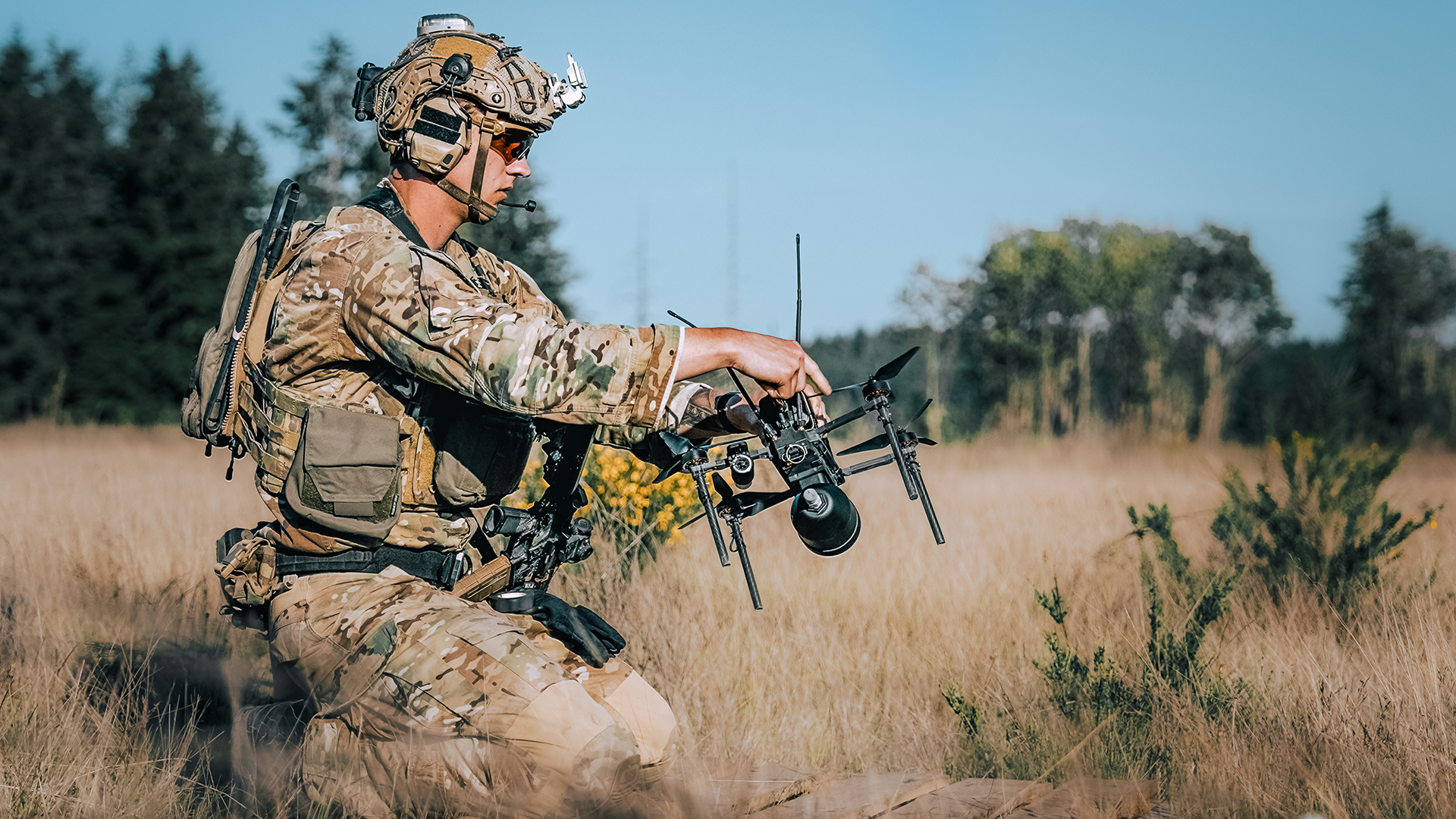
The Army’s 75th Ranger Regiment has tested using First Person View, or FPV, one-way attack drones to destroy enemy tanks, drawing heavily from tactics that have become commonplace in the Russia-Ukraine war.
These experiments are one example of how the U.S. military is racing against time to ramp up production of small drones, as both Ukraine and Israel have used the unmanned aerial systems to launch devastating attacks against their adversaries.
The 75th Ranger Regiment demonstrated to Defense Secretary Pete Hegseth how FPVs laden with explosives can be used to destroy targets when Hegseth visited Fort Benning in Georgia last week.
These types of drones are cheap to replace and, “The cost per kill is hugely elevated when we have FPVs killing $5-6 million tanks,” said Master Sgt. Andrew Heater, the regiment’s technology and mobility division chief.
Over the past 18 months, the regiment has conducted a series of experiments with FPVs that have included fitting small drones with explosively formed penetrators, or EFPs, a type of anti-tank weapon that Shiite militias in Iraq used against U.S. troops, Heater told reporters during Hegseth’s visit to Benning.
“I would comfortably say that, yes, we’ve played with stuff that can penetrate armor, depending on the thickness,” Heater said.
Top Stories This Week
EFPs fire a slug of high-density metal at a high velocity, giving it the energy needed to punch through armor protecting tanks and other vehicles. Such weapons have been used frequently in Ukraine, Heater said.
Depending on their size, the FPV drones that the regiment has been testing can carry anywhere from five to 10 pounds of explosives, and they can fly more than 5 kilometers, Heater said.
It is possible that the U.S. military could eventually use FPVs as a substitute or replacement for artillery, Heater said.
“Kind of what we saw in the lessons learned from Ukraine is this became a viable solution because they ran out of artillery,” Heater said. “It’s a lot easier and cheaper to source materials to make this, and you’re packing it with Army common explosives, rather than producing 155mm shells at the cost that is per shell.”
So far, the 75th Ranger Regiment has not used one-way attack drones in combat to destroy enemy targets, said Maj. Justin Wright, a spokesman for the regiment.
“We have nearly completed 100 lethal drone strikes within the Ranger Regiment,” Wright told reporters on Thursday. “Half of those drone strikes have been in a training environment, alongside Rangers 250 meters from the frontline trace during maneuver live-fire ranges.”
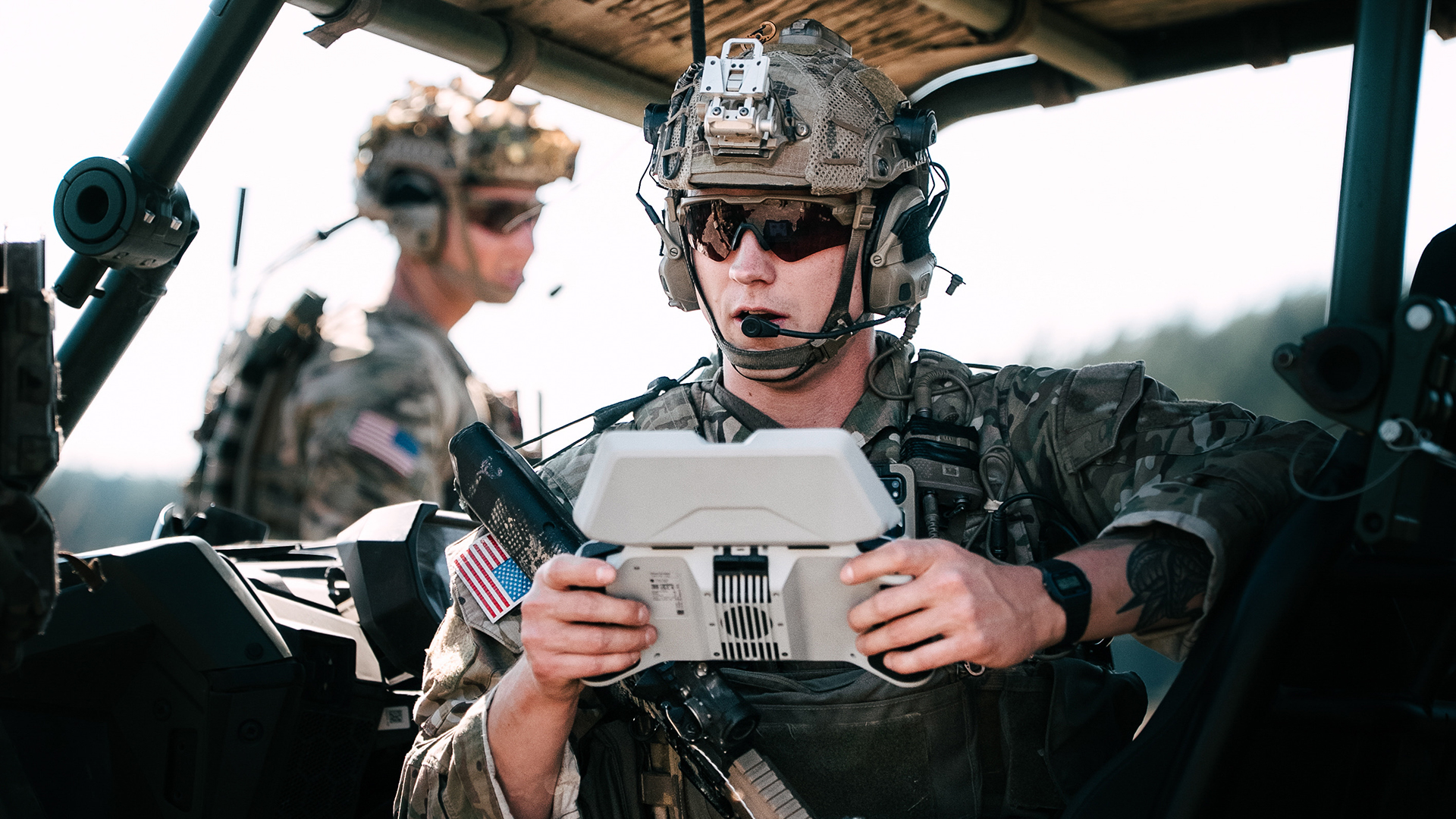
Exactly how effectively the U.S. military could use small drones against enemy tanks remains to be seen.
“There’s a lot of talk about how one of these can take out a tank,” said retired Marine Col. Mark Cancian, a senior adviser at the Center for Strategic and International Studies. “But it has to be pretty lucky because it just carries such a light warhead, or payload.”
The Russia-Ukraine war has shown that even M1A1 Abrams tanks can be vulnerable to FPV attacks; however, Cancian noted that militaries have begun equipping their tanks with cages as protection against small drones.
“I have seen drones fly into hatches that are open, that sort of thing, but that’s a lucky hit, not something you can count on,” Cancian told Task & Purpose.
FPVs could be more effective against enemy trucks and other lightly armored vehicles, Cancian told Task & Purpose. He also said that small drones could supplement rather than replace U.S. military artillery and mortars.
“Instead of having six or eight mortars in a battalion, maybe you’d have four and then four First Person Viewer stations,” Cancian said.
Both Ukraine and Israel have shown that the U.S. military has a long way to go on exploiting small drones to their full potential. Still, Cancian praised the 75th Ranger Regiment for its experiments with small drones.
“You have to start someplace, and it’s good that they’re starting,” Cancian said. “And, to be fair, the environment that the 75th Ranger Regiment might be in would probably be a lot different from what your basic Ukrainian infantry battalion is in. They’re in something like World War I and the 75th would be in a much more mobile situation. So, they have to figure out how to operate these in expeditionary environments — and also get used to the idea that you’ve got to use hundreds of these.”