Four military working dogs died over a three-year period at bases across the country because they were housed in aging kennels that were not kept in good condition, a Pentagon report found. Kennels at bases around the U.S. did not protect dogs “from extreme weather conditions, kennel mold issues, or manage quarantine and isolation areas,” a report from The DoD Inspector General found.
The IG also found conditions of neglect at the military-wide hub for dog training, the Air Force’s 341st Training Base at Joint Base San Antonio-Lackland, Texas.
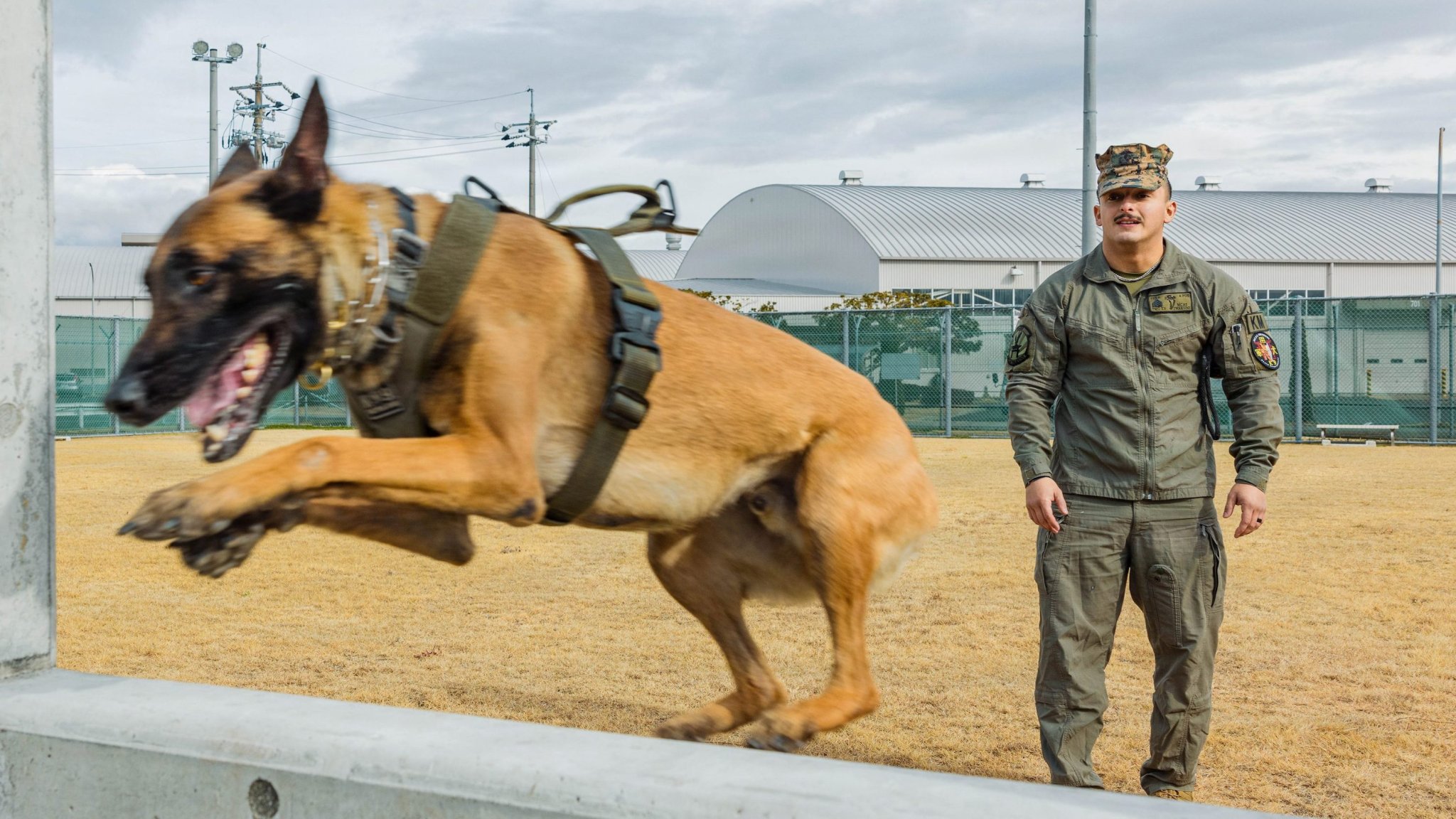
The U.S. military has about 1,600 working dogs across all four services with at least a handful on duty at nearly every base.
Overall, the report found that 10 of 12 inspected kennels had “aging and unsatisfactory” facilities, which caused the death of four working dogs from fiscal year 2021 through 2023. The IG said that the Pentagon had not prioritized renovation or new construction which led to the “unsatisfactory kennel facility conditions” that caused the dogs’ deaths and could pose future health and behavioral risks
The IG found that dogs were sometimes not sheltered from extreme weather. At bases with hot desert climates in California and Texas, the IG found that dogs were kept in open-air cages during the summer months. At the 341st in Texas, the IG found that over a three-year span, 22 dogs sustained heat injuries while living outside.
The watchdog also found that dogs were exposed to health hazards at a variety of bases. Dogs at Fort Bragg, North Carolina were exposed to mold, while those at Joint Base Langley–Eustis, Virginia, were put in kennels with poor ventilation and left with standing water that contained canine waste.
In response to the report, Anthony Baity, Air Force assistant deputy chief of staff for logistics, engineering and force protection, told the IG that the service is updating guidance for kennel facility design and revising veterinarian inspection checklists.
Kennel upgrades could end up costing the services a chunk of money. In a Feb. 20 release, officials from Joint Base Charleston, South Carolina reported that they just finished kennel upgrades that began in 2023 and cost nearly $3.2 million. Officials said the renovations increased the space to house more dogs, added sound-dampening panels to “reduce kennel anxiety” and fencing that “prevents visual agitation,” and added flooring to reduce moisture and skin issues.
Air Force officials told the IG that a new working dog council and working group is being set up which will look at kennel standards and the dogs’ health and welfare.
Problems at main working dog training unit
The IG also looked at the Air Force unit at the center of all military working dog operations, the 341st Training Squadron, at Lackland. All military working dogs, and their handlers from every branch, begin their service in 341st training courses. The unit takes in about 500 dogs a year, most purchased from specialized breeders, and as many as 90 are born into the program. The 341st also trains many dogs and their handlers for other federal agencies.
While the IG found that dogs were well cared for during the unit’s formal 120-day working dog course, the inspectors found significant issues among those in a “non-training” status. These dogs are typically just arriving at the unit, awaiting a final assignment or deployment, a medical disposition, or have been rejected from continuing their working dog careers.
The IG report found that regulations require dogs to get five hours each day of physical activity, social and cognitive enrichment, which they generally receive during the working dog training course. But non-training dogs, the IG found, instead had 10-minute walks four times a week or less. The 341st squadron commander told the IG that the kennel instead provided dogs with “holistic enrichment” with inflatables, audio books, music, and scented bubble machines.
The 341st dogs had higher rates of “sentinel diseases,” (illnesses contracted because of the facility condition or environment) and showed more “stress behaviors” than other working dog locations. In fiscal year 2023, 22% of the 520 working dogs at the Texas base were infected with an intestinal disease that was largely unseen among the 1,520 dogs at other bases.
The IG found that the kennel did not have enough staff to keep the dogs healthy and provide sufficient enrichment.
Air Force officials told the watchdog that the service has requested more funding to add caretaker positions.