The U.S. Army has sent a new missile system to Japan, one that can launch Tomahawks and SM-6 missiles from a truck. It’s called Typhon, and while this deployment is only for a training exercise, it marks a significant shift in how the Army wants to operate in the Indo-Pacific while also sending a message.
For decades, long-range strike capabilities have been dominated by the Navy and Air Force. Ships, submarines and bombers provided the reach while the Army provided ground forces. With Typhon, that’s changing.
The Typhon is also known as the Strategic Mid-Range Fires program. The system is designed to fire two proven Navy missiles: the Tomahawk Land Attack Missile and the Standard Missile-6. Each Typhon battery includes four trailer-mounted launchers, each with four vertical launch cells, for a total of 16 missiles per battery. The system also includes a mobile command post and generator vehicles to power its sensors and communications.
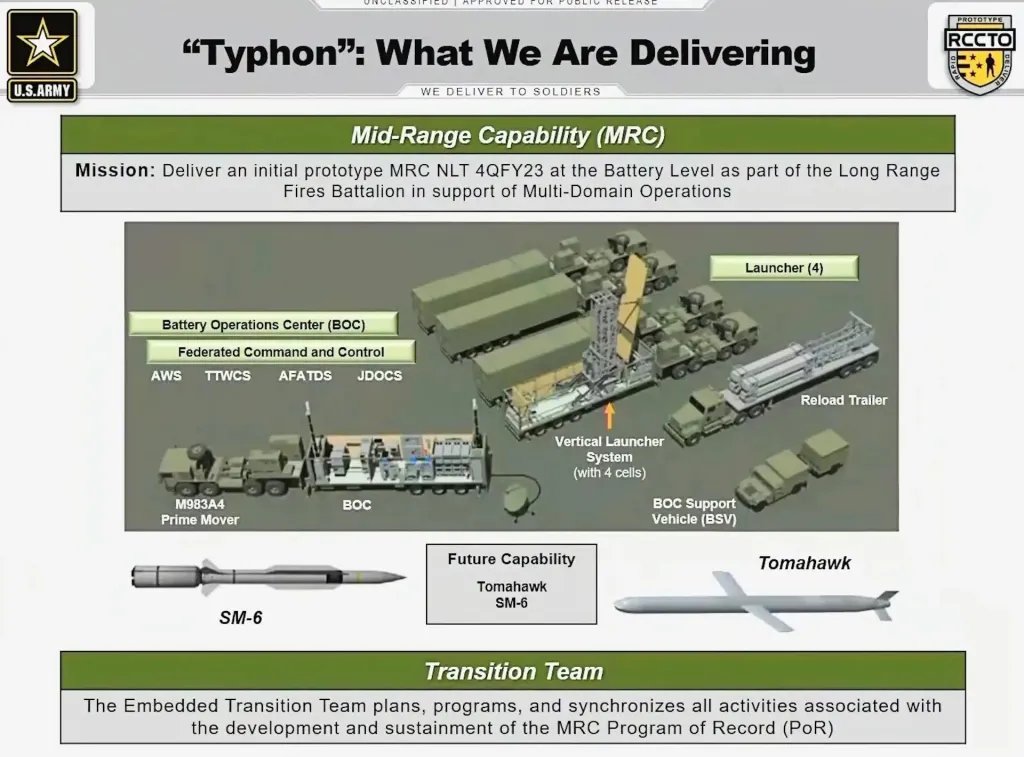
Tomahawks are subsonic cruise missiles that have been used by the Navy for decades. They fly low and follow terrain to strike targets up to 1,600 kilometers away, or roughly 1,000 miles. Most carry a 1,000-pound high-explosive warhead and are ideal for hitting fixed infrastructure like command posts, airfields and radar installations. These have been used in every U.S. conflict since the Gulf War and are long-proven in combat. Recent upgrades have added the ability to strike moving maritime targets as well.
The SM-6 is a supersonic interceptor originally built for air defense but now adapted for anti-ship and land-attack roles. It can reach speeds of over Mach 3, uses an active radar seeker and has an estimated range of around 320 kilometers (200 miles). Both missile types have seen combat under Navy control, and these, along with the other Standard Missiles, have been essential in the Navy’s Red Sea fight.
Top Stories This Week
The capability to hit targets 1,000 miles away alone is a major shift. The Army hasn’t had a land-based system with this kind of range since the Cold War. For years, the Intermediate-Range Nuclear Forces Treaty banned the U.S. from deploying ground-launched missiles with ranges between 500 and 5,500 kilometers. After the U.S. withdrew from the treaty in 2019, citing Russian violations, the Army moved quickly to fill the gap.
Typhon is one of three major missile programs in the Army’s Long Range Precision Fires portfolio. The first is the Precision Strike Missile (PrSM), which replaces the aging ATACMS and can be launched from HIMARS and M270 vehicles. The second is Dark Eagle, a 1,725-mile-range hypersonic missile system still in development, but it has been deployed to Australia for training. Typhon fills the mid-range gap between the two, with longer reach than PrSM but using proven Navy munitions instead of developing new ones from scratch.
This makes Typhon easier to field and cheaper to maintain than brand-new platforms. A road-mobile launcher firing Tomahawks and SM-6s from land also complicates the targeting picture for adversaries. Instead of tracking just ships and planes as serious threats, they now have to look for trailer-sized launchers on highways, islands or remote jungle clearings 1,000 miles away.
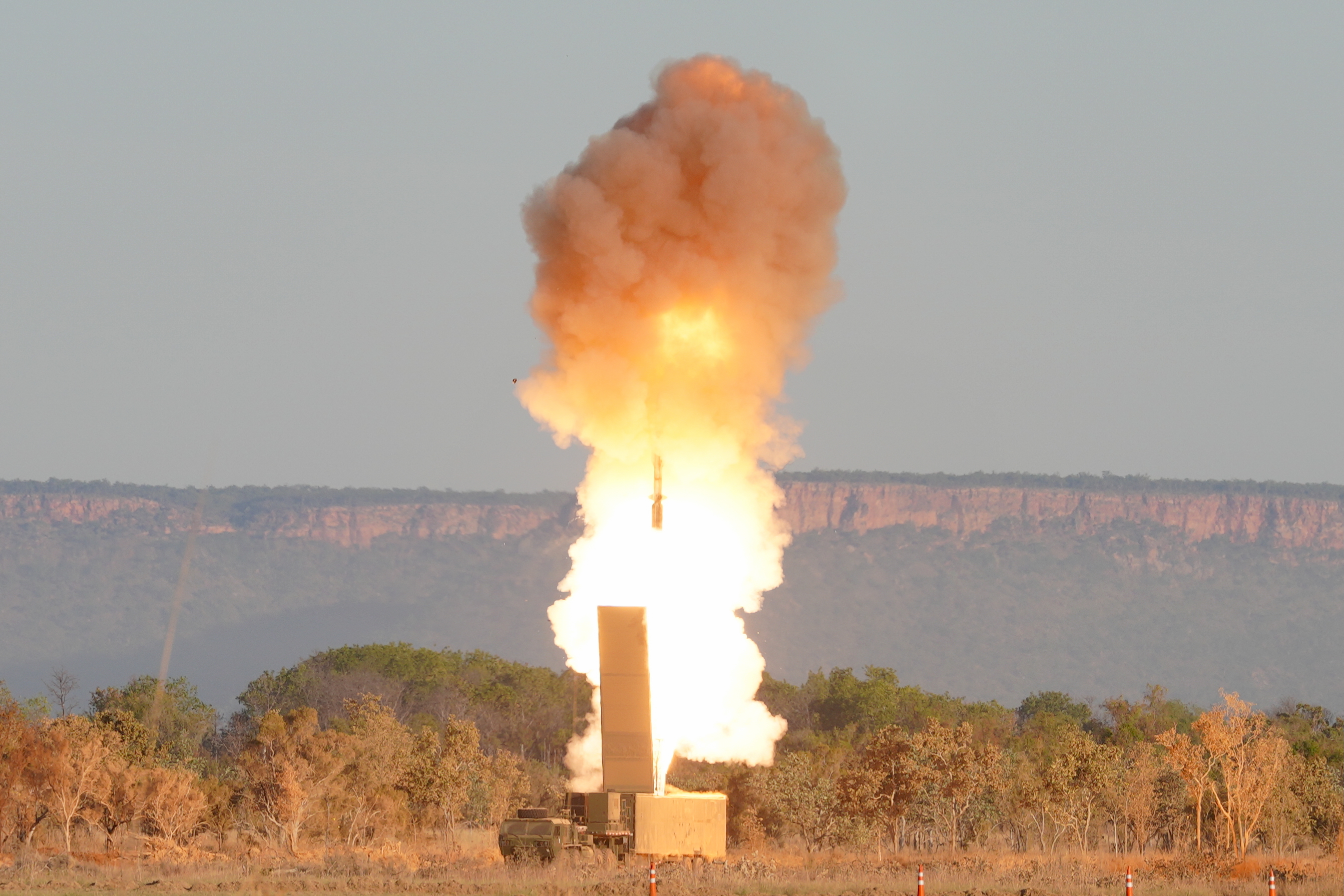
So far, the Army has tested the system at White Sands Missile Range in New Mexico, fired an SM-6 at a maritime target during the Talisman Sabre exercise in Australia, and deployed to the Philippines for Exercise Salaknib. Now the system is in Japan, with Typhon scheduled to participate in Exercise Resolute Dragon 2025, which runs for two weeks this month. None of these are combat deployments, but each one builds confidence in how the system works, moves and integrates with allied forces, and it sends a message in the region.
Japan, for its part, is developing its own long-range missile capabilities, including upgraded Type 12 surface-to-ship missiles and future hypersonic glide vehicles, and is also buying Tomahawks from the U.S. Hosting Typhon is a sign of growing alignment between Japanese and American strategy in the region.
Not everyone is happy about it. Chinese and Russian officials have condemned the system’s deployment. China’s foreign ministry said it “opposes the United States deploying the Typhon Mid-Range Capability missile system in Asian countries,” while Russia called it a destabilizing move.
That pushback is expected. Typhon’s capabilities, which we discuss more in depth on our YouTube channel, complicate China’s regional ambitions and pose a serious threat to Russia’s east, as well. You can watch that here.