

Pick-Up Day is the moment of truth for Marine recruits. Sometimes given the unofficial moniker of “Black Friday” among Marines, it marks the first time they meet their drill instructors, who will train them for the next 13 weeks of boot camp.
The U.S. military recently published photos of recruits’ first encounters with their drill instructors at Marine Corps Recruit Depot San Diego, California, and you can almost hear the yelling.
The May 30 photos by Marine Cpl. Evelyn Doherty underscore the intensity of that moment: recruits sprint to their squad bay, their new home for the next three months, harried every step of the way by frog-voiced, knife-handed drill instructors.
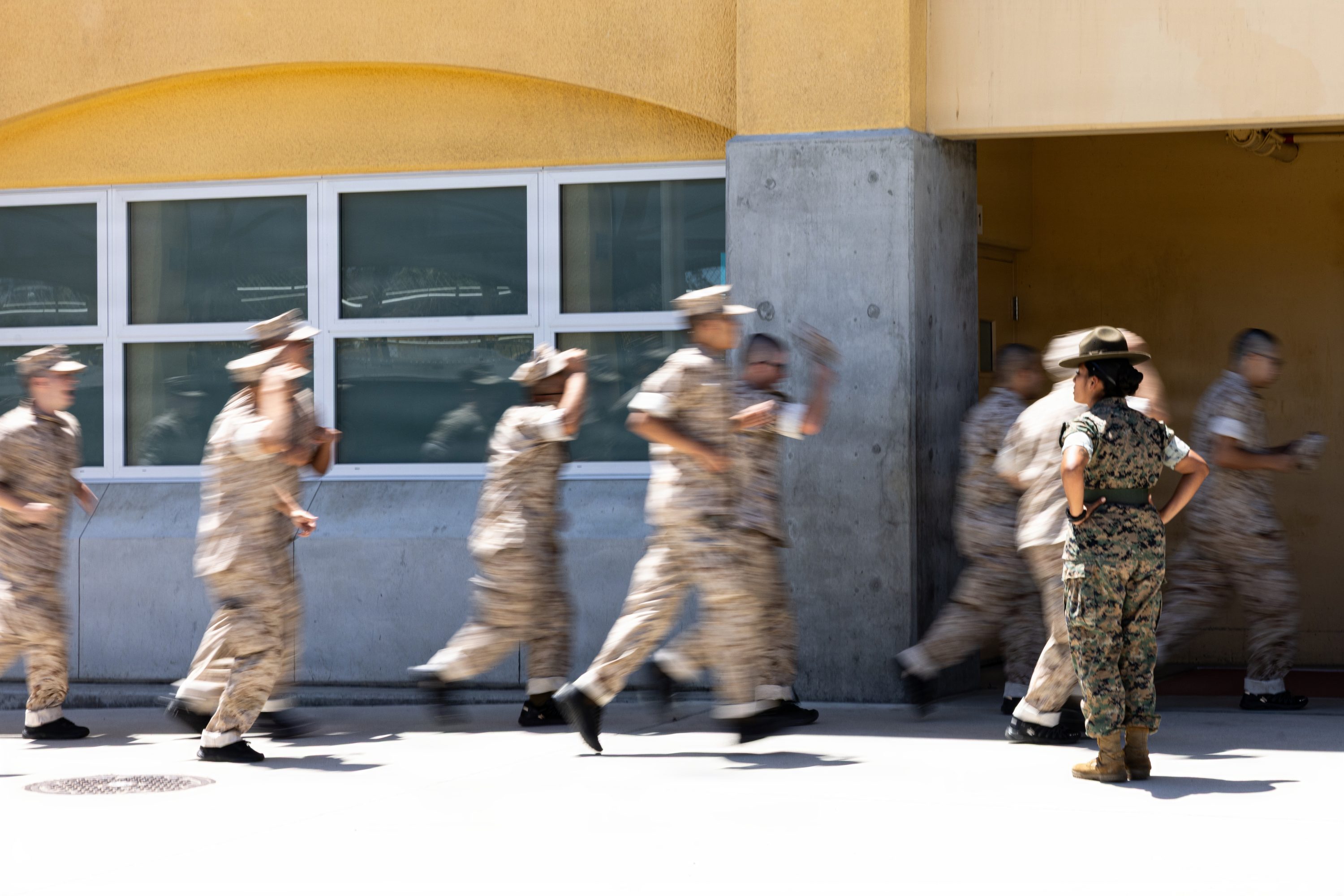
Pick-Up Day takes place five days after recruits arrive at Marine Corps Recruit Depot San Diego — or typically on the fourth day at Parris Island, South Carolina, for those on the East Coast — with the first few days set aside for in-processing, medical evaluations and being issued their gear. Taking place on the first Friday or Saturday of boot camp, it marks the start of recruit training and sets the tone for everything that follows.
“When those hatches open, and they walk out, and they meet their drill instructors, it is their first example and look of what a Marine is, and it sets that example of how they should carry themselves,” said Sgt Nathan Estrada, the senior drill instructor with Mike Company, 3rd Recruit Training Battalion.
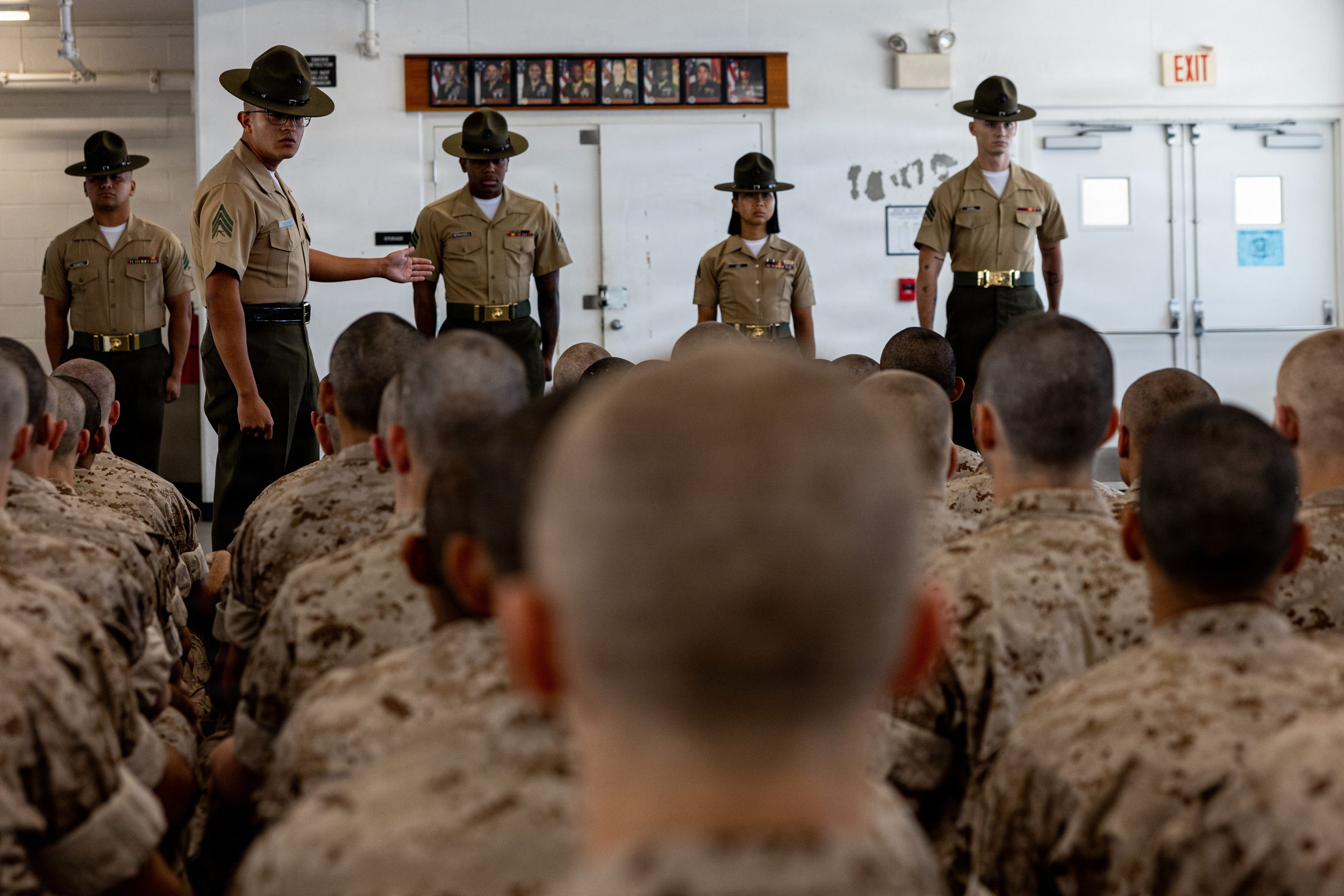
Estrada said he has seen a range of reactions from recruits when they first meet their drill instructors. Some are excited to fulfill their dream of becoming a Marine. Others are afraid of what the next 13 weeks may be like.
“Although on that first day they may be disoriented and in shock when they first arrive, Pick-Up Day introduces them to that intensity that recruit training is known for,” Estrada said. “So, from day one until graduation it is going to be intense, but everything is to accomplish a legitimate goal.”
By the end of their first official training day, all recruits need to understand that “it is no longer about them,” and they have to work together as a team to succeed, Estrada said.
“Recruit training is definitely inherently stressful,” Estrada said. “Stress for the recruits is produced initially by that stark change in their personal lifestyle; transitioning to our military doctrine and routine and that fear of the unknown. Later, as time goes, it comes from fear of failure and the pursuit of excellence as general structures endeavor to teach, train, and mentor and lead their recruits throughout recruit training.”
Top Stories This Week
As shown by the photos posted, one major source of stress that recruits immediately encounter is: The yelling. There’s a lot of it.
“When a drill instructor is there with a lot of recruits — we can have up to 110 in a platoon — the drill instructor can’t be just talking,” said Staff Sgt. McKenzie Witmer, a drill instructor at Marine Corps Recruit Depot Parris Island. “They have to make sure that every recruit in that squad bay hears what is told to them. That way they can execute the task.”
Recruits also need to get used to the yelling because they will need to be able to communicate with Marines in a loud environment, Witmer told Task & Purpose.
On that first day, drill instructors teach recruits the basics of boot camp, including how their squad bay needs to be set up and how to make their beds, Witmer said. This is where they begin to learn about paying attention to details.
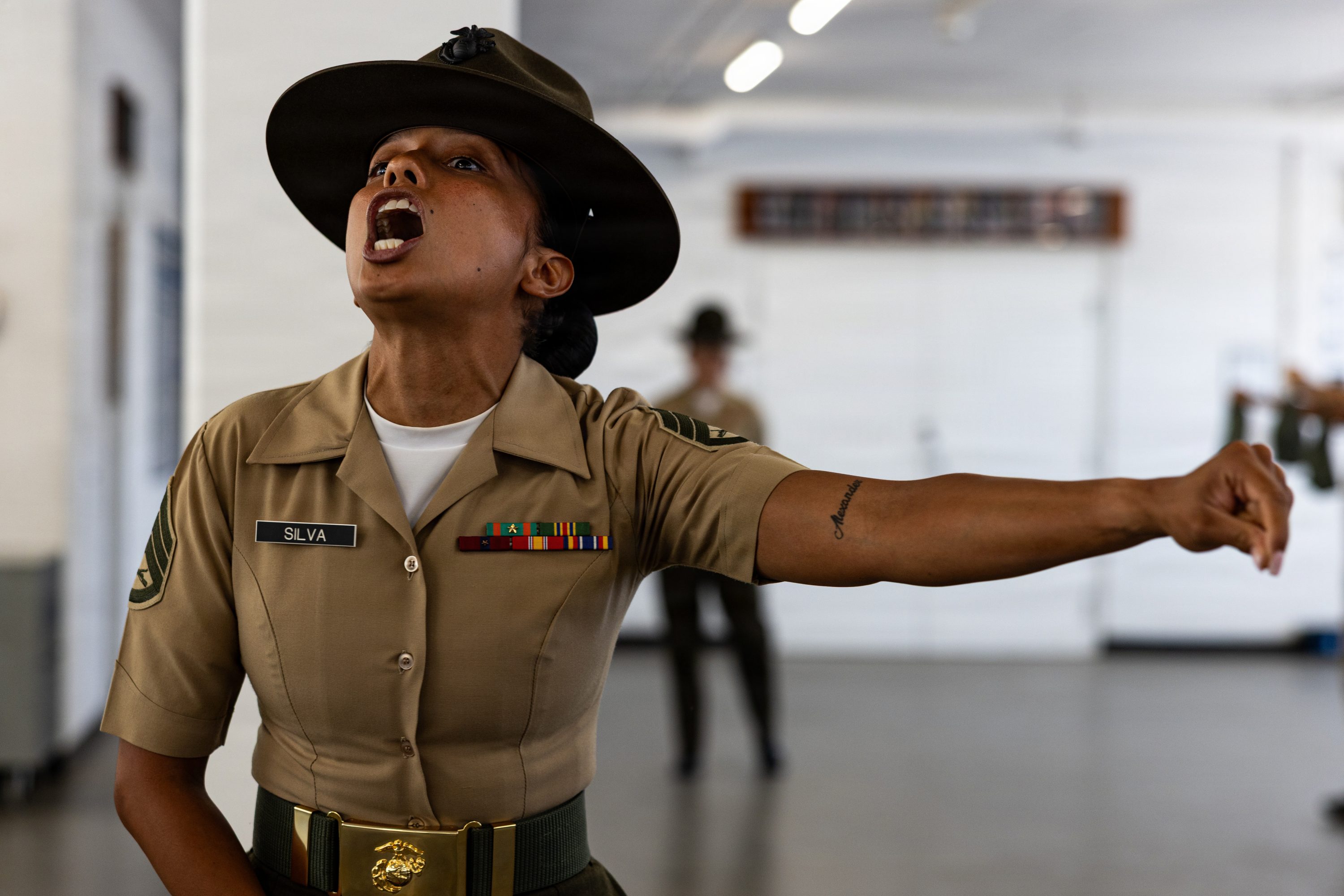
“Sometimes we’ve got to teach them the bare essentials of hygiene: How to brush their teeth, because some of these recruits come in and they don’t have that experience or that expectation from how they’re raised,” Witmer said. “So, at the end of the first day, yes, it’s a culture shock, but I think it’s culture shock for the better for those recruits, where they are learning how to live a new way of life while they are here.”
For recruits, it also marks the first time that they learn about the energy and effort that will be required of them to serve as Marines, Witmer said. Their first encounter with drill instructors is intended to be intense, so they immediately understand what is expected of them.
“A lot of the individuals or groups that come here, just the idea of being held to a certain level of expectation and accountability is new for them,” Witmer said. “Some, right from the get-go, they understand what to do. Then others, it takes a little bit. But as drill instructors, we have to meet them where they’re at and build upon that to get them to where they need to go.”
Loading comments…
Comments couldn’t be loaded. Please refresh the page.