
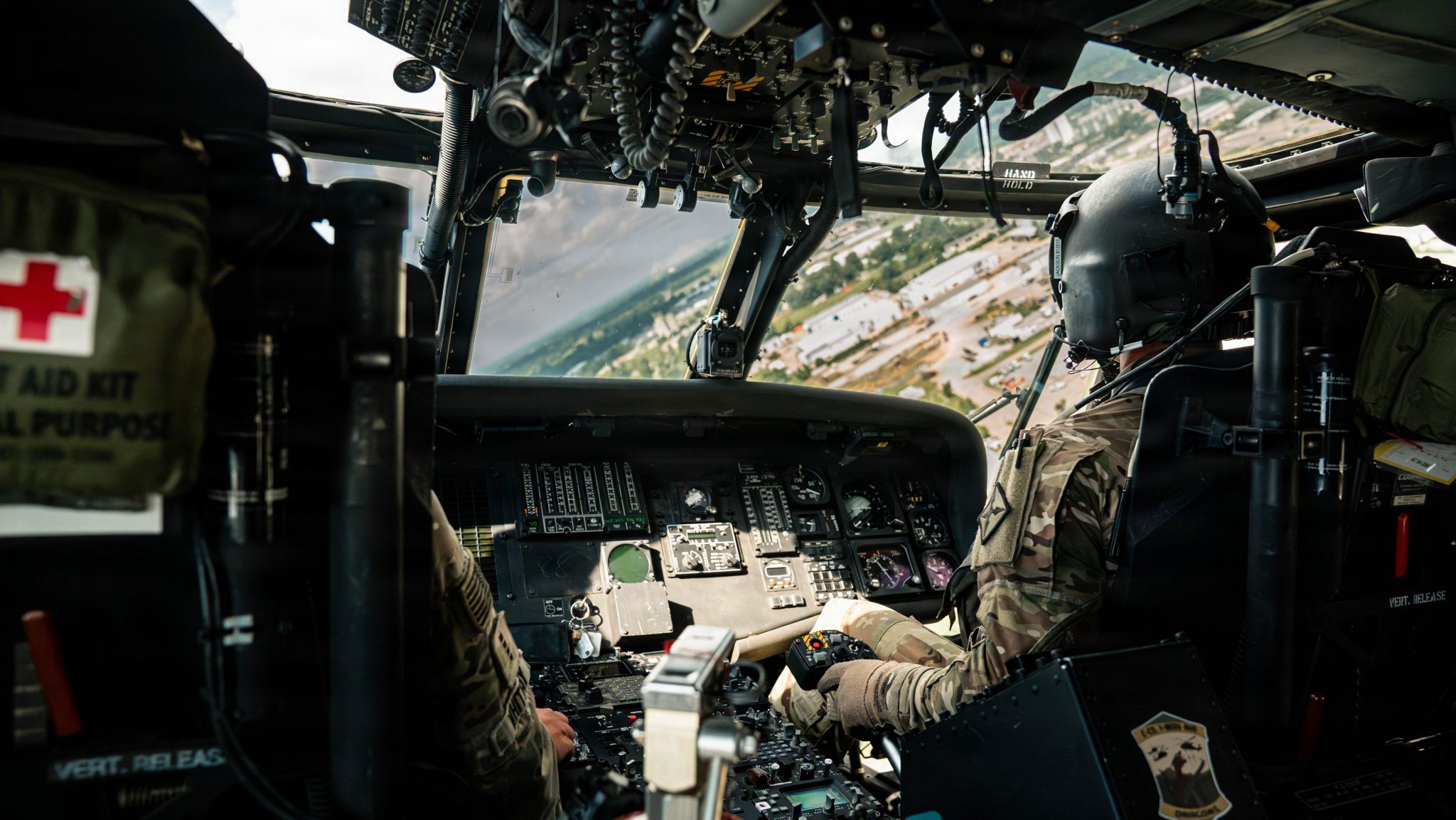
Army pilots are taking solo flights in civilian airspace as part of flight school for the first time in years, officials said.
Starting Wednesday, student pilots at the Army Aviation Center of Excellence at Fort Rucker, Alabama, began conducting solo cross-country flights, which involved taking off from one airport and landing at another, officials announced this week.
The flight school puts 1,300 students through the course every year, which can cause the instruction to become “very choreographed,” Col. Keith Hill, commander for the 110th Aviation Brigade, told Task & Purpose. He said leaders at the training center realized that the school “slowly drifted away” from basic aviation skills, one of which is “mastering” a cross-country flight.
“It’s very easy to become a trail horse while we’re flying around our military environment where we do the same thing every day,” Hill said. “When they get out there, their plan may not go according to what they think [is] going to happen, so they’re now trained and they’re drilled to react to changes that will happen out in the airspace.”
Lt. Col. Andrew Bartlett, commander for the 1st Battalion, 223d Aviation Regiment, said students are getting a total of three weeks’ worth of training “in the national airspace system.”
He explained that flight school is broken up into three phases. In the first phase, instructors familiarize students with the helicopter and basic flying patterns. The second phase includes learning more “advanced maneuvers” like emergency tactics or vertical takeoffs, understanding “published procedures” of how to fly within the national airspace on a simulator or actual helicopter flights with instructors. The first two phases are considered the “common core” part of flight school, he said. The final phase is advanced aircraft training, where students become experts in their airframe, whether it be a Chinook, Black Hawk, Apache helicopter, or the C-12 Huron fixed-wing aircraft.
Top Stories This Week
The pilots-in-training will take two weeks of cross-country flight instruction. Before their solo flight, students take their “check ride,” which is a culminating flight where pilots are assessed on the totality of their skills, officials said in a press release. Students are required to do at least two solo flights to pass the course and move on to advanced training. Some students might have the opportunity to do up to five solo flights.
Chief Warrant Officer 4 Carey Blake, one of the flight school instructors, said that during earlier portions of flight training, students are practicing at military fields or local airports “that everyone’s been to.” With the cross-country flights, he said, students really get to practice “aeronautical decision making,” like looking across the airspace for other types of aircraft, doing weather assessments and making radio calls.
Bartlett said the flight paths for students flying cross-country may have them land at 54 different airports across southern Alabama, the Florida Panhandle, or Georgia. They are not major commercial airports but smaller ones used by some small commercial aircraft or private jets.
“Some of those airports have commercial airliners coming into them and air tractor crop sprayers, and then somebody’s 18-year-old getting their pilot’s license,” he said. “It’s a pretty expansive program to expose our students to a broader level of experience rather than just here at the Fort Rucker area.”
In order to fly into civilian airspace, soldiers have to be able to switch between military and civilian lingo to talk to air traffic controllers at major Federal Aviation Administration-run centers like Jacksonville, Florida, and Atlanta, Georgia Center, Blake said. Both of those control towers cover more than 100,000 square miles of airspace extending across multiple state lines.
“You have to know who you are talking to, what you need to say and how to say it,” 2nd Lt. Kyler Suerth said in an Army news release.
Hill said the Army cut cross-country flights out of flight school as the service was training pilots for operations in Iraq and Afghanistan during the 2000s and 2010s.
“The force needed aviators out in the force faster. So we responded to that,” Hill said. “That was an area that we felt we could make up the delta by shaving a little bit out of flight school, and then they would make it up when they got to their units because at that time the units were flying very heavy. Flight hours weren’t a concern, fiscal realities weren’t a concern, and every aviator in the Army was getting as much flight time as they wanted.”
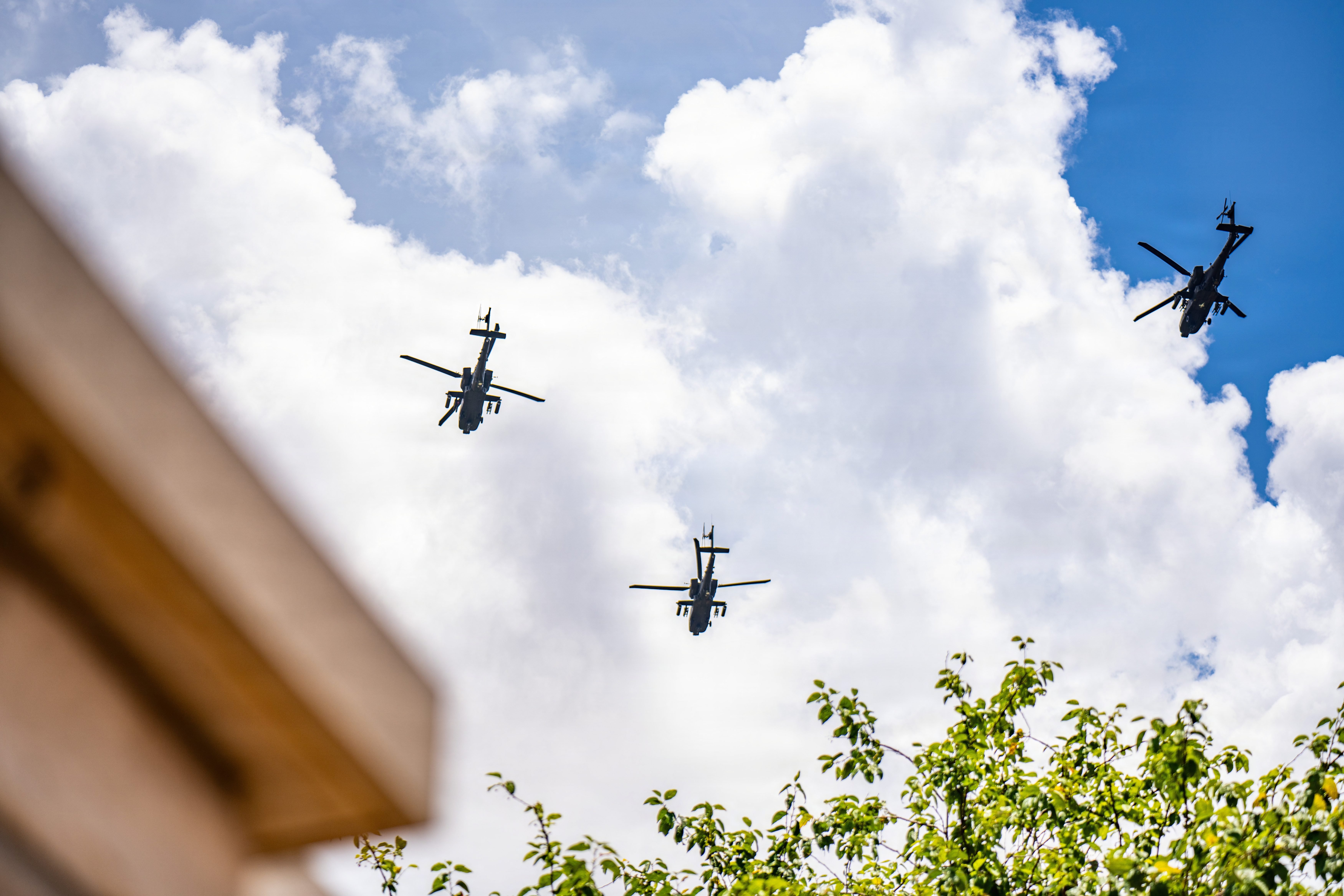
The Army has overhauled its flying enterprise in recent years, responding to a series of aviation mishaps and major shifts in technology.
In 2024, over the course of six months, the Army had 12 aviation mishaps, 10 of which were fatal. The rate of accidents prompted Army officials to order extra safety training to “reinforce” pilot skills like spatial awareness and power management.
Then, in January 2025, an Army Black Hawk crew collided with an American Airlines plane landing at a Washington, D.C., airport, killing three National Guardsmen and 64 civilians. The National Transportation Safety Board’s investigation found that the Black Hawk’s altitude readings were incorrect and the crew’s night goggles restricted their peripheral vision. The air traffic control’s instructions were never received by the crew because of the helicopter’s radio transmission settings. Following the crash and investigation, the Army changed policy requiring more helicopters to have and use a safety feature that broadcasts the aircraft’s location to civilian controllers and nearby planes.
In 2025, the Army also took steps to begin cutting human pilots as the service adds more drones and uncrewed flights into its formations. As part of the cuts to flying positions, soldiers have been asked to change jobs or leave the service entirely, which pilots told Task & Purpose has had an impact on unit morale.
Regarding the recently returned solo flights, Bartlett said the students are receiving “top-level instruction” and that this kind of training is also standard for new civilian pilots.
“If you were to go to Jim Bob’s Flight School, the FAA requires student pilots to solo, and we have, you know, 17-year-olds out there doing this with their Cessna 150s or whatever aircraft,” Bartlett said. “Millions of civilian pilots are doing this on the day, and we’ve established those systems to make it safe at scale here at Fort Rucker as well.”
Loading comments…
Comments couldn’t be loaded. Please refresh the page.