
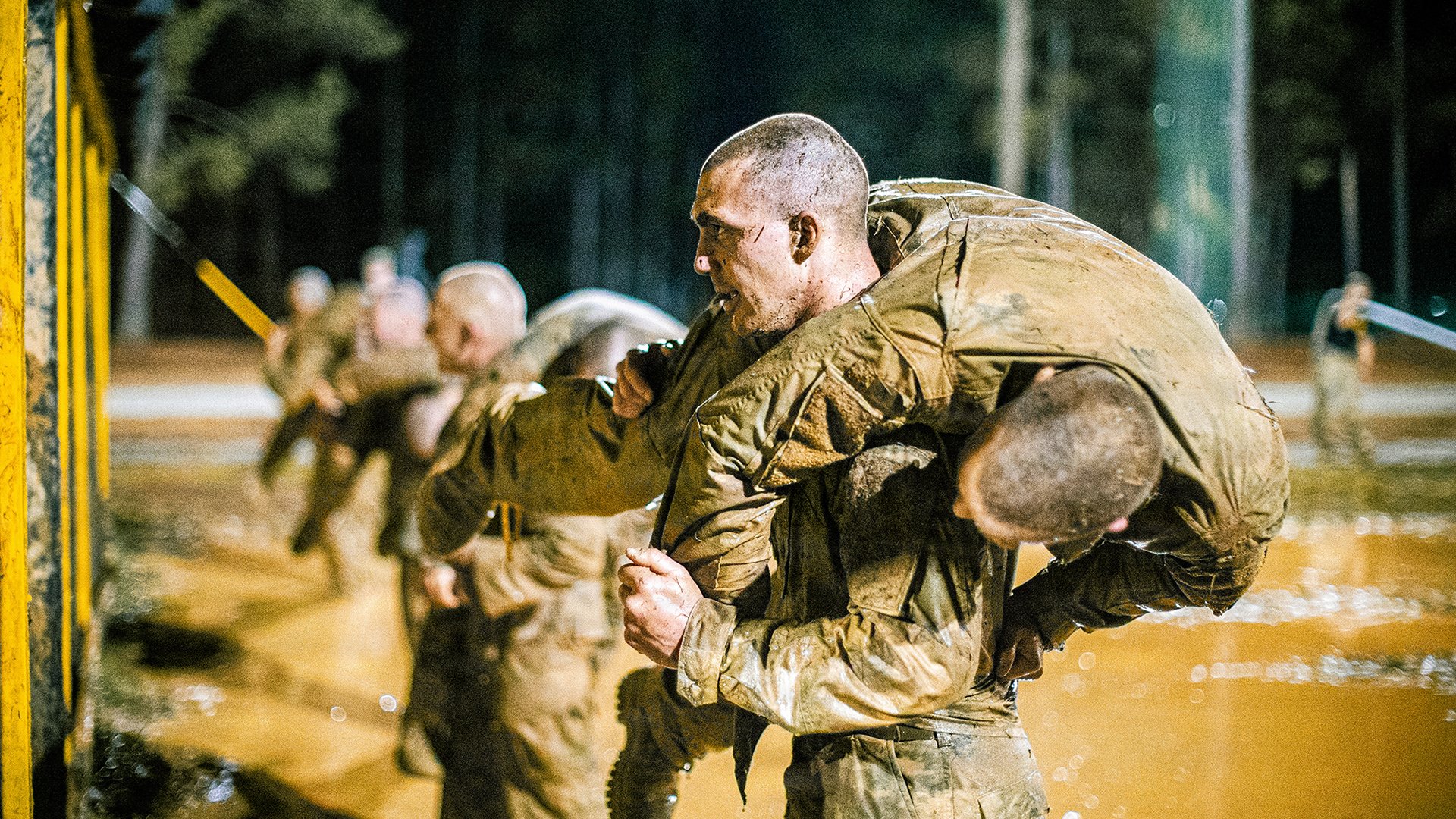
Men who went through the Army’s grueling Ranger School at Fort Benning, Georgia, experienced greater hormonal changes than women who took part in the course, according to a recent study by the service.
The findings are from the U.S. Army Research Institute of Environmental Medicine, whose researchers looked at men and women who participated in the 61-day leadership course. The study focused on how stressors impact the body’s physiological responses, like metabolic and sex hormones, iron levels and inflammation markers. The results could be used to “identify potential interventions to mitigate disruptions to soldier health, performance, and recovery,” according to the study, which was published in the Journal of Applied Physiology.
The Army’s Ranger School is one of the toughest training programs that soldiers can attend, with nearly half of candidates getting cut in the first week. Soldiers get limited sleep and burn more calories than they consume — two Meals-Ready-to-Eat, MREs, per day — while completing demanding challenges in field training, mountain and swamp environments for eight weeks straight. According to the research, military training that exposes troops to “severe energy deficits and inadequate recovery” can put them at risk for Relative Energy Deficiency in Sport (REDs) and overtraining syndromes.
Top Stories This Week
Holly McClung, the lead researcher on the Army study, told Task & Purpose that there “hasn’t been much” research on both men and women going through the school since it was opened to women in 2015. She also said that leaders at Ranger School had questions about the health impacts of limited sleep and food that soldiers endure.
The study comes amid a broader political debate over women in more physically demanding roles, including combat jobs.
In the Army’s previous Ranger School studies, McClung said they assessed students before and after the course. For the latest study, researchers gathered blood and urine samples, took surveys, and measured body composition throughout the three different phases. The study evaluated Ranger School students between 2022 and 2023, she said, and the final paper included data from 27 men and 10 women.
McClung said they looked at physiological changes to understand the body’s response to prolonged stress. She said physical performance, muscle mass, hormone levels and energy balance are all “tied together” so the research might help the Army understand what soldiers need to “maintain or supplement” to get through the course.
The research specifically found that “male physiological markers were susceptible to disruption” while female bodies “exhibited limited alterations.” Women showed more changes during the middle mountain phase, while men “experienced changes across many markers throughout all phases.”
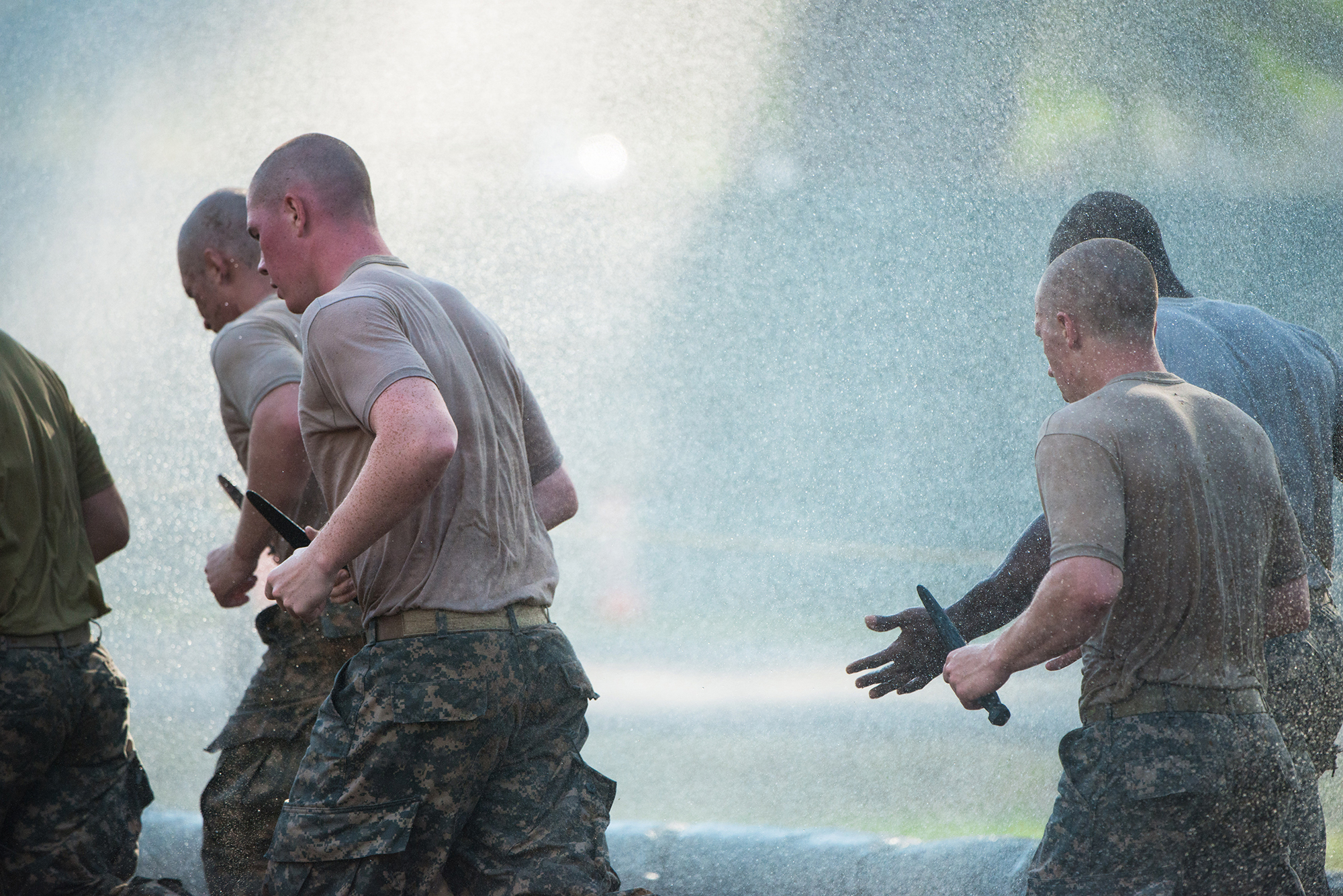
“These findings indicate male physiology may be disproportionately affected in multi-stressor environments,” according to the study. “Future research should investigate the influence of stressors other than energy balance that are unique to long-term military training environments to identify the mechanisms underlying the large physiological disruptions observed in males and to better understand why females experienced minimal alterations.”
Researchers also found that men’s and women’s bodies draw energy from different sources.
“Men are using their muscle, and women are turning on and utilizing fat lipolysis for energy, so it’s just the way that we’re composed,” she said. “What we’re seeing in the field is kind of what you would expect, and what you hear about. Women are just meant to withstand longer periods, I think, and they’re just maybe more efficient in utilizing the fuel that they have on board.”
The findings validate other research on endurance training, like a 2016 study that found women are “usually less fatigable than men.” McClung and the 2016 study acknowledged that the understanding of how sex differences play a role is largely limited because of a deficit in the number of women available to participate in these performance studies.
“It’s just that women traditionally don’t have the same opportunities to train, but that’s becoming very different in the last like 20 years. I think women are really probably having the most momentum in long-term sports recently,” McClung said. “I think where women are going to be successful is in those endurance, long-term [physical activities] because that’s where the small kind of energy utilization differences kind of shake out.”
In addition to the physiological differences between men and women at Ranger School, the Army also conducted studies on students’ energy balance and body composition and physical performance, sleep, and psychological responses.
“Women seem to be just a little bit more resilient, so I think it kind of shows us that maybe we need a bigger sample,” McClung said of the recent body of research. “But an elite war fighter is an elite war fighter. It doesn’t matter what your sex is.”
Loading comments…
Comments couldn’t be loaded. Please refresh the page.